Ribas Wine Tasting

Ribas logo

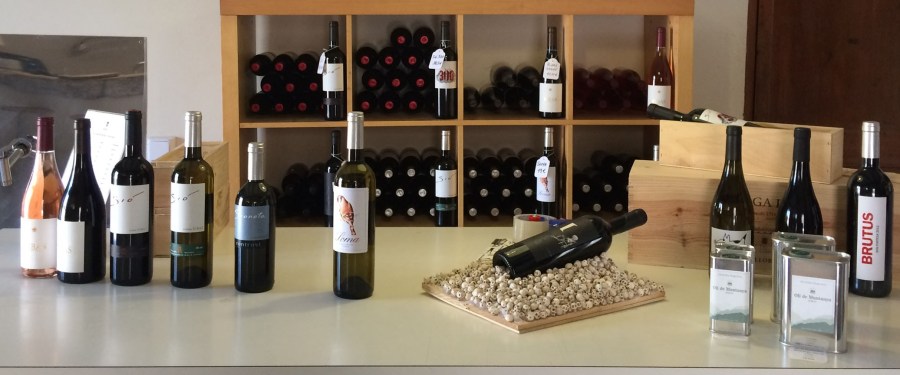
Wines Tasted

◊   1 White   ◊

Ribas Blanc 2014

◊   2 Reds   ◊

Sio 2013
Ribas Negre 2012
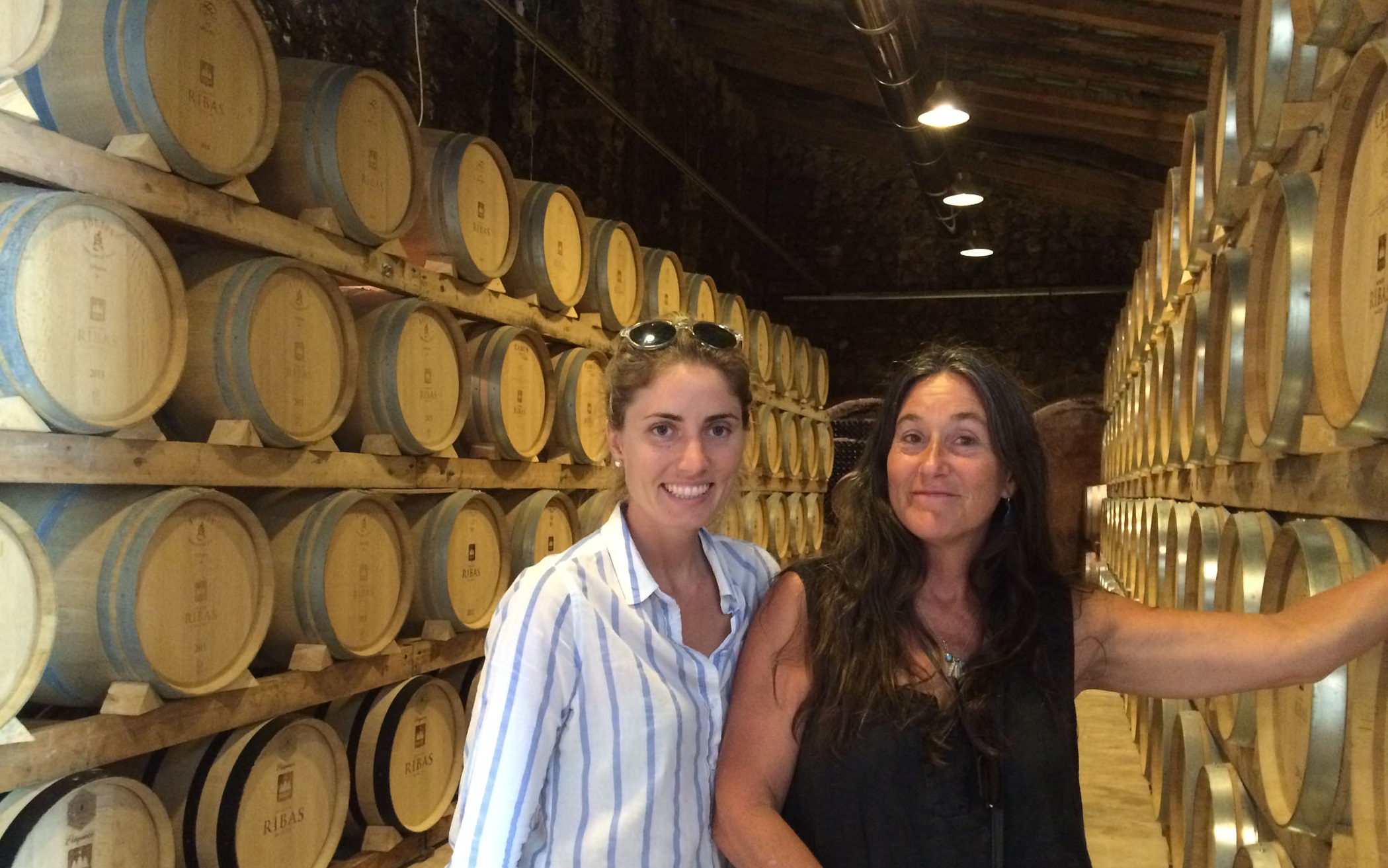
Ribas tasting

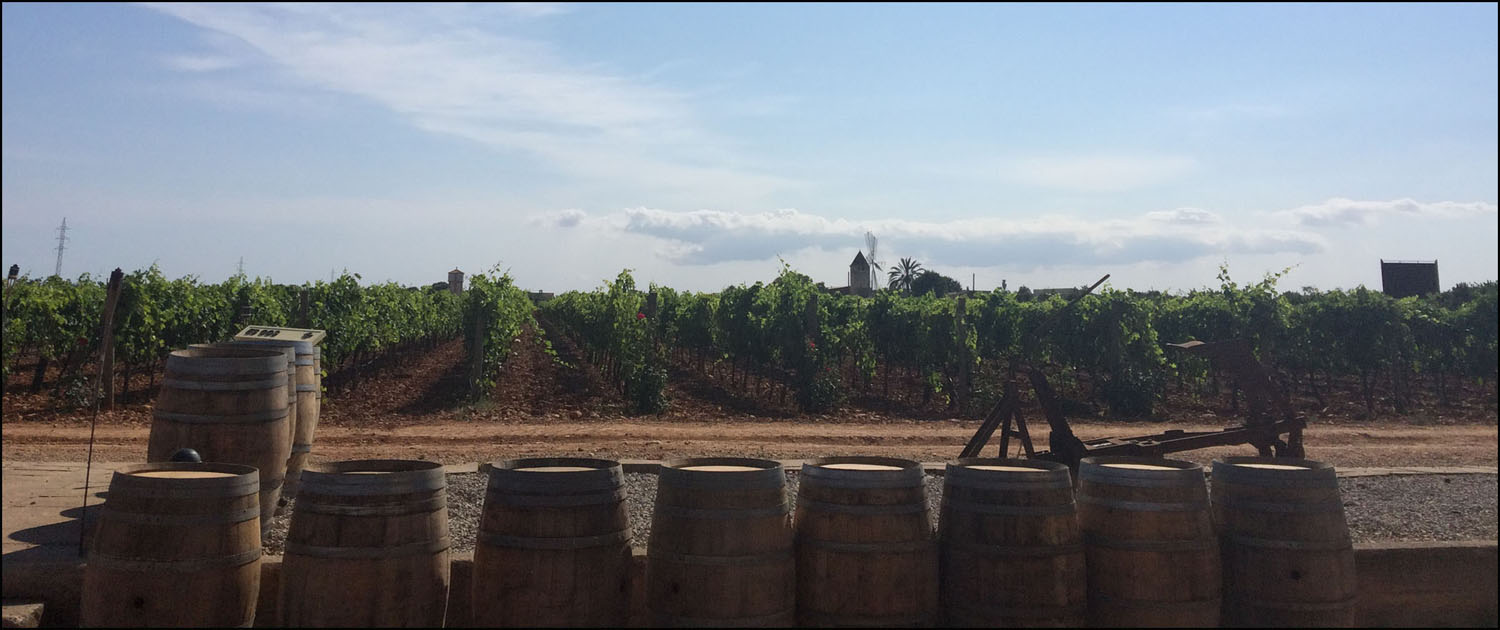
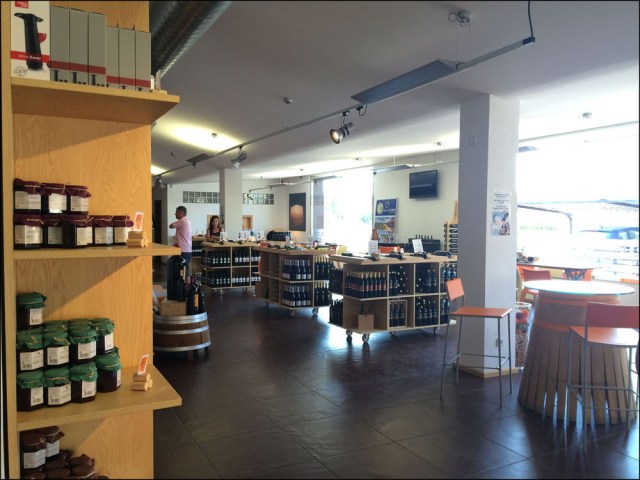
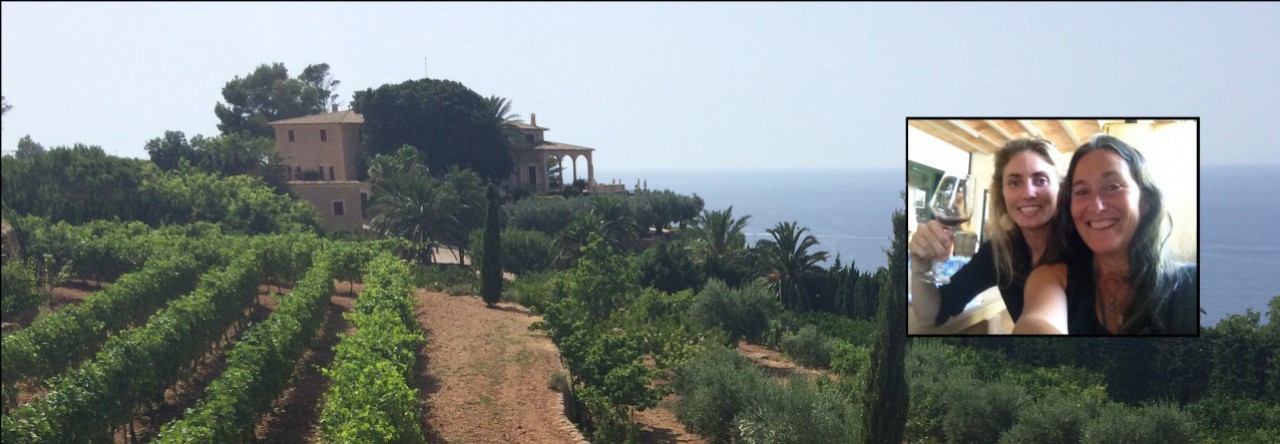
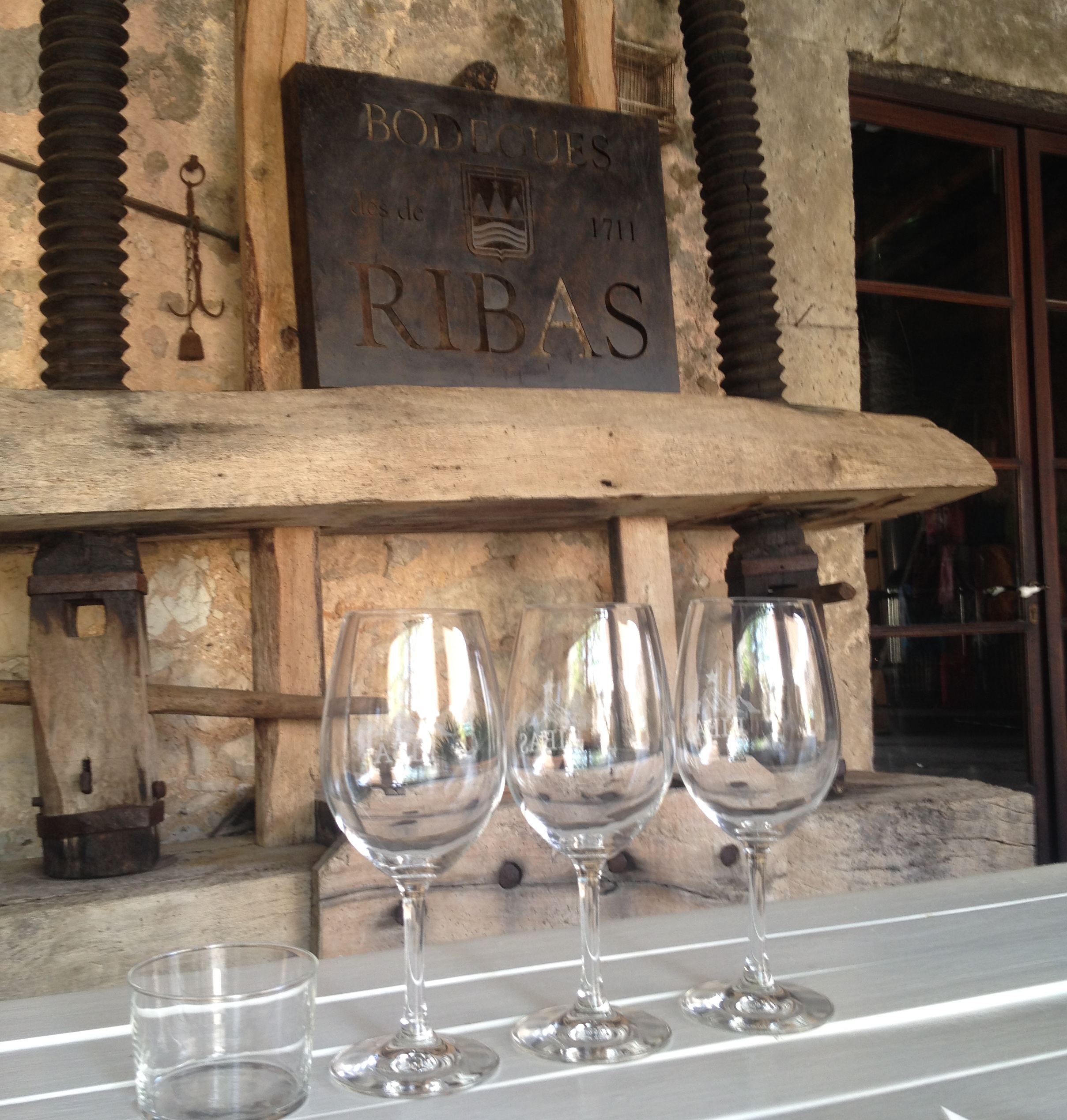
Wine tasting at Bodega Ribas is really like going over to a good family friends’ place. It is a loving and welcoming environment. Even though it is one of the oldest wineries on the island, you feel their desire to evolve with the times and keep current. It is a wonderful juxtaposition. They are driven to perfection and dedicated to the Mallorcan authentic grapes. A must on the Mallorcan Wine Trail!


#1
Ribas Blanc 2014
Grapes: Prensal Blanc 87%
Viognier 13%
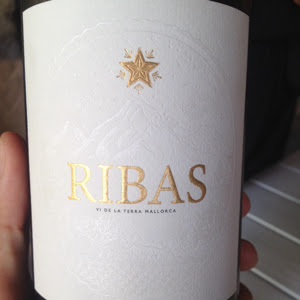
Ribas Blanc

Comment:
Tawnee: This is a beautiful colored white-fresh, delicate and clean. It is summer sunshine in a glass. It is a great combination of sweetness and citrus flavors, perfect for sipping on the patio while watching the kids or for combining with a great summer lunch of rice and fish.

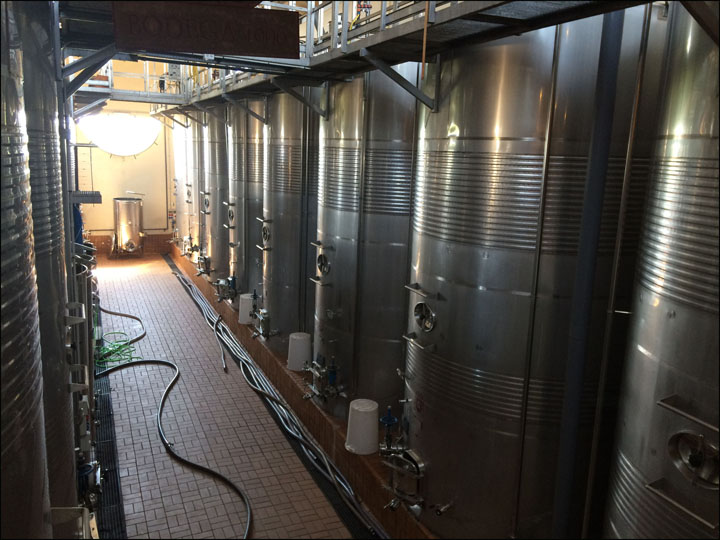
Merie: The Ribas 2014 is a fresh, light, clean and crisp young white wine. The grapes are harvested by hand, and then again hand culled for perfect quality. They are gently pressed at low pressure before a long fermentation in Stainless Steel tanks at low temperatures to retain the subtle aromas of these unique grapes. The wine is 12.5% alcohol in strength. Enologist Araceli helped us understand the aromas: Prensal Blanc gives a delicious white fruit and citrus nose. The taste was crisp, and white-fruit, like pear and citrus, with a slight desirable-bitterness. Our guide Sylvia told us the Viognier gives characteristic complexity and smoothness as a balance and complement to the bright Prensal Blanc.


#2
Sio Negre 2013
Grapes: Manto Negro 50%
Syrah 25%
Cabernet Sauvignon 15%
Merlot 10%
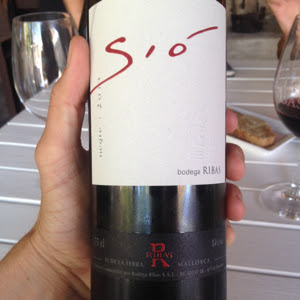
Ribas Sio

Comment:
Tawnee: There is something beautiful knowing that a bodega honors their heritage, and this line of wines is named after the grandmother of the family Ribas – Concepsio thus Sio! This was my favorite wine we tasted. A very bold wine, it fills the mouth as a deep rich smooth velvety carpet unrolls for royalty. There is a hint of sweetness that mixes with some spice that makes it a perfect compliment. This wine is a great combination for grilled meats either on the BBQ or on the open fire.

Merie: Next Sylvia poured the Sio Nerge 2013. What a marvelous wine! Sio is aged 12 months in Oak barrel: 50% in new French oak, and 50% in second year French oak after it has aged their Ribas de Cabrerra wine! These vintners really know how to delicately weave their magic! Sylvia opened a new bottle for us and it needed to breathe; but then as the tannins softened, a great, complex flavor developed. The aromas were of ripe black fruit and spices, and the flavors almost tobacco and later to chocolate; Stunning!  Araceli told us that in her view the 2013 was not quite ready – that the 2012 would be better now.


#3
Ribas Negre 2012
Grapes: Manto Negro 50%
Merlot 25%
Syrah 20%
Cabernet Sauvignon 5%
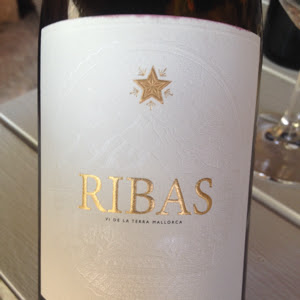
Ribas Negre

Comment:
Tawnee: The Ribas Negre 2012 has a beautiful deep red cherry color. The aromas match the color being full of red and black berries. This is an excellent stable wine that has just the right amount of tannins.  A great compliment to a long lunch. Great for combining with lamb chops or rabbit in the autumn or winter.

Merie: Last, Sylvia poured the Ribas Negre 2012. It is aged 12 months in oak barrel: 75% French oak and 25% American oak for the different flavors they provide. It has 14.5% alcohol strength. Again, these grapes are all hand picked and then further hand selected. The fermentation is at a moderate temperature to preserve the desired aromas of red fruit from the Manto Negro, and the smooth tannins of the other grapes. The aromas are rich but light, almost chocolate, oh I was stretching to figure this out! I DID know that the flavor of this wine is so good, robust but not forceful. A true gem. Aracelli tried a taste and quieted: as today is unbelievably hot, she felt it had over-opened in our glasses – but I thought it was perfect.


Note: Because it was sold out we didn’t get to taste their signature red: Ribas de Cabrera 2012 which is 55% Manto Negro, 40% Syrah, 5% Cabernet Sauvignon, and aged 12 mo in 100% new French oak.
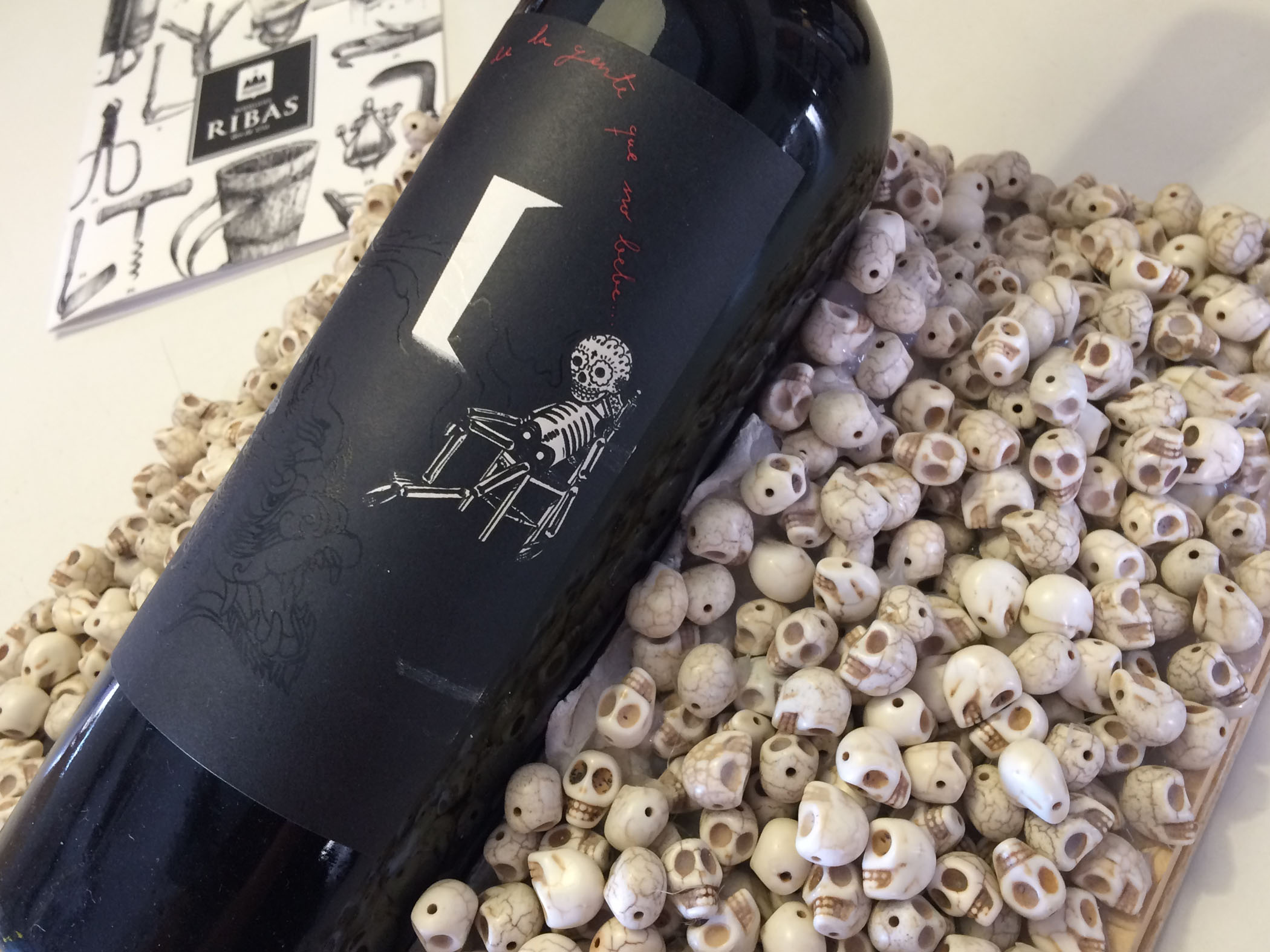

Desconfio de la gente

As we paid for the bottles of wine and T-shirts we had decided to buy, we noticed a special edition wine they made this year called: “Desconfio de la Gente que No Bebe.”   The English translation: “I Don’t Trust Anyone Who Doesn’t Drink.”   It has a unique label with a skeleton sitting in a chair and takes its inspiration from Humphrey Bogart.  We couldn’t resist. We splurged and decided to buy it. It is a first year vintage and is Ribas’ tribute to the Manto Negro grape:  95% Manto Negro and 5% other grapes. There has been a lot of controversy over the Manto Negro grape as it can be a difficult grape and some think it cannot stand alone.  Well, Ribas took the challenge and has created this rare wine. We look forward to uncorking it on a special occasion that will do honor to the passion and dedication to making this wine.

Ribas thank you
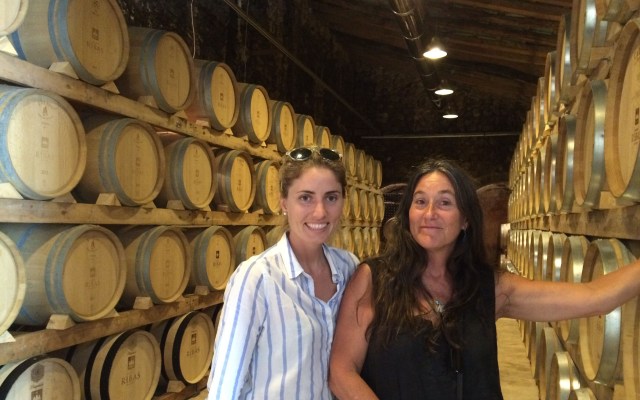
Thank You Sylvia and Araceli!

See Bodega Ribas Visit: Click Here

###   BODEGA RIBAS   ###
José Ferrer Winery Visit

“Deep rooted tradition, with modern innovation.”

Jose Ferrer Logowww.vinosferrer.com
Tel. +34 971 51 10 50
Binissalem, Mallorca Spain

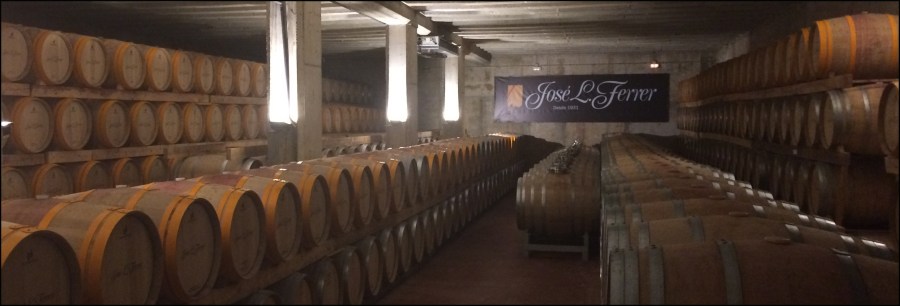
The José Ferrer Winery is still family owned and run since its founding in the 1930s, and is one of the largest and most organized wineries on the island. A smaller vintner told us the family is now island aristocracy. So well established, José Ferrer is one of the primary symbols of Mallorca for wine. They have made their name, reinvested their profits, are large and efficient, and have an inviting facility for welcoming people who come tour and taste. They make wines of all grades, from young table wines to select reserves, reasonably priced and available in stores everywhere. Their current production is 800,000-900,000. bottles per year. They are registered in the D.O. Binissalem and Vi de la Terra Mallorca, and have some vineyards registered in the association of Ecological Agricultural Products. Their wines are well known throughout Spain, and as Spanish export wine. At their stylish winery in Binissalem, they offer many levels of tours and tastings.

Jose Ferrer grapes

Jose Ferrer_6-24-15_#8

We showed up without a reservation, and overheard the tour guide Miguel tell the people in front of us that there was a tour about to leave; but it was a closed tour, pre-booked by a small group and not open to the public. We wandered away, looking at the vast display room, and the tour left without us. A cheerful employee came up and asked if she could help us. We inquired about the next tour, and she immediately lead us to Miguel, they spoke in Mallorquin, and we joined Miguel’s closed tour that had just begun! Another example of the nice way even large island businesses can be personal! We followed bursting with questions, but not wanting to dominate the tour that we were so lucky to get on…

Jose Ferrer_6-24-15_#11

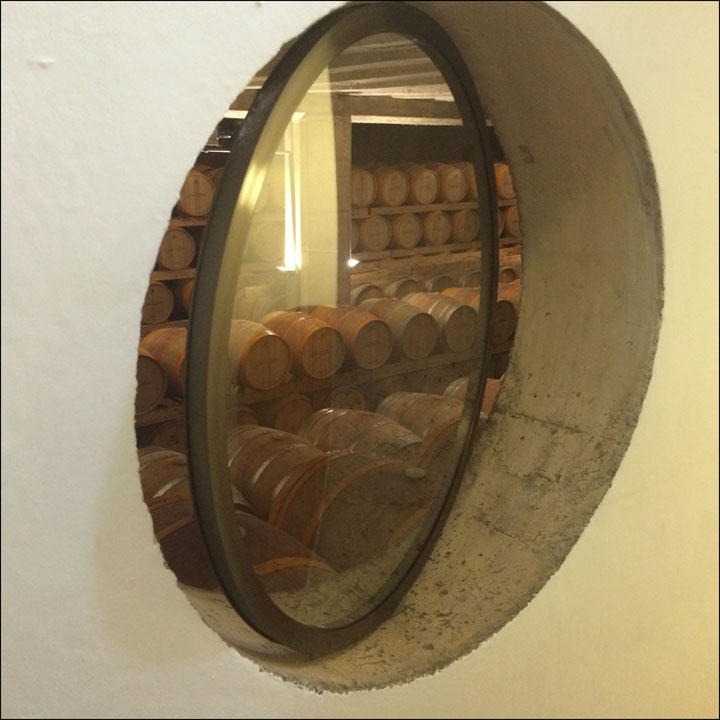
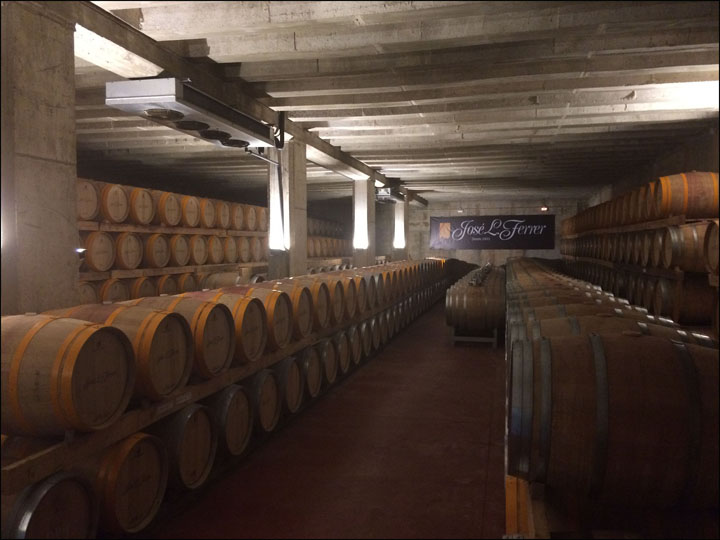
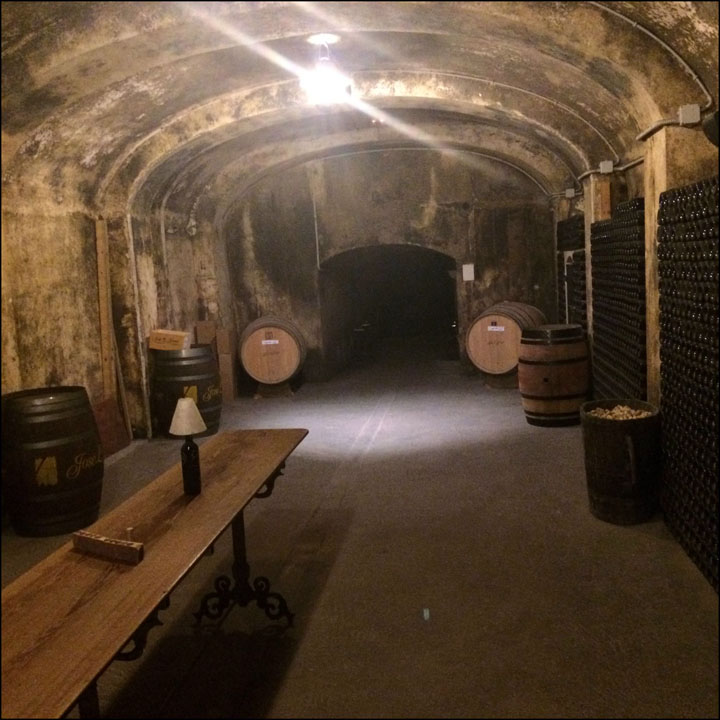
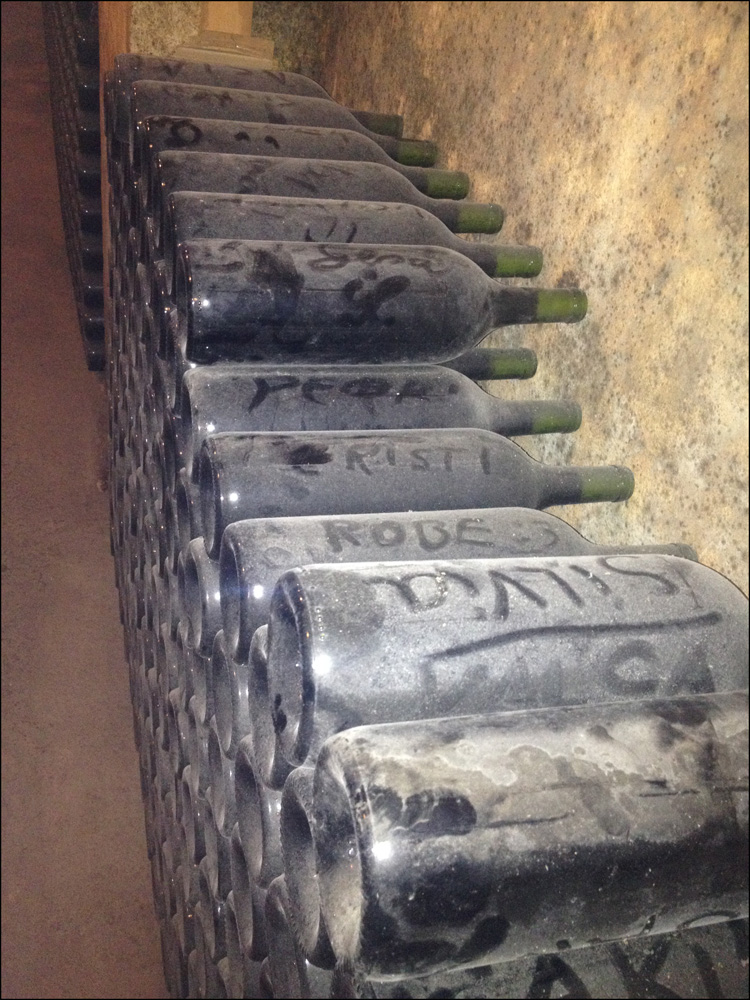
In fact, the tour was fairly formal. First, we were shown the original bodega area, with lovely old fermentation tanks painted red with a product that seals out oxygen. Next we were taken upstairs to see the contrasting enormous stainless-steel fermenting tanks now in use since the bodega’s 1990s upgrade and remodel. Their size was astonishing; we were on the second story and they still towered above us! We then toured the clean and efficient bottling plant; then on to the gorgeous old original cellars that are still in use. The main cellar is a vast room and beautifully lit. Miguel mentioned that there was a basement with more barrels below, not surprising because of the sheer volume of their production; their website says they have 2000 barrels in use!

Jose Ferrer_6-24-15_#12

Here we learned that at José Ferrer, if they age a wine in oak, they generally age in bottle the same amount of time. All wines ferment first in the stainless steel tanks. Fermentation stops when they lower the temperatures, which kills the yeasts, after which time the sediments are removed. They stop the fermentation of their red wines as soon as they separate it from the skins. And the local Manto Negro varietal is the red grape they use most, by choice and in keeping with DO Binissalem requirements.

Jose Ferrer_6-24-15_#13
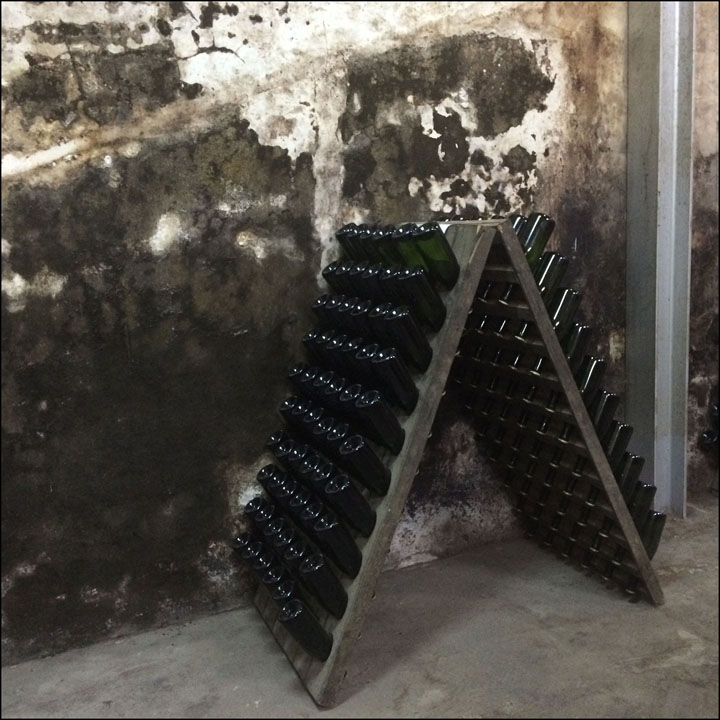
After seeing the attractive new climate-controlled barrel rooms, we passed to where the wine was aging in bottles. Here we were told that José Ferrer makes one of the only Cavas, on the island.  So you know, Cava is the lovely name for Spanish sparkling wine.

Jose Ferrer Cava

It can’t be called champagne because the name “Champagne” is a Designation of Origin that can’t be used anywhere outside of Champagne, France. Anyway, at José Ferrer, the Cava never goes to oak, it goes straight from stainless to bottle. It is a coupage of Prensal Blanc (aka Moll), Muscat & Parellada grapes. Ok, we learned “Coupage” is a term for the blending of wines to create a new wine that is intended to be better than any of its parts alone.

Jose Ferrer tasting room
The tour moved on to a beautiful tasting room with magnum bottles lining both sides and a gorgeous long wooden table in the middle. We were told that they do private tastings in that room, but for bigger groups. We would have been delighted if we could have stayed and tasted there, the ambiance was that of Spanish Knights meeting around the table in preparation for victory.

Jose Ferrer Magnum Bottles
Gesturing to all the bottles, Miguel told us there are multiple lines of wine at José Ferrer, each include whites, rosés, and reds:

  1. José L Ferrer
    Traditional wines made the same way since their beginning in 1931
  2. Veritas
    Innovations and newer trends
  3. Dues
    Blends of 1 each Mallorcan and foreign grape varietals
  4. Pedra de Binissalem
    certified organic wines
  5. Special Editions

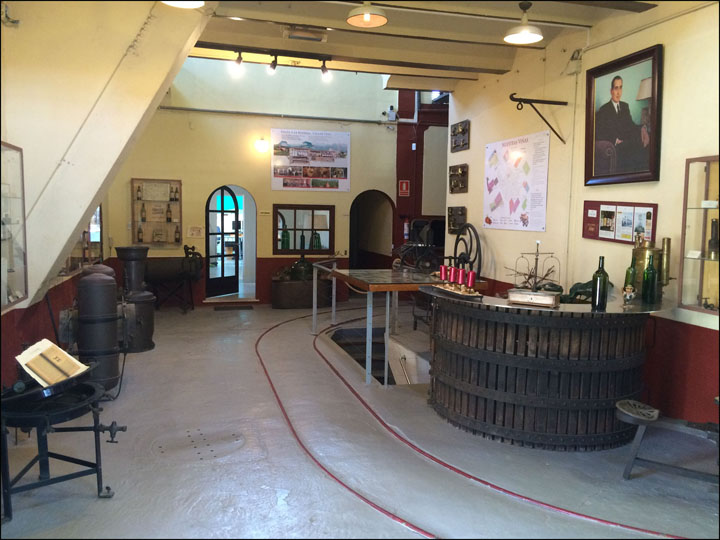
Back upstairs we saw rail tracks around the stairway. We were told that the rail used to come right through José Ferrer to ship their wine across Mallorca and to the island ports destined for Europe. Clearly it is one of the biggest wineries on the island, and rich in local history!

Jose Ferrer_6-24-15_#9

After the very interesting tour, Miguel stayed with us and we continued our talk and started our personal tasting.  Perhaps our enthusiasm and true interest in wine opens Cellar doors for us!

Jose Ferrer_6-24-15_#5
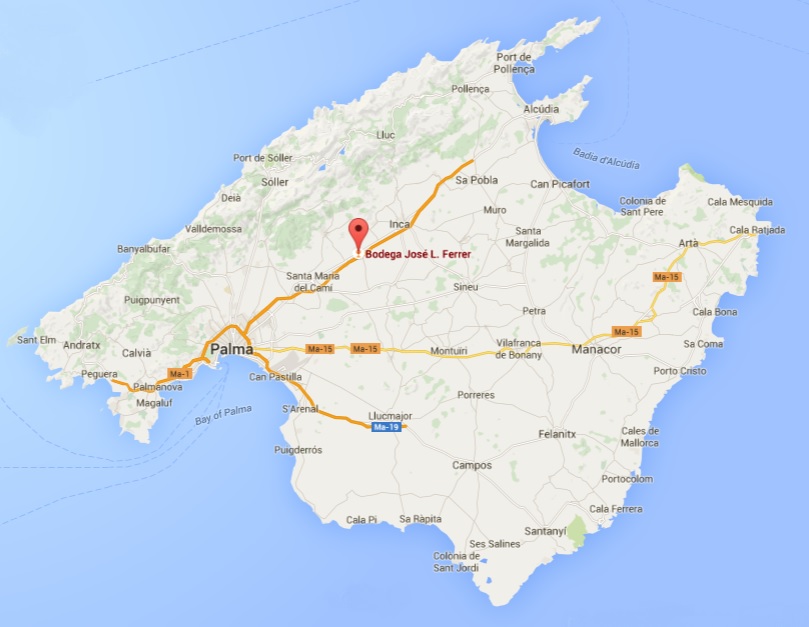
Jose Ferrer MapHow to get there:
From the Highway Palma-Inca, take the exit for Alaro/Binissalem and at the roundabout go in direction Binisalem, which is right. José Ferrer Winery is on the main road on the right hand side. There are big signs and a parking lot. You cannot miss it!

See Wines Tasted at José Ferrer: Click Here

### JOSÉ FERRER ###
Es Verger Winery Visit

“Hidden away in a mountain valley, this precious jewel is worth every second spent searching for it.”

Es Verger Logo
http://www.esverger.es
Esporles, Mallorca Spain

The award winning Es Verger is a small, privately owned and run boutique winery. They have 7 hectares of vineyards on this magical mountain property, and all production is done on site.  Originally planted in 1995, the first wines went to market in 2001. They produce approximately 15,000 bottles per year; their wine is certified organic, and sold primarily to an international market and fine local restaurants. They produce 3 reds, a rosé, and a very special sweet white.

Bodega Es Verger Vineyard

So, after we left Celler Son Vives, we called Es Verger to see if they were open, since we had to drive through Esporles anyway to get out of the mountains. Friday night – 5:30 – what are the chances? A man answers the phone “Sure, come on over… I’m here.” And we are off to the next Winery!

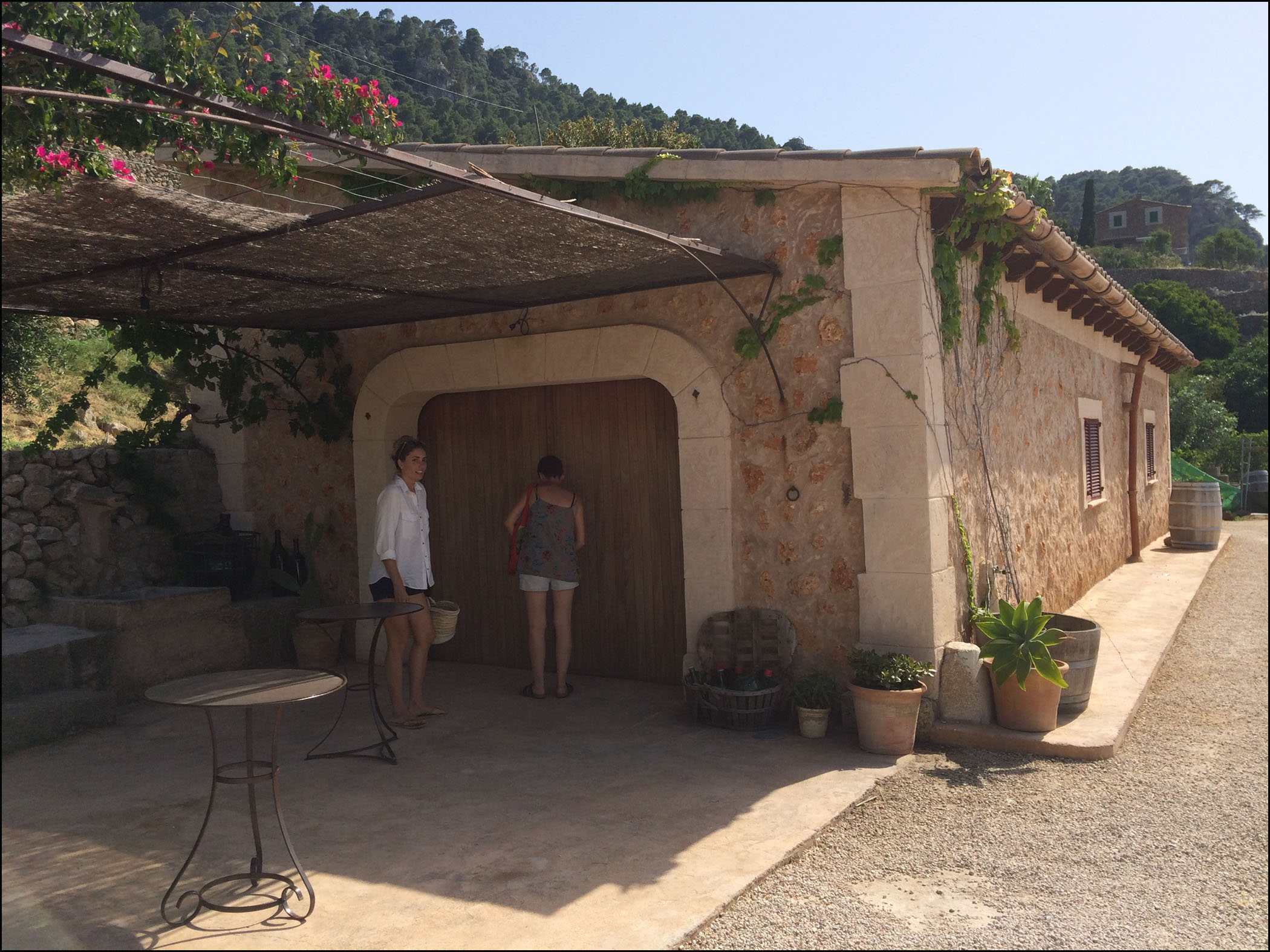
Es Verger is situated way up in the Tramuntana hills above Esporles, accessed only by a small, beautiful, and winding road with hidden or invisible street signs. After a few more phone calls – in Spanish of course – we get directions by landmark: “In direction Palma, third right after the plaza, climb, wind, until the big tree in the middle of the road… then…” Unsure if we were on the right road the entire time… looking at the clock and thinking perhaps we don’t have time for this… and then, 4.5km winding through the mountain… there he is – the man on the other end of the phone – waving us down to stop at his gorgeous stone walled vineyard.  It felt like we were in a summer dream…

Bodega Es Verger bodega

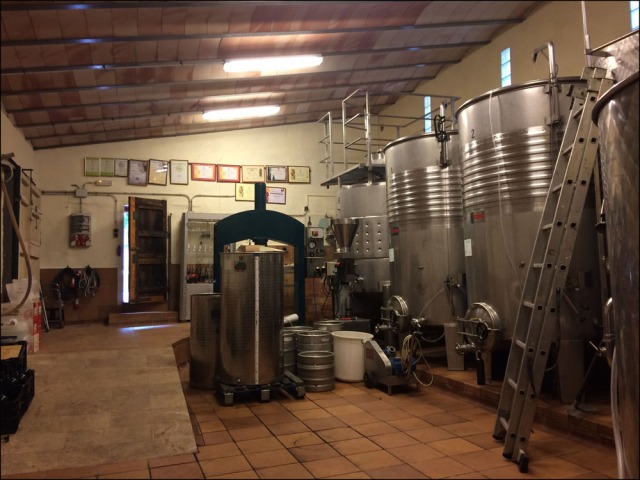
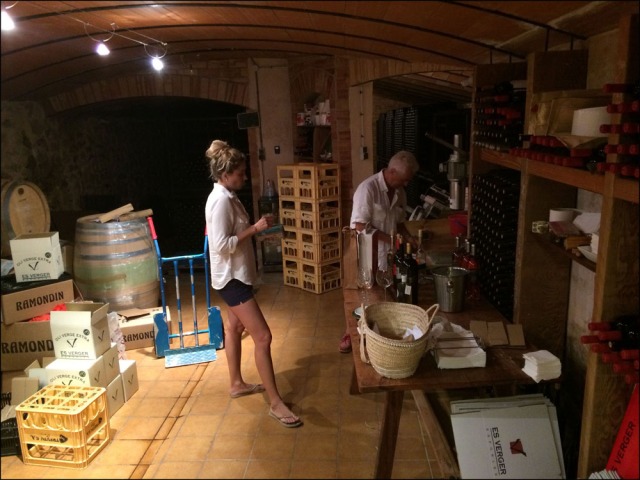
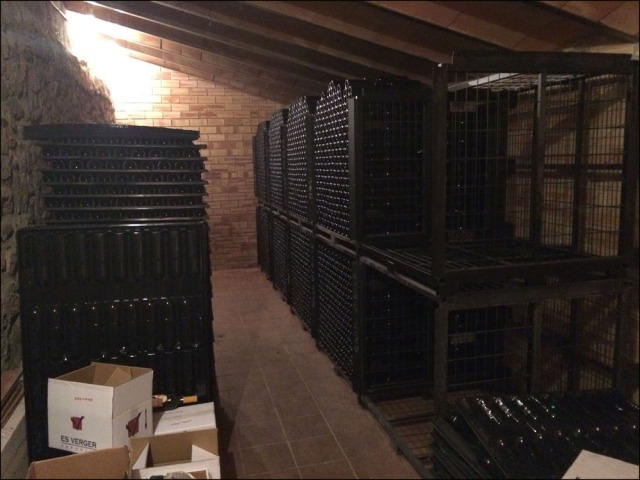
Miguel, the owner and vintner, welcomed us onto his property through his stone pillared gate. Lean, tan, white haired and wearing shorts and a loose, pressed white cotton shirt, he walked us past his beautiful vine covered home amidst gentle sounds of young voices and tapping earthen kitchenware, and to the adjoining Bodega. Inside, the cool air greeted us, and the now familiar steel fermenting tanks lined one wall as we passed through to the tasting area. The first thing we notice were all the awards and certificates that are proudly, yet discretely, framed on the wall. For some strange reason, this did not mean anything to us, and we had no expectations before the tasting. Surrounded by maturing bottles, and speaking to us only in Spanish, Miguel brought out 5 bottles of wine, two glasses, and an elegant small bottle of light virgin olive oil.

Bodega Es Verger tasting

Pouring the first taste, Miguel starts telling us about his wine and how he makes it. He started the vineyard out of passion and interest, and only wants to make good wine. Producing around 15,000 bottles per year, they are mostly exported, or sold in high-class restaurants on the island and to private clients. After the first taste we love it! It is clear that this is his passion and that he makes the wine that he wants to drink. While we tasted, his daughters appeared, earnest and beaming, bringing rock salt and sliced rustic bread to frame the home pressed oil that is also for sale. The oil was lovely, light and delicate, a very welcome addition to the tasting and delicious! We tried four of the five bottles of wine; the only one we didn’t try is the Pinot Noir, because of demand it has sold out.

Bodega Es Verger Bottles

Please see our tasting notes for more detail on the wines.

Trying to let Miguel get back to his family, we asked him to show us his vineyards on the way back to our car. We walked along the stunningly healthy vines planted carefully in their lines, all certified and organically tended. Miguel explained that they plant their rows farther apart than standard because of the mountainous terrain, and the sun and air between the rows largely prevents disease. He told us more sun produces thicker skin, thus more flavor and tannins, becoming full bodied in fermentation.  Tannins are textural, and the perfect astringency in the mouth seems to make a wine ‘taste dry.’   8-10 days steeping with the skins creates the flavor; the ripe inside fruit providing the water and sugar for successful fermentation.

All Es Verger wines are produced thoughtfully, with high personal standards, and are ecologically tended and certified organic = subject to the strict regulations of the Island Council’s CBPAE body (Consell Balear Regulador de l’Agricultura Ecològica).  These delicious wines deserve the recognition received, and our tasting visit was characteristic of the quality at Es Verger … a summer dream come true!

Open Sesame
Through the rabbit hole
Finding passion, friendship
A desire for perfection
A jewel of Mallorca

Es Verger MapHow to get there: When you come from Palma to Esporles, you will see a sign for Es Verger on the left. Take that turn and follow the road for 4.5km. It is a long winding road out of town. Keep driving until you get to a tree in the middle of the road. At this fork take the left where it says Es Verger.

See Wines Tasted at Es Verger: Click here

###  ES VERGER  ###

Celler Son Vives Visit

“Millionaire views paired with artisanal winemaking techniques”

Son Vives logo 1
Banyalbufar, Mallorca, Spain
www.sonvives.com
[Website in Castilian and Catalan only]

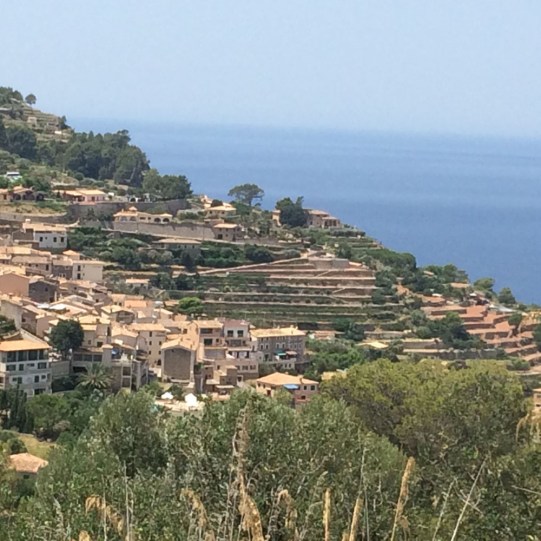
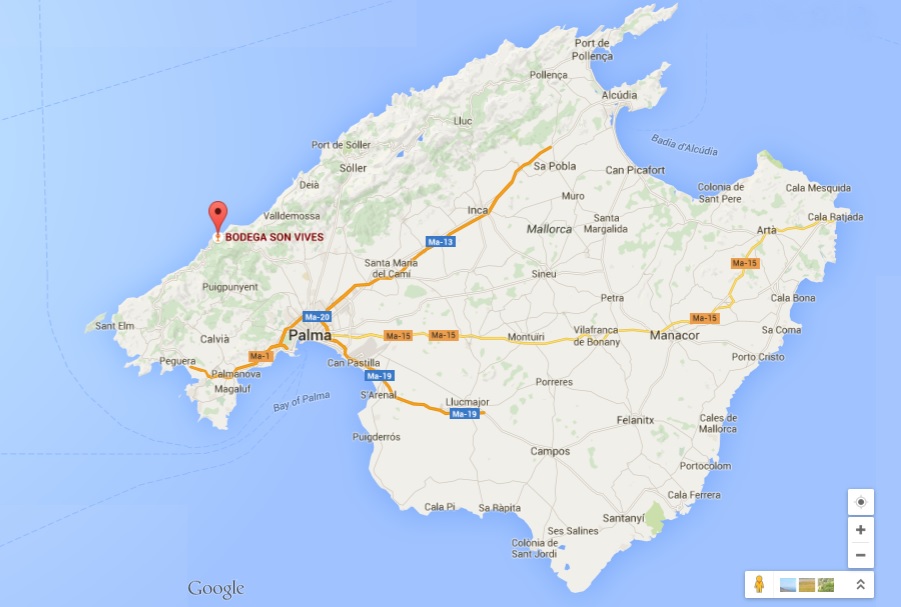
Featuring the rare native Malvasia grape, beautiful Celler Son Vives opened in 2003, and Mallorcan proprietor Toni Darder Alorda answers the phone himself, in Spanish – because as of this writing the main number for this Tasting Room is his cell phone!  A small winery, Son Vives produces approximately 15,000. bottles each year, with four labels. They distribute mostly to restaurants on the island, and to select retail stores in the lovely capital city of Palma. The location and views at Son Vives are stunning, and the coastal climate ideal for the rare Malvasia grape which is the signature of all Banyalbufar wineries, and their reason for existing in this unique spot.

Bodega Son Vives

Mariona was just locking the gate when we pulled up at 5:00, and although she had a fair drive home to Palma, she readily agreed to reopen the tasting room for us. We walked together along a broad terrace amidst olive trees, lavender bunches, and amazing views of the terraced coast and azure sea, to a small outside counter-style tasting bar where Mariona poured from inside the shady Bodega. Tasting room ambiance just doesn’t get better than this!

Bodega Son Vives_7-3-15_#5

We tried 1 mono variety, 100% Malvasia of course, and 2 blends. Sadly, we were not able to tour the bodega production area because of how late we were. However, the tasting bar is on a lovely veranda, which overlooks the Mediterranean, and the views are exquisitely beautiful! In fact, it overlooks the gorgeous Celler Ca’n Pico estate, and if we didn’t know better, we would have thought those vines belonged to Son Vives. As Mariona poured, we noticed a menu on the wall showing that they can make Pa amb Oli here (bread & olive oil with sliced meats or cheeses) to pair with their wines. We’d highly recommend that, but book in advance. Or bring your own tasting-complementary picnic for the bottle you’ll want to buy here after tasting! The tasting area is right off the ‘main’ road, but you feel like a millionaire enjoying these wines with a view.  Combining a lunchtime tasting here on the veranda with an afternoon tasting at Ca’n Pico would make for a great day!

Banyalbufar View

As we sipped their three tasting wines, we learned their property always had vineyards which were for family consumption. In 2003 the family transitioned to commercial production without losing the artisanal techniques, including hand picking the maturing Malvasia grapes.

Celler Son Vives is part of the Island group Vi de la Terra Serra de Tramuntana which is comprised of 18 municipalities in the protected UNESCO World Heritage Serra de Tramuntana, reaching from Cap de Formentor to Andratx.  It is characterized by the famous stone “bancales” which are agricultural terraces mostly made during the Moorish occupation which lasted approximately 500 years from the 700s to 1200s AD. Built of local stone and rich soil, the terraces prevent soil erosion and allow the Malvasia vine roots to grow deep in well draining guarded soil. The North-facing coast offers maximum sun time with cooler temperatures, but it is more difficult to pick and creates differing ripening times – therefore requiring a lot of individual care!

Bodega Son Vives bottles

While Celler Son Vives grows their Malvasia in this vineyard, they also make two blends, a white and a red, and those grapes are brought here for production from the hotter and dryer central island plain. Please see the tasting notes for more details on that!

Doors closing
Hearts opening
Bottles cracked
Lips smacked
Gorgeous

Mariona was very knowledge about the wines, and we would have enjoyed touring the production areas and asking her more questions about their history and blends. However, we were very pleased with the kindness she showed us so late on a Friday evening!

We will have to return again and taste and tour with more time!

BanyalbufarMain Street, Banyalbufar

How to get there:Son Vives Map
As you leave Banyalbufar heading West in direction Estellencs you will see a sign for a parking lot on the right. You can park there and walk up or continue driving 10m and will see the sign of Son Vives from the road with 3 or 4 parking spaces out front. Very easy to find.

See Wines Tasted at Son Vives: Click here

### Celler Son Vives ###

Bodega Son Bordils Visit

“Wine with character, consistently good and modestly priced”

Finca Son Bordils was the first Winery we visited, and we both hold it as one of our all time favorite wine tasting experiences because of how much fun we had, how much we learned, and the door that it opened to a change in our lives.

Note: This blog entry is actually a fusion of two visits, one in April of 2014 when the magic first happened, the other in the summer of 2015 when we were on our personal Mallorcan Wine Trail and we had to go back with our new knowledge and further questions!

logo son bordilswww.sonbordils.com
Inca, Mallorca, Spain

Son Bordils Vinyard

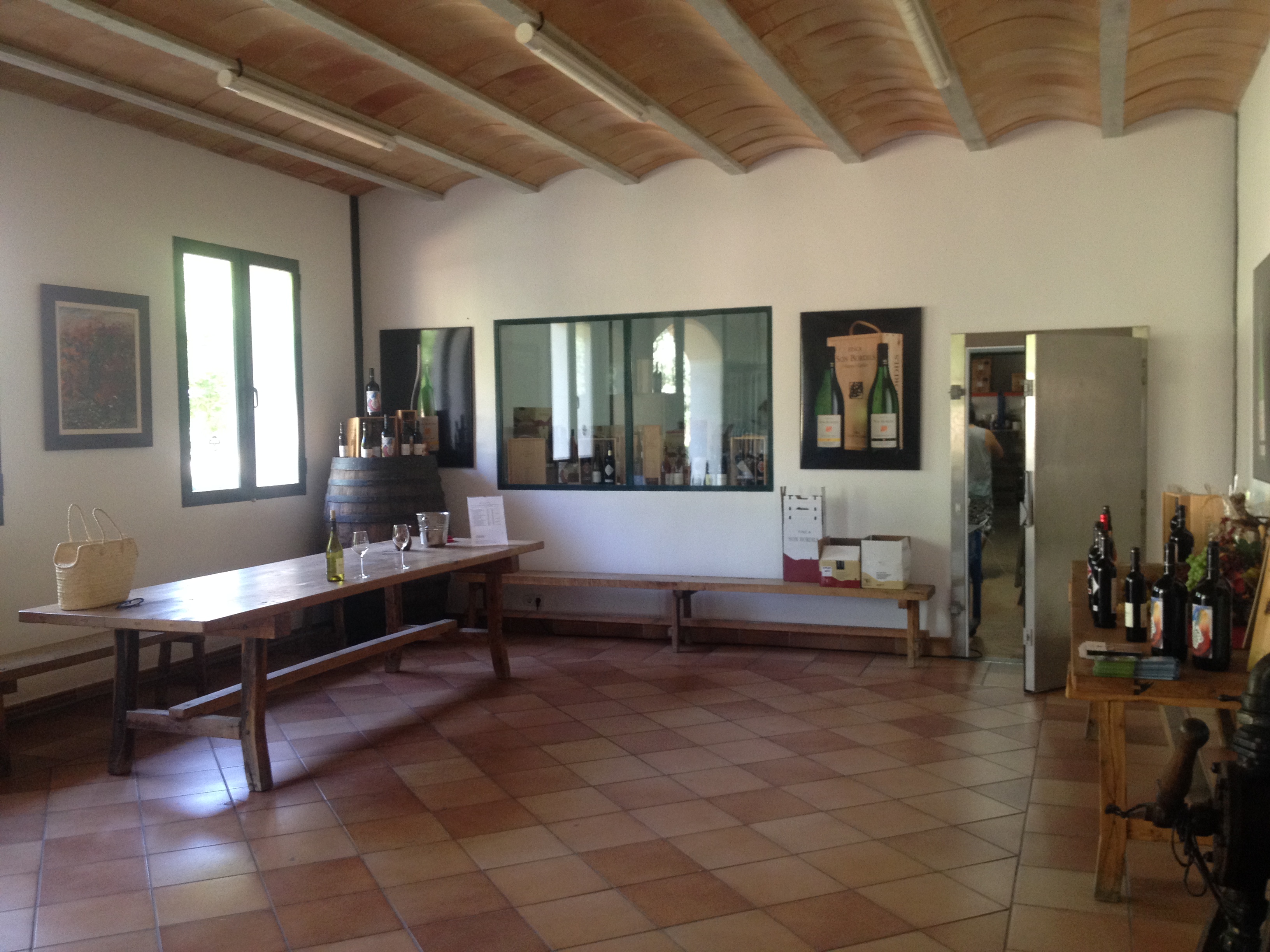
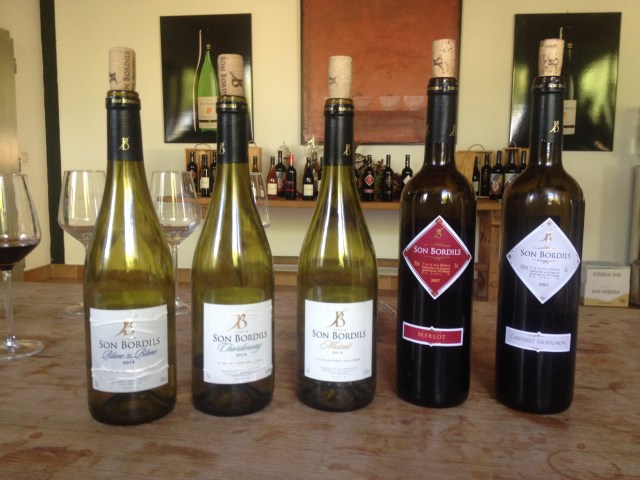
April 2014: The winery Finca Son Bordils, perched in the rolling mid-island plains outside of Inca, might be the oldest winery on the island – there is some debate. Founded in 1433 by D. Joan Bordils i Pont, the current owners are Ramón and Pedro Coll, and the Vineyard has been in their family for over 100 years. After the grape phylloxera plague, the family completely replanted 34 hectares of land with Chardonnay, Muscat, Prensal Blanc, Merlot, Cabernet, Syrah, Callet, and Manto Negro grapes, and built this beautiful and modern winery in the center, where we arrived for our tasting. They currently produce 150,000-200,000 liters/bottles per year, and are members of the Island organization Vi de la Terra Mallorca. These wines have character, and are consistently good and modestly priced.

26.07.15 067

When we arrived there, the marvelous owner Ramón Coll told us that unfortunately, the person who normally pours the tastings was out dealing with a personal matter. But as it happened, Jaume was there. He takes the Bordils wines to restaurants and pours for potential clients, and he kindly agreed to give us a tasting. It was the beginning of the serendipity and island hospitality that has been characteristic of our entire tasting experience and is part of what makes this wine region so marvelous to visit.

Mostly in Spanish we all got talking, and Jaume got pouring, and soon Jaume was telling us all about the history of wine on the islands, of trains from the interior island loaded with wine or grapes, going to the Cellars on the cooler coasts, and then out for export to mainland Spain and nearby France. He taught us about the phylloxera blight era in Europe and how Mallorca had almost 30 halcyon years when Mainland had the blight and Mallorca did not, and Mallorcan wines were in high demand and very lucrative. Sadly, phylloxera arrived in Mallorca in 1891 and devastated the island’s vineyards. He told us about the history of commerce in the Mediterranean, from when the Phoenicians were thought to have brought the first vines to the island in early BC, and wine cultivation began in earnest in Mallorca around 120 BC when Rome conquered Mallorca. We talked and tasted for what seemed like hours, enjoying unique wines from the back that are normally reserved for special clients: It was a Friday late afternoon, bottles were open which would be bad by Monday’s work day, so we enjoyed a generosity and friendship that might otherwise not have been available.

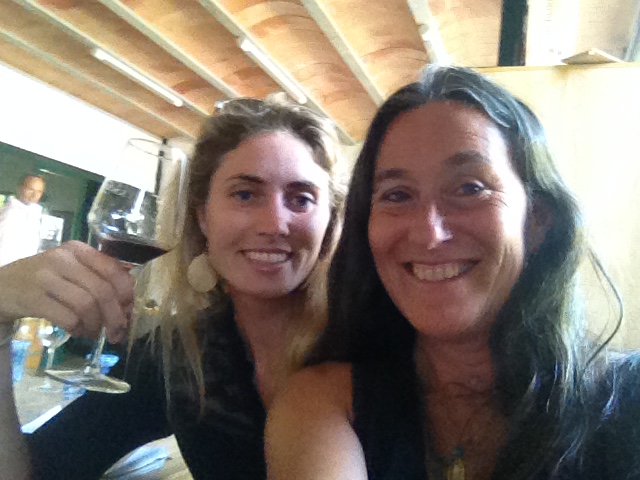
T at son bordils

So you know, Phylloxera are sap-sucking insects, originally native to North America and related to aphids. They infect the grape roots and leaves, ultimately restricting nutrients and water to the vines. At this time there is no cure, but the rootstock that came from North America when Europe was replanted is resistant. American vintners had been given clippings of the famous European grapes, and grafted them onto American grape rootstock, with the great success of American wine industry today. In a graced turn of events, after the European Phylloxera plague, the American vintners brought back clippings from those same grapes, and resistant rootstock, and Europe was able to replant it’s own varietals. Jaume told us that there were 33,000 hectors of grapes planted on the island before the phylloxera blight, and that there are around 1,500 now.

Basic timeline:

  • 1862 Phylloxera blight in France, spreading across Europe.
  • 1865 Wineries and vineyards in Mallorca in peak production.
  • 1891 The blight arrived in Mallorca and virtually all grapevines were killed.
  • 1990 Island wide replanting of grapes began.

Before we knew it, we had missed the opportunity to make Merie’s train! But, as kind fate would have it, Jaume was from the same town on the other side of the island, and he was headed home from work as soon as we were done! So off they went chatting happily in Spanish all the long drive home (fabulously challenging for Merie who is still learning!).


After that experience we were hooked, and the glorious idea of further self-educating and tasting at Mallorcan wineries was born.

26.07.15 083


July 2015: We went back to Son Bordils in order to taste their wines again with our newfound interest in self-education. It was late on a Friday afternoon like last time, an odd coincidence. This time owner Ramón Coll poured for us so his normal Tasting Staff could go home on time. He remembered us, and that he and Tawnee are Friends on Facebook after our last visit!

Wine Son Bordils

Ramón is an amazing teacher and wanting to help us learn. When we told him that we are on a mission to understand wines, the first thing he said is that temperature is critical when tasting. A wine does not taste the same from one temperature to another, and tasting is for understanding the true character of the wine; different from enjoying a glass of wine where it inevitably warms in the glass and opens like petals of flavors. Every time he took out a bottle from the cooler, or had one out on the table from a previous pour, he checked the temperature of the bottle with his hand to ensure that his wines were at their best! Pouring our first white, the Blanc de Raim Blanc of 100% Prensal Blanc grapes — see tasting notes, below — he told us that Bordils is the family name of the founder who came to Mallorca from Girona in Mainland Cataluña in the 1200s with Jaume 1st (James 1 the Conqueror, in Catalan: Jaume el Congueridor). This family brought vines with them and started their production of wine in the middle of the island.

26.07.15 087Click Here for details of: Wines Tasted

After only the first glass of white, Ramón said “You must see how it happens if you want to understand what is going on.” So, even though the bodega was at closing time on a Friday afternoon – he whisked us into working area to show us how it is all done. As we walked around the fermentation room, filled with shining steel tanks, he told us about the process. It has all to do with the yeast and sugar! There are two fermentation processes.  The first is called Primary Fermentation, which is the conversion of sugar to alcohol by the yeasts.  Secondary Fermentation (also known as malolactic fermentation) is when naturally tart malic acid is converted to lactic acid which is more mellow.  The yeasts come from the skin on outside of the grape. How much and the quality all depend on the land around it, the climate that year, and what you decide to put on your grapes. The yeast adds flavor to the wine and convert the sugars into alcohol, for every 17g of sugar= 1% alcohol. When all the sugar has been consumed you have a dry wine, not all consumed leaves what is known as residual sugars. He commented that this is one of the most difficult parts of the process, and sometimes the bodegas have to add yeast in the end to ensure that the whole process is finished to taste. Red wines generally ferment with seeds and skins to ensure color and tannins, generally whites are pressed then separated from the mash before fermentation.

26.07.15 074

They close at 6:00pm, and again it was after that – but the front doors were still unlocked and suddenly a family group of 15 German tourists filled the tasting area. We told Ramón that he should attend to them because we are only two, and we have many more questions! So back we went to the tasting room!

As we tasted, we talked about how the wines were made. One of the important things that we learned was about the labeling laws in the area. For instance, to put the name of a grape varietal on the bottle, say Merlot, it only needs to have 85% of the grape inside! We found this extremely Interesting as now we are going to try and find out who produces 100% Merlot, and who makes a “blend,” and how that might contribute to why sometimes we can’t identify a Merlot wine right off. Possibly this is more specifically important to the native grapes on Mallorca, as some are difficult to create strong mono-varietal wines from, and hence many Mallorcan winemakers create blends to get the colors and flavors they want. Looking forward to trying some Prensal Blanc, Manto Negro, and Callet mono varietals =).

The group of German tourists bought two cases. We were thankful because we are all about education right now and not bulk purchasing. We did buy two bottles before we left, but we felt like that serendipity group paid for Ramón’s staying late with us on a Friday night, AGAIN.

And we look forward to coming back and finishing that production facility tour someday!

map son bordilsHow to get there:
Leaving Inca direction Sineu it is 4.1 km on your right. It is also easily located as it is across the Inca-Sineu road from the train station Enllaç.

### Finca Son Bordils ###

See Wines Tasted at Son Bordils: Click here

### Bodega Son Bordils ###