José Ferrer Winery Visit

“Deep rooted tradition, with modern innovation.”

Jose Ferrer Logowww.vinosferrer.com
Tel. +34 971 51 10 50
Binissalem, Mallorca Spain

The José Ferrer Winery is still family owned and run since its founding in the 1930s, and is one of the largest and most organized wineries on the island. A smaller vintner told us the family is now island aristocracy. So well established, José Ferrer is one of the primary symbols of Mallorca for wine. They have made their name, reinvested their profits, are large and efficient, and have an inviting facility for welcoming people who come tour and taste. They make wines of all grades, from young table wines to select reserves, reasonably priced and available in stores everywhere. Their current production is 800,000-900,000. bottles per year. They are registered in the D.O. Binissalem and Vi de la Terra Mallorca, and have some vineyards registered in the association of Ecological Agricultural Products. Their wines are well known throughout Spain, and as Spanish export wine. At their stylish winery in Binissalem, they offer many levels of tours and tastings.
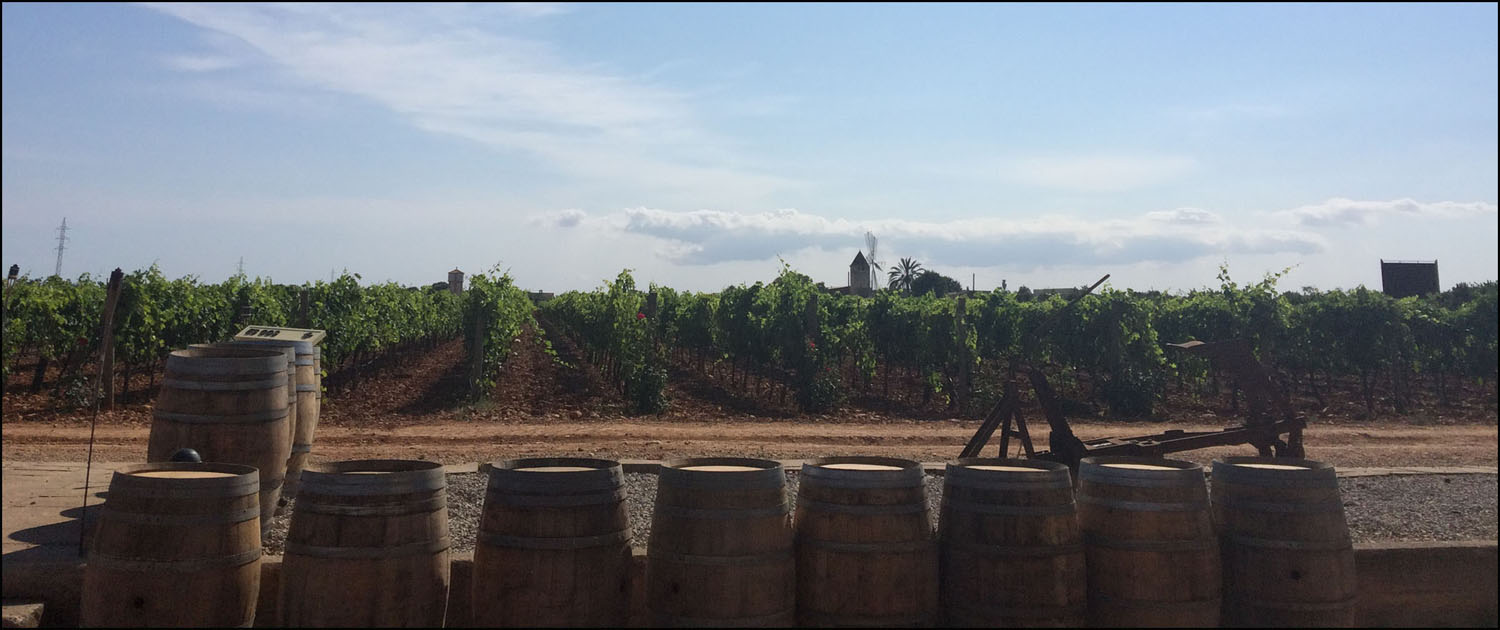
Jose Ferrer grapes

Jose Ferrer_6-24-15_#8

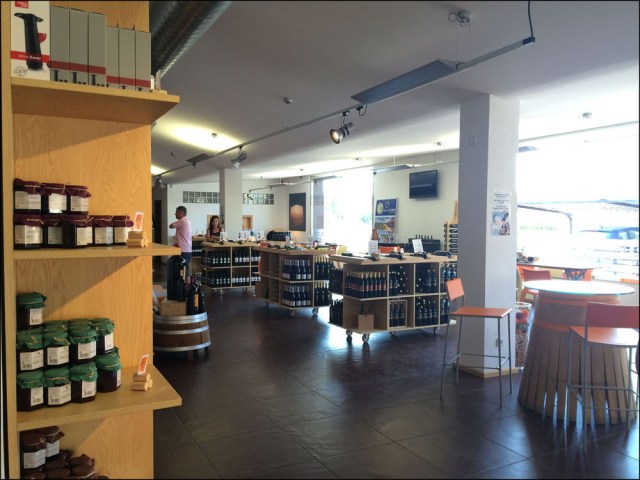
We showed up without a reservation, and overheard the tour guide Miguel tell the people in front of us that there was a tour about to leave; but it was a closed tour, pre-booked by a small group and not open to the public. We wandered away, looking at the vast display room, and the tour left without us. A cheerful employee came up and asked if she could help us. We inquired about the next tour, and she immediately lead us to Miguel, they spoke in Mallorquin, and we joined Miguel’s closed tour that had just begun! Another example of the nice way even large island businesses can be personal! We followed bursting with questions, but not wanting to dominate the tour that we were so lucky to get on…
Jose Ferrer_6-24-15_#11

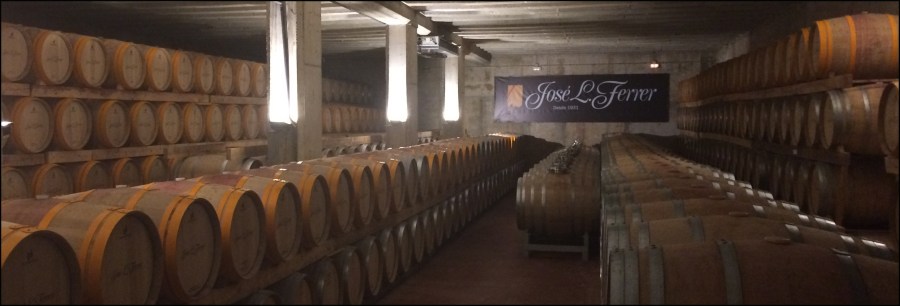
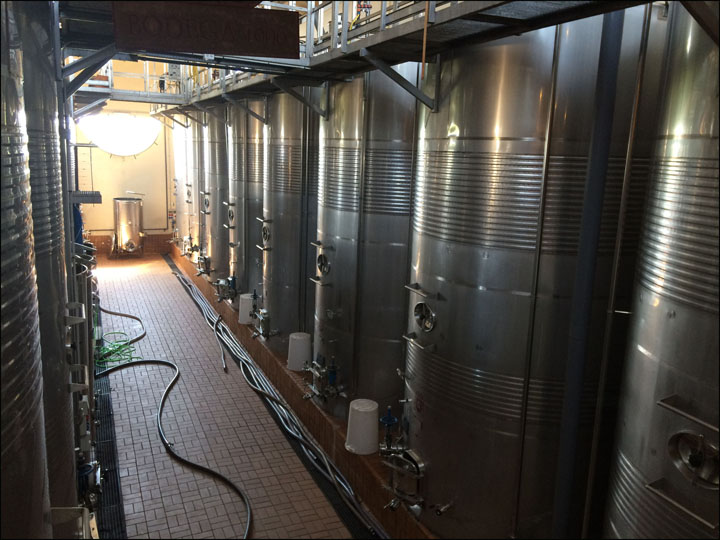
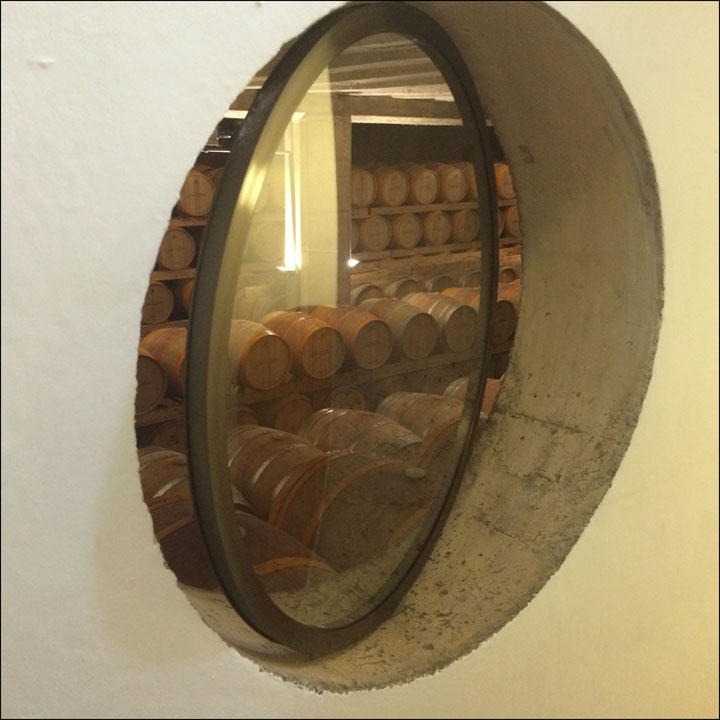
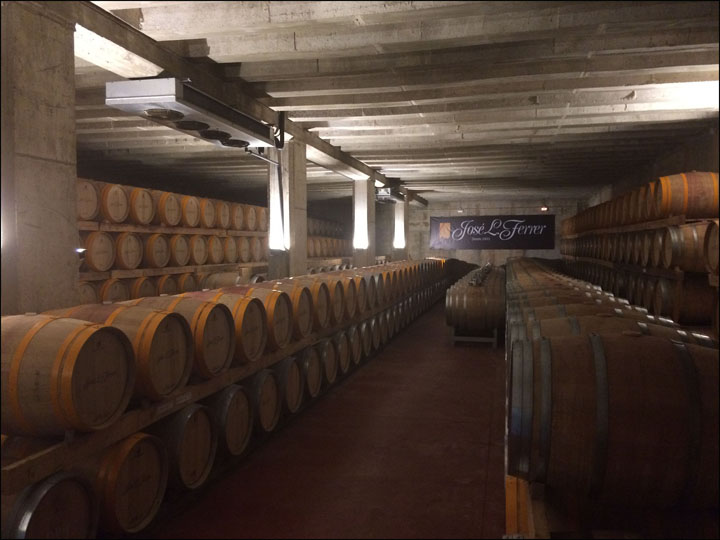
In fact, the tour was fairly formal. First, we were shown the original bodega area, with lovely old fermentation tanks painted red with a product that seals out oxygen. Next we were taken upstairs to see the contrasting enormous stainless-steel fermenting tanks now in use since the bodega’s 1990s upgrade and remodel. Their size was astonishing; we were on the second story and they still towered above us! We then toured the clean and efficient bottling plant; then on to the gorgeous old original cellars that are still in use. The main cellar is a vast room and beautifully lit. Miguel mentioned that there was a basement with more barrels below, not surprising because of the sheer volume of their production; their website says they have 2000 barrels in use!
Jose Ferrer_6-24-15_#12

Here we learned that at José Ferrer, if they age a wine in oak, they generally age in bottle the same amount of time. All wines ferment first in the stainless steel tanks. Fermentation stops when they lower the temperatures, which kills the yeasts, after which time the sediments are removed. They stop the fermentation of their red wines as soon as they separate it from the skins. And the local Manto Negro varietal is the red grape they use most, by choice and in keeping with DO Binissalem requirements.
Jose Ferrer_6-24-15_#13
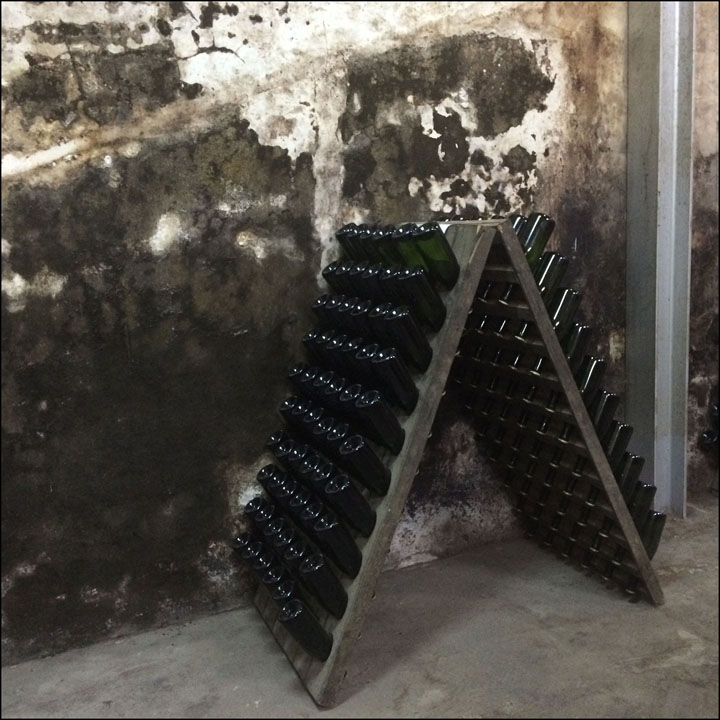
After seeing the attractive new climate-controlled barrel rooms, we passed to where the wine was aging in bottles. Here we were told that José Ferrer makes one of the only Cavas, on the island.  So you know, Cava is the lovely name for Spanish sparkling wine.
Jose Ferrer Cava

It can’t be called champagne because the name “Champagne” is a Designation of Origin that can’t be used anywhere outside of Champagne, France. Anyway, at José Ferrer, the Cava never goes to oak, it goes straight from stainless to bottle. It is a coupage of Prensal Blanc (aka Moll), Muscat & Parellada grapes. Ok, we learned “Coupage” is a term for the blending of wines to create a new wine that is intended to be better than any of its parts alone.
Jose Ferrer tasting room
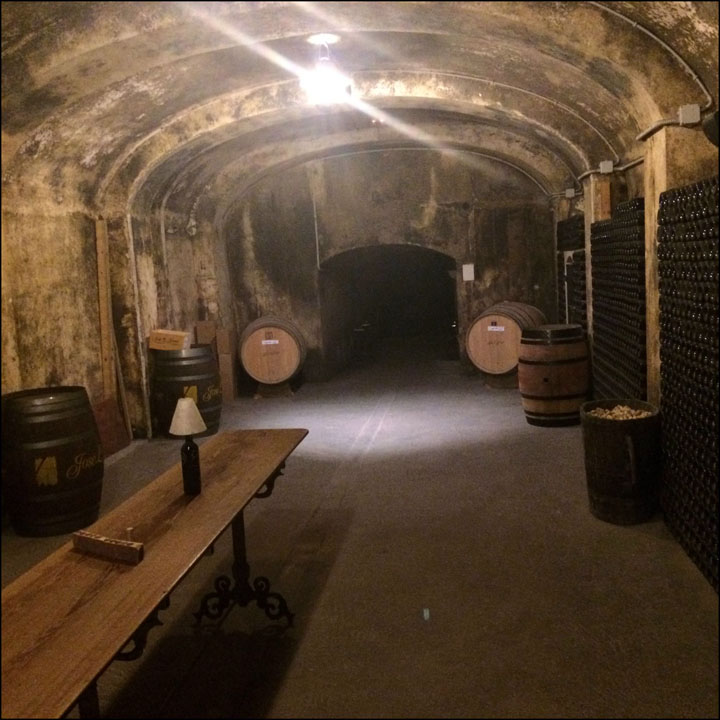
The tour moved on to a beautiful tasting room with magnum bottles lining both sides and a gorgeous long wooden table in the middle. We were told that they do private tastings in that room, but for bigger groups. We would have been delighted if we could have stayed and tasted there, the ambiance was that of Spanish Knights meeting around the table in preparation for victory.
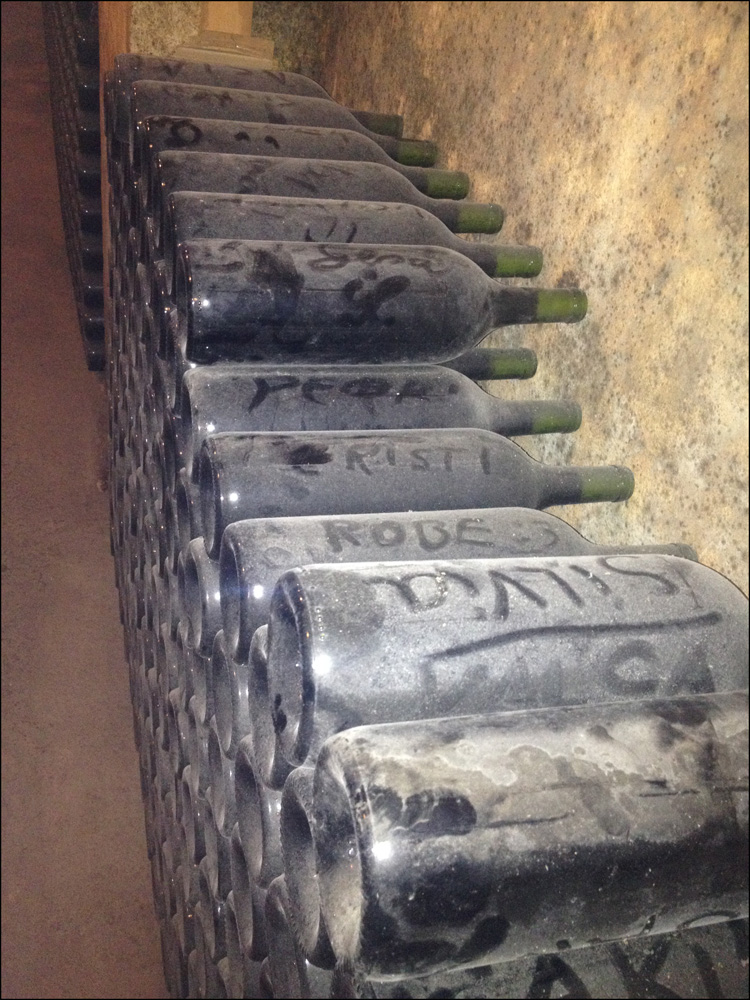
Jose Ferrer Magnum Bottles
Gesturing to all the bottles, Miguel told us there are multiple lines of wine at José Ferrer, each include whites, rosés, and reds:

  1. José L Ferrer
    Traditional wines made the same way since their beginning in 1931
  2. Veritas
    Innovations and newer trends
  3. Dues
    Blends of 1 each Mallorcan and foreign grape varietals
  4. Pedra de Binissalem
    certified organic wines
  5. Special Editions

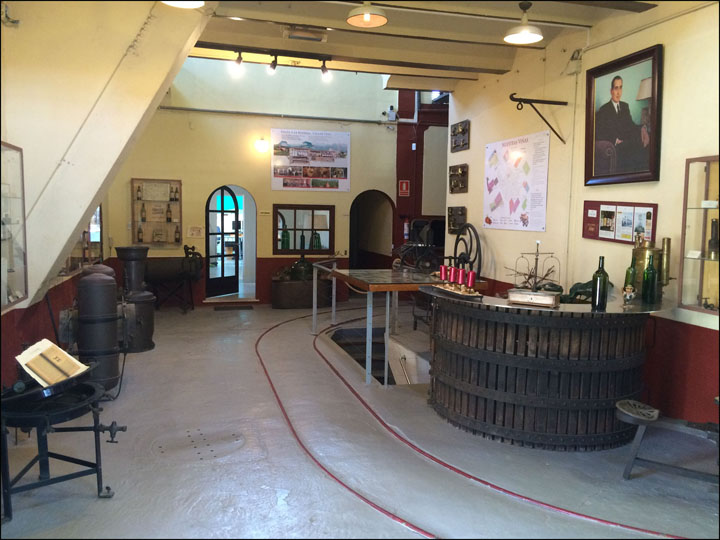
Back upstairs we saw rail tracks around the stairway. We were told that the rail used to come right through José Ferrer to ship their wine across Mallorca and to the island ports destined for Europe. Clearly it is one of the biggest wineries on the island, and rich in local history!
Jose Ferrer_6-24-15_#9

After the very interesting tour, Miguel stayed with us and we continued our talk and started our personal tasting.  Perhaps our enthusiasm and true interest in wine opens Cellar doors for us!
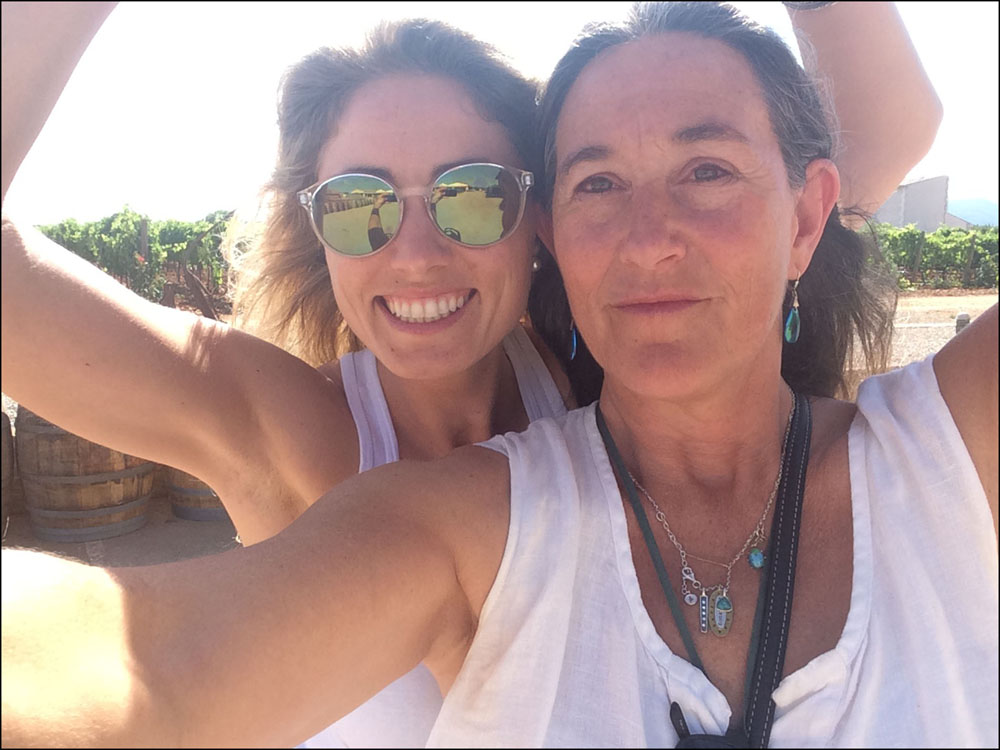
Jose Ferrer_6-24-15_#5
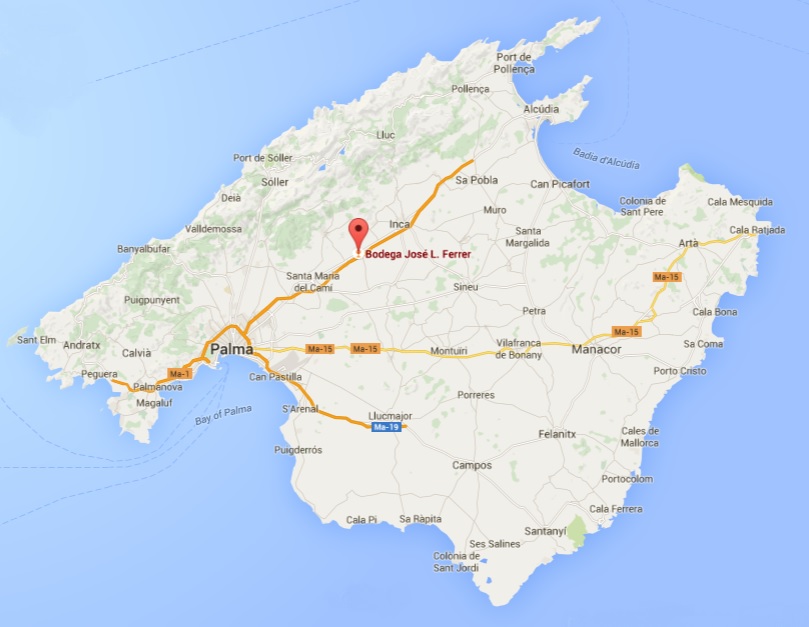
Jose Ferrer MapHow to get there:
From the Highway Palma-Inca, take the exit for Alaro/Binissalem and at the roundabout go in direction Binisalem, which is right. José Ferrer Winery is on the main road on the right hand side. There are big signs and a parking lot. You cannot miss it!

See Wines Tasted at José Ferrer: Click Here

### JOSÉ FERRER ###
José Ferrer Wine Tasting

Jose Ferrer Logo

Wines Tasted:

◊   3 Reds   ◊

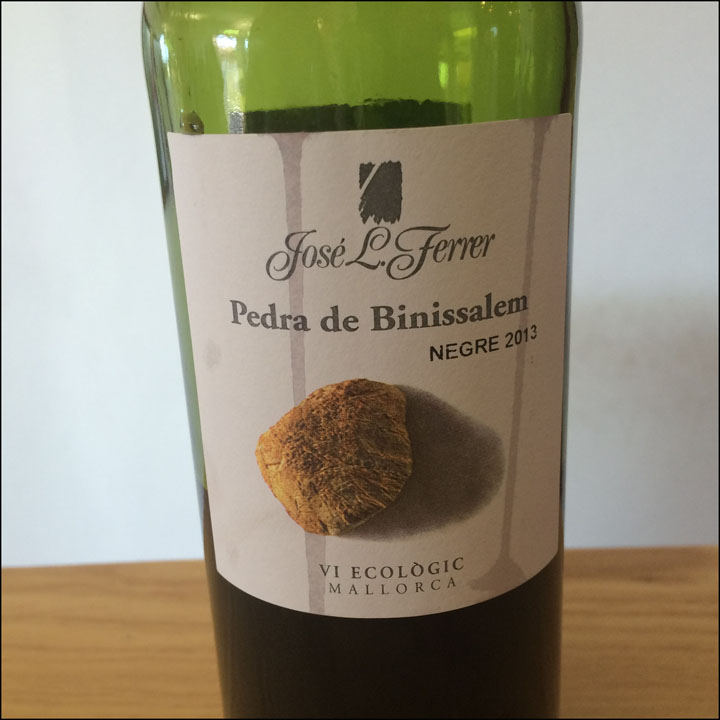
Pedra de Binissalem Negre 2013
Reserva Veritas 2007
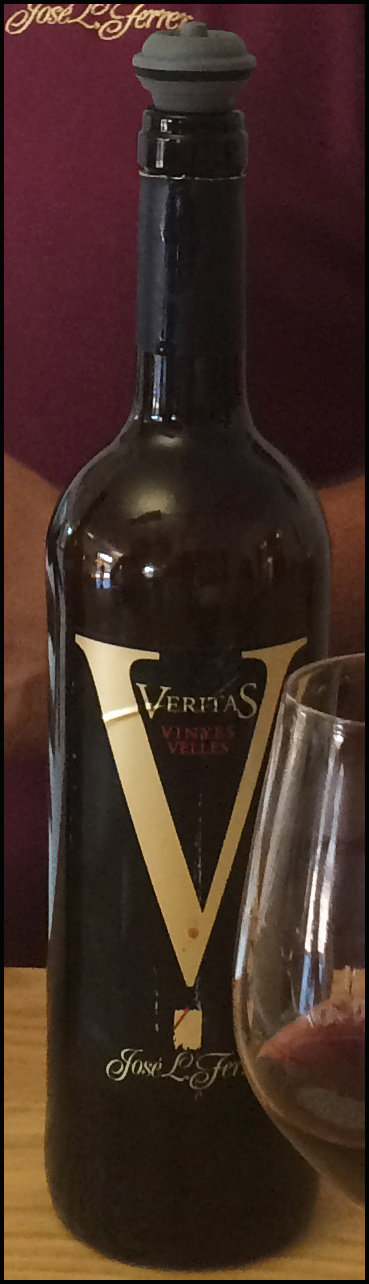
Veritas, Vinyes Velles

Jose Ferrer multiple lines

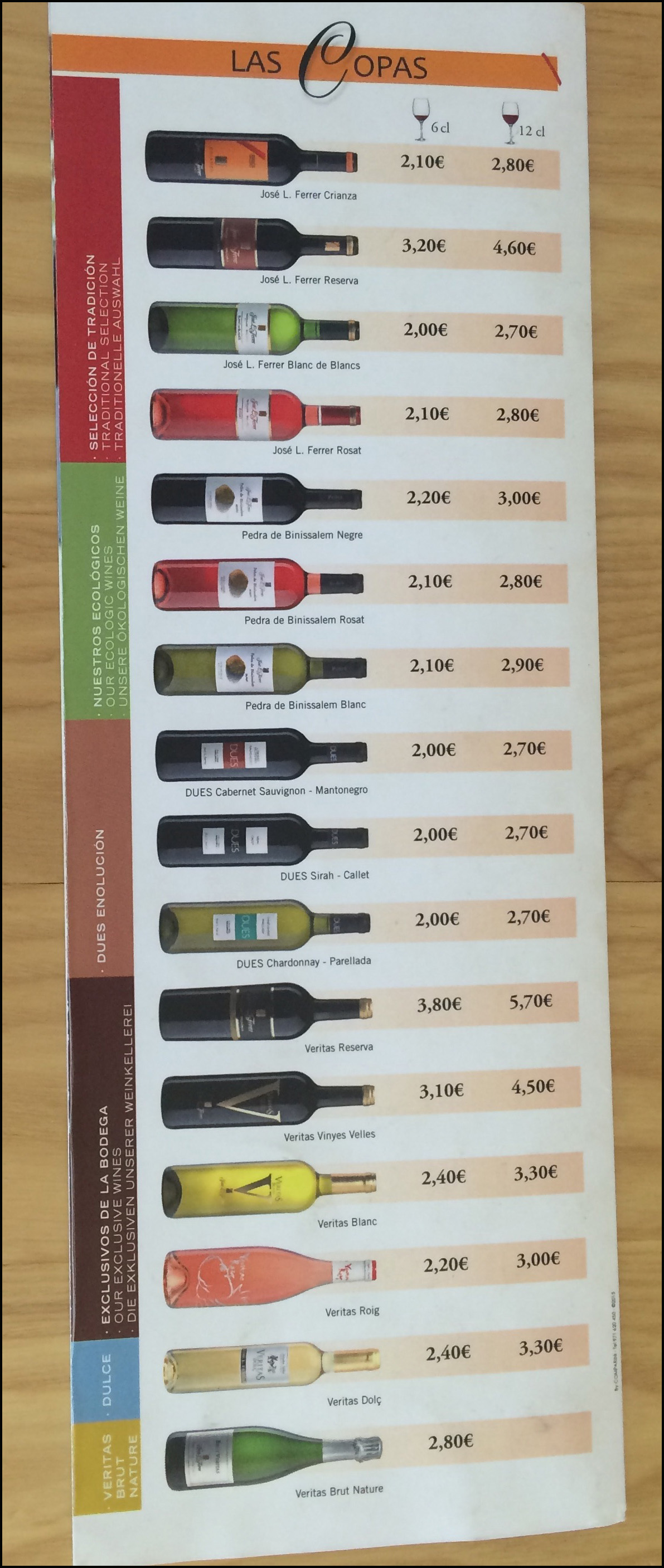
There is no shortage of wines to choose from for tasting! With five different lines of wines produced at José Ferrer, we wanted to taste them all! However, we must have told Miguel we are red-centric, because we only tasted red wines today. In retrospect, of course we should have tried a white and a rose, because it is hard to understand the full spectrum of the winery when you only taste one type. But, one really can’t taste everything as a drop-in; and we were going with the flow – as one does!

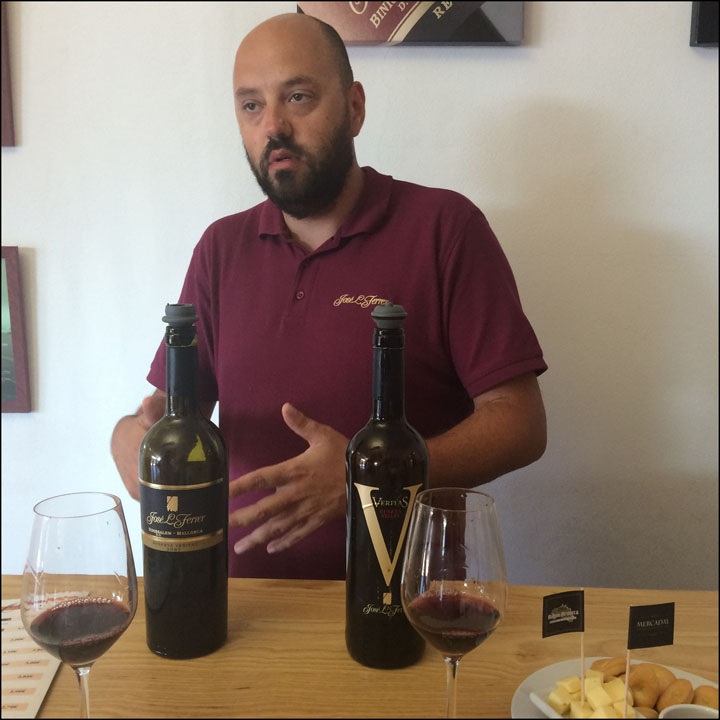
Putting our glasses beside a plate of Quelly biscuits and Mahon cheese (great authentic Mallorcan products for our tasting), Miguel poured, and we dove into a sea of red.


#1
Pedra de Binissalem Negre 2013
Grapes: Mantonegro
Cabernet Sauvignon

Jose Ferrer Pedra de Binissalem

Comment:
Tawnee: I am so happy to see that a major producer on the island is getting into organic wine! We had to try this red! It was delicate, with ripe berry tones and a distinct finish.

Merie: The first wine was the Pedra de Binissalem, Negre 2013. This deep red wine is organic, from their own Vineyard at Finca Sa Pareteta which is registered Ecological. It is a blend of Manto Negro and Cabernet grapes. They cool the bunches of grapes before squeezing, and maceration and fermentation are done in stainless tanks before following with 6 months in new American and French oak barrels. This wine has aromas of berries and ripe fruit, with the chocolate and coffee notes of French oak.


#2
Reserva Veritas 2007
Grapes: Manto Negro
Callet
Cabernet Sauvignon

Jose Ferrer Veritas

Comment:
Tawnee:  I was happy to be able to try a Reserva on the tasting list, as usually they do not open them. This was a solid wine. The name is perfectly chosen – Veritas in English means “the truth.”  It would be good served with a traditional meal of Mallorcan lamb chops, fried garlic and French fries.

Merie: Next we tried The Reserva Veritas 2007 red. Fermented in stainless, aged one year in French and American oak, then aged in bottle over two years before sale. It is made from 60% Manto Negro, then Callet and Cabernet Sauvignon. It is a very rich, almost smoky wine, with aromas and flavor of ripe fruit.


#3
Veritas Vinyes Velles
Grapes: Manto Negro
Cabernet Sauvignon
Syrah
Callet

Jose Ferrer Veritas Vinyes Velles

Comment:
Tawnee: This is my favorite wine of all that we tasted, and I like the label with the big V! V for Veritas (the truth). It is a solid wine with a good rich flavor in mouth. Vinyes Velles means “the old vines” and that is where this wine comes from – José Ferrer’s oldest vines. Knowing this adds to the enjoyment of drinking it, it is deep rooted and full of heritage and wisdom.

Merie: Finally we tried the Veritas red. All the Manto Negro, Cabernet Sauvignon, Syrah and Callet grapes in this wine are hand chosen from old vines. Held in French and American oak for one year. It is rich, with smoky almost roasted, aromas and flavor.


Here is the rub: There is some quality about these reds that wasn’t to our taste. We are wondering if the grapes are pressed too ripe, or if a short fermentation period leaves some residual sugars, or maybe the tannins are too smooth… we really don’t know. These wines are rich and robust and have a ripe fruit quality; however, there was something different about them that was consistent in all. Further education is needed!


Jose Ferrer Miguel

Thank you Miguel!

See José Ferrer visit: Click here

### JOSÉ FERRER ###
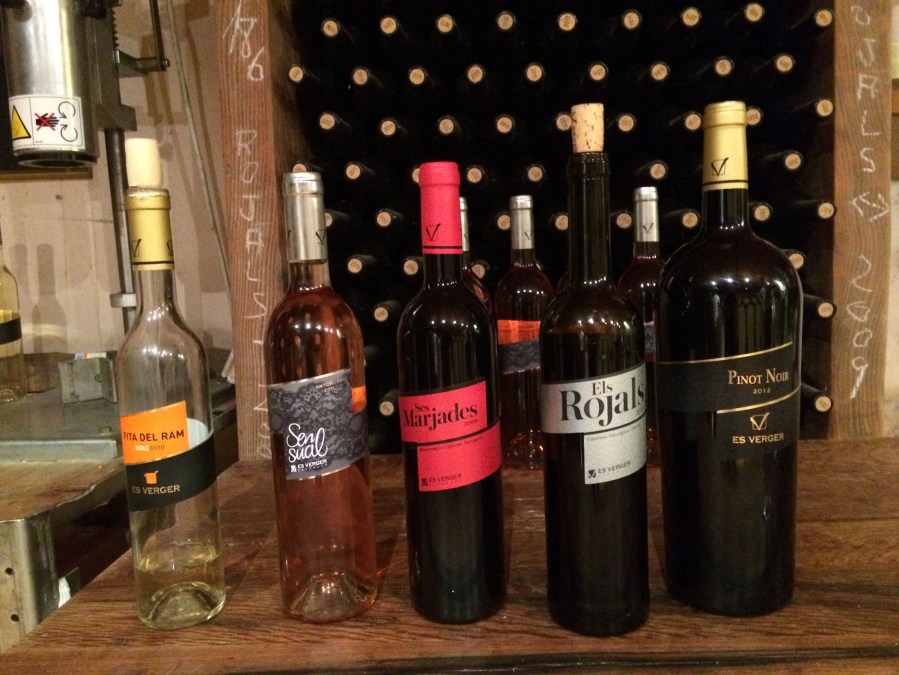
Macia Batle Wine Tasting

Macia batle logo

Wines Tasted:

◊   1 White   ◊

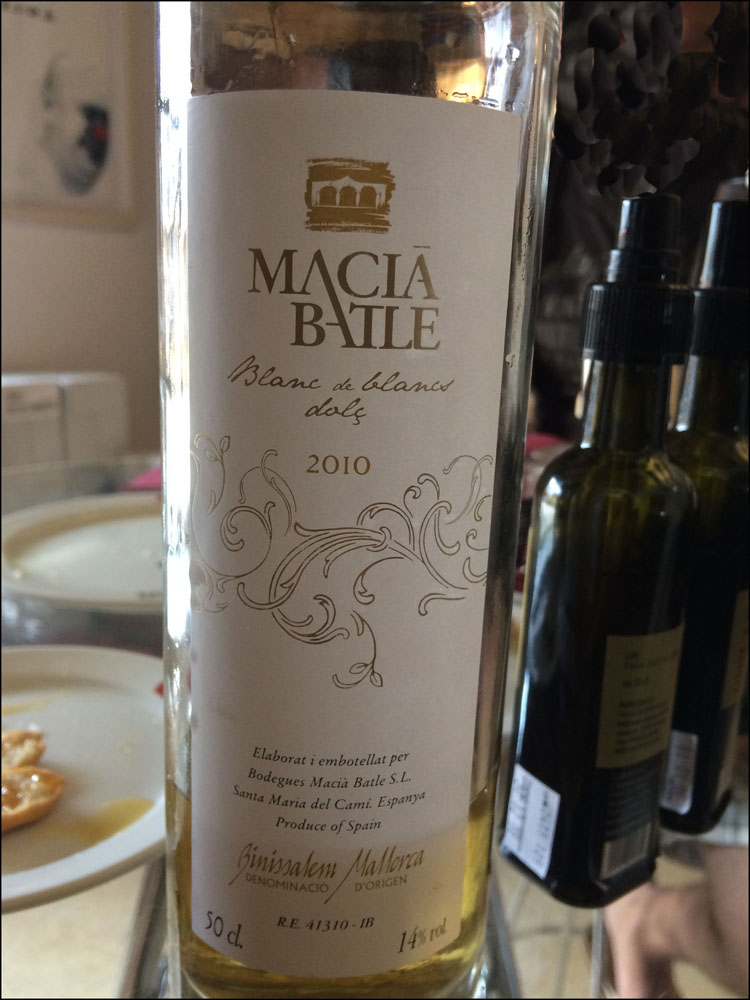
Blanc de Blancs Dolç 2010

◊   2 Rosé   ◊

Rosado 2014
Margalida Llompart Rosé 2014

◊   3 Red   ◊

 Crianza 2012
Crianza 2010
Margalida Llompart Negre 2012

Macia batle bottles

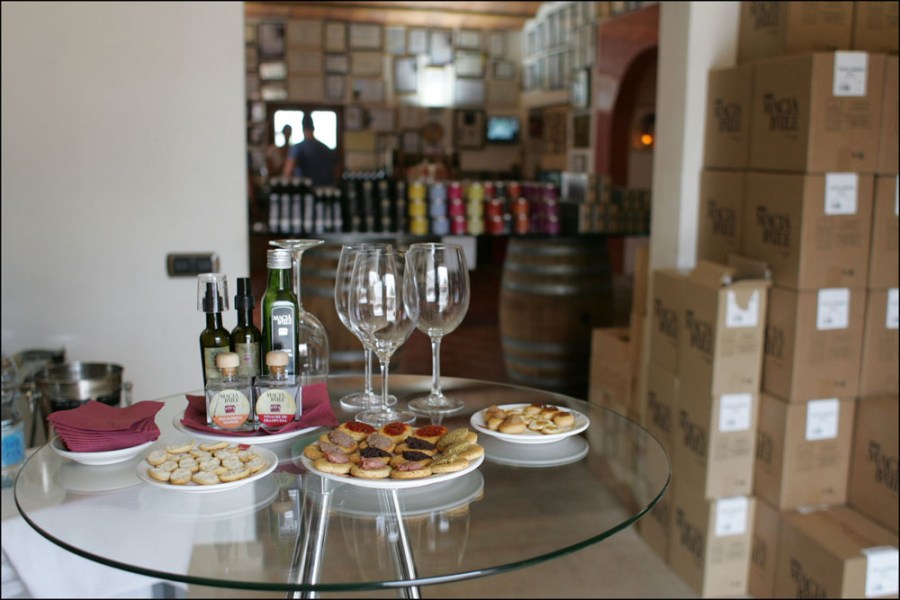
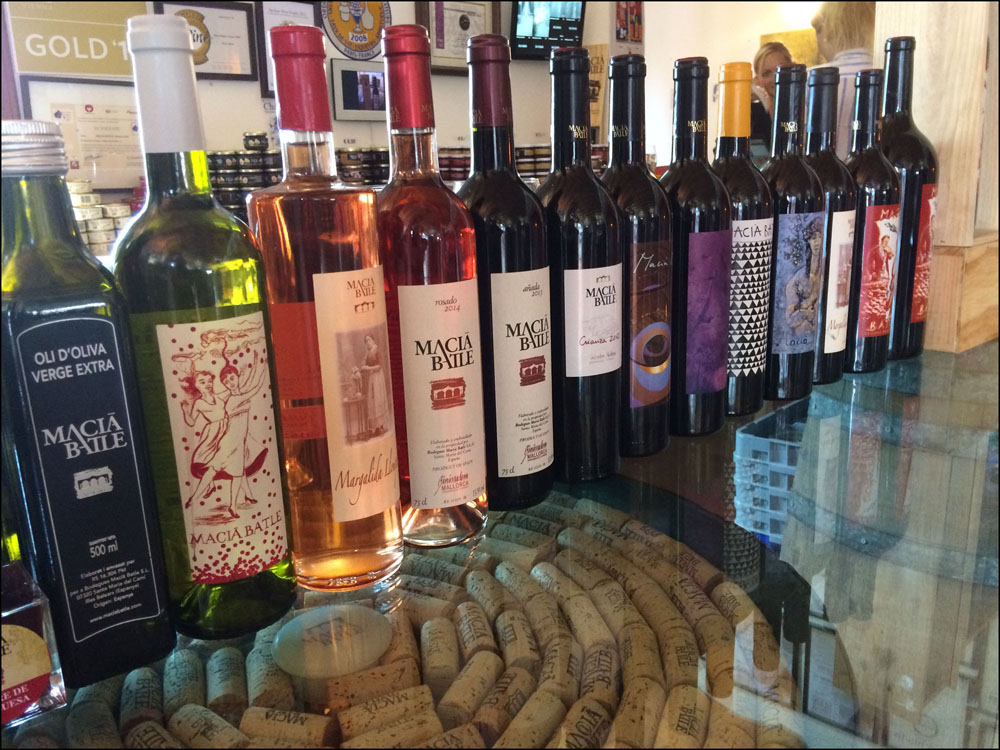
Macia Batle knows how to do a tasting! Isabel was extremely informative and knew her wines and their production. It was wonderful to learn so much about the wines while enjoying them. As we went along, each wine was paired with a specific cracker and topping. It was delicious to follow Isabel’s suggestions, and then to try our own pairing ideas as well. It is striking how much a pairing accents the wine! We suggest always tasting the wine alone before pairing, both to know the wine, but also to see how it develops. We were asked at the beginning if we preferred whites or reds and we, of course, said REDS!  That is why we didn’t try a dry white first – and only tasted the sweet white after the reds.  Live and learn.


#1
Rosado 2014
Grapes: Manto Negro
Cabernet Sauvignon
Syrah
Merlot

Macia batle Rosado

Comment:
Tawnee:  Rosado – the Spanish translation of Rosé. The blend of these four grapes creates a traditional rosé color and a slight sweetness to the wine. I noted soft aromas of apple. I would drink this wine chilled in the early afternoon on the terrace while reading a good book. It is very fresh.

Merie: We started with the Rosado 2014, a blend of Manto Negro, Cabernet, Syrah, and Merlot. Legs of sugar and alcohol glistened down the glass. 13.5% alcohol, tart, clear and young, with a fruity scent. We tried it with both black and green olive oils and spreads with great effect. A super rosé at a good price.


#2
Margalida Llompart Rosé 2014
Grapes: Manto Negro 100%

Macia Batle Margalida Llompart Rose

Comment:
Tawnee: I love to see tradition honored, and using the grandmother’s name for a bottle is beautiful. Normally in Mallorca you name your children after their grandmothers. This is why there are so many names repeated in families here on the island. This Rosé has aromas of cherries and contains 13.5% alcohol. Its delicate flavor matches the subtle rose color created from the Manto Negro grape. It is a wonderful appetizer drink on a summer’s day.

Merie: The Rosé Margalida Llompart has a photo of the grandmother as the label — somewhere we learned there is a tradition of honoring the mothers by naming a good wine after them! This wine is 100% Manto Negro so is lighter in color than the Rosado blend. I found it slightly more acid or tart, very fresh and lightly dry.


#3
Crianza 2012
Grapes: Manto Negro
Cabernet Sauvignon
Syrah
Merlot

Macia Batle Crianza 2012

Comment:
Tawnee: This is a smooth bottle of red. It is has lots of ripe berry flavor and good body. I enjoyed it.

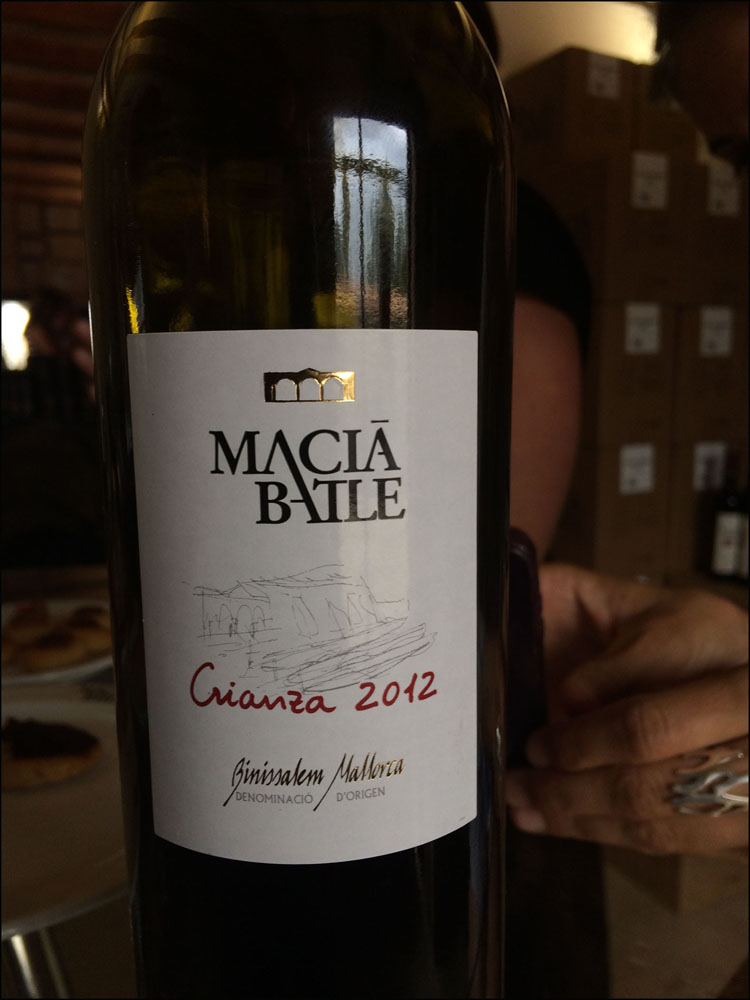
Merie: Next we tasted the Crianza 2012 red which is 50% Manto Negro and 20/20/10 Cabernet/Syrah/Merlot, with 10 months in Barrel, and then 14 in bottle. It is 14% alcohol, showed more legs. Interestingly, it is the same blend of grapes as the Rosé Llompart – but it sits with its skins longer for the deep red color and tannins they give. It is smooth, elegant, and soft. And we were told the longer it ages in bottle the better it gets for special occasions.


#4
Crianza 2010
Grapes: Manto Negro
Cabernet Sauvignon
Syrah
Merlot

Macia batle Crianza 2010

Comment:
Tawnee: What a difference just two years can make! I really loved the body in this red. It had solid tannins and a great finish. I would say it is worth it to buy a more recent bottle, and keep it to open a few years down the line.

Merie: The Crianza 2010 is the kind of red I want at my table!  A very balanced red which would go well with any meal.


#5
Margalida Llompart Negre 2012
Grapes: Manto Negro
Cabernet
Syrah
Merlot

Macia Batle Margalida Llompart

Comment:
Tawnee: With aromas of bacon, this red wine has 14% alcohol, strong tannins, deep color, and great body. I love that we were able to try almost the whole line of Margalida Llompart wines.

Merie: This is a stellar red, strong and rich, but never heavy. The high alcohol content suggests there were a lot of sugars in the grapes, but no unwanted residual sugars here! It is nicely dry and perfect for hors d’oeuvres or a great meal.


#6
Blanc de Blanc Dolç 2010
Grapes: Prensal Blanc

Macia Batle Dolc

Comment:
Tawnee: A lovely sweet white wine. It would be a lovely drink on a cold winter day, served ever so slightly chilled after a meal. Delicious.

Merie: The last tasting was the Blanc de Blanc Dolç 2010.  This lightly sweet wine is a Prensal Blanc. Interestingly, it doesn’t taste like the aroma. The scent is almost white-raisin sweet, while the flavor is more tropical and fresh.


Note: We were not able to taste the Red Reserva because there were only 10 bottles left in the winery stock. Good wines move fast! It is a Crianza with 2+ years in oak and 2+/- years in bottle. They carefully reserve the best grapes for this signature wine, the same blend of 4 red grapes as in the other reds we tasted.

While pouring the last tasting, Isabel said that at Macia Batle there is innovation and constant growth mixed with a love of the local grapes and a huge respect for wine and art.   That says it all!


Macia Batle Isabel

Thank you Isabel!

See Bodega Macia Batle visit: Click here

### Bodega Macià Batle ###

Es Verger Wine Tasting

Es Verger Logo

Wines Tasted:

 ◊   1 white   ◊

Fita del Ram 2010

◊ 1 Rose ◊

Sensual

◊   2 Reds   ◊

Ses Marjades 2008
Els Rojals 2010

Bodega Es Verger_7-3-15_#2

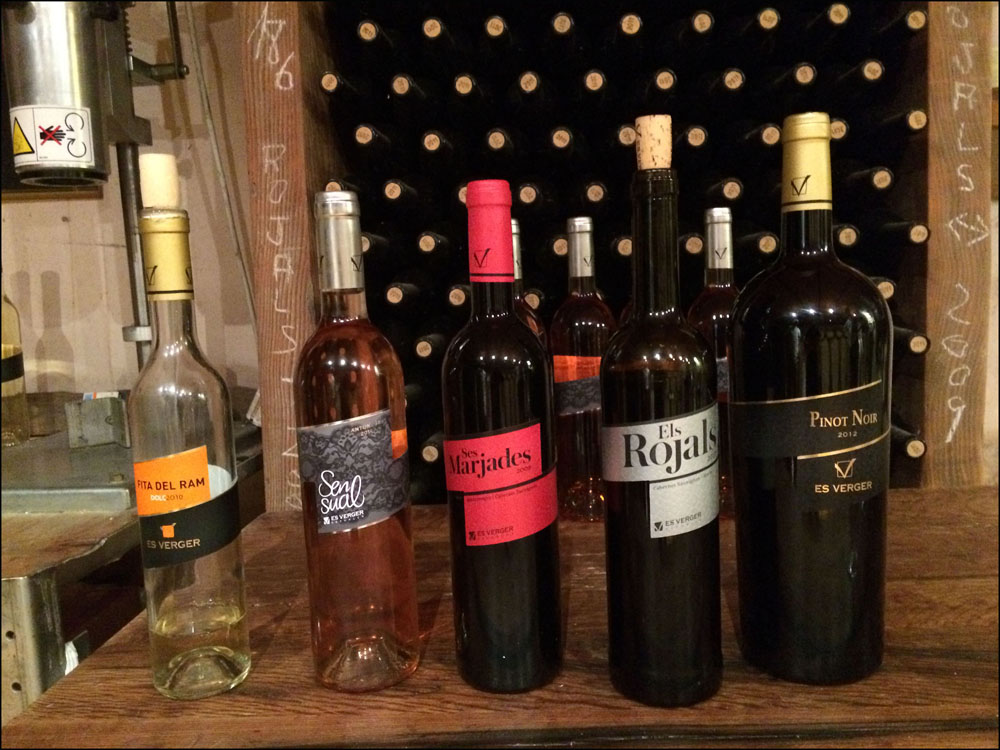
Es Verger pays attention to detail. They put quality before quantity and have set the standards high being an organic winery. We tasted four of the bottles available, because their Pinot Noir is a specialty wine that Miguel produces only in small quantities when the harvest is good enough for his standards. The bottle in this picture was the last one from the year, the rest of the stock sold out. He has very loyal clients internationally and also from the island’s first class restaurants. We learned all his red wines are aged in French oak. All processing is done on this land and in the tasting cellar we were in. It is a beautiful small scale family production with exquisite results.


#1
Fit del Ram 2010
Grapes: Viognier

es verger fita del ram

Comment:
Tawnee: The Fita del Ram was a sweet delicious wine. Perfectly refreshing on a hot day! It had fruity aromas and was fresh and smooth. I think it would be great after a meal instead of dessert!

Merie: We started with the Fita Del Ram, made from Viognier grapes. I don’t drink sweet wines normally, but this was light and delicious, with a smooth honey-like texture. I bought a bottle of this treat for a dear friend of mine who grows Viognier in Napa, secretly hoping he’ll bring it out for our band of friends!


#2
Sensual
Grapes: Mante Negro 100%

Sensual

Comment:
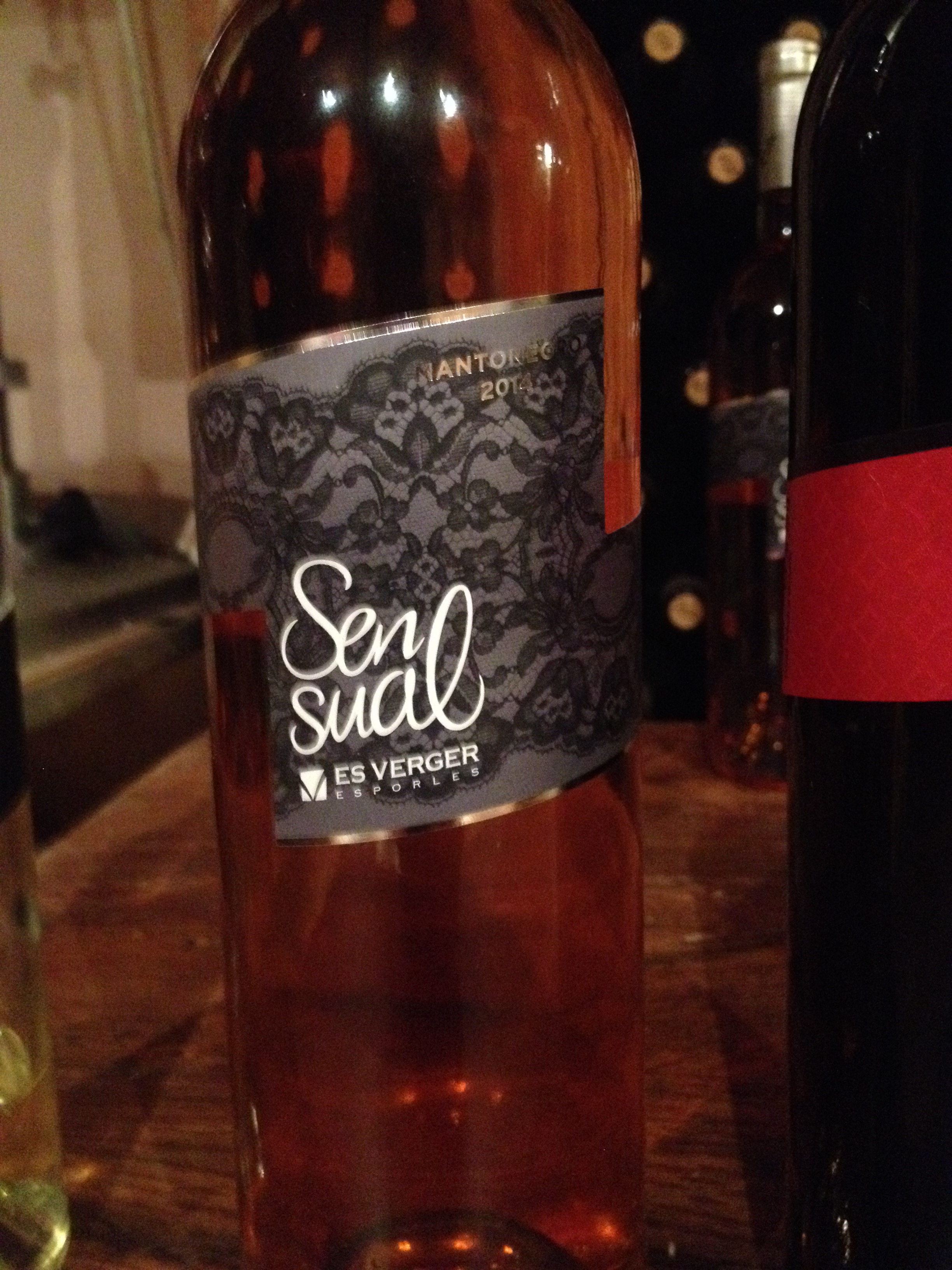
Tawnee: Wonderful summer wine. I love that it is made with 100% Mante Negro grapes. It is a true native Mallorcan delicate wine with a name to match the feeling it gives you.

Merie: Next Miguel poured their rosé, Sensual, made from Manto Negro grapes. I don’t normally drink rosé wines either, yet found this one extremely drinkable, fresh and lightly dry. If you haven’t liked rosés, rethink with this!


#3
Els Rojals 2010
Grapes: Manto Negro
Cabernet Sauvignon
Merlot

Els Rojals

Comment:
Tawnee: This wine is delicious organic Mallorcan wine. You can taste the passion and attention to detail when you drink it. I think it would be lovely with a steak and mashed potatoes.

Merie: On to Els Rojals, their “everyday red” and a Manto Negro, Cabernet and Merlot blend. I would drink it every day too and found it really well balanced, thorough, smooth, and full-bodied. I loved this ‘modest table wine,’ and proudly bought a bottle for my Uncle who lives in the central California Santa Ynez Valley and has no shortage of good wine!


#4
Ses Marjades 2008
Grapes: Manto Negro
Cabernet Sauvignon
Merlot

Ses Marjades

Comment:
Tawnee:
This is an incredible wine! I just love it! I have re-named it the the black pearl because it is like the sea at night that flows smoothly and luxuriously over your tongue when you taste it. It was delicious on its own, but I can only imagine it with a good red meat. Divine. I bought a bottle immediately.

Merie: The label name Ses Marjades means the [stone] terraces – for which Mallorca is famous. Aged in new French oak casks, this is the award winning red for the special occasion. Made from Manto Negro, Cabernet and Merlot grapes, Miguel called the flavor “larga” and advised to let it breath in a wide mouthed glass container 20 min. In fact it is not a pretentious or overly serious wine, it is very balanced and complex, and perfect to honor one’s guests with.


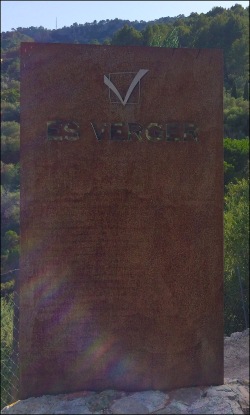
EV Sign crop

Thank you Miguel!

See Es Verger visit: Click here

###  ES VERGER  ###
Son Vives Wine Tasting

Son Vives logo 1

Wine Tasted:

◊    2 Whites    ◊

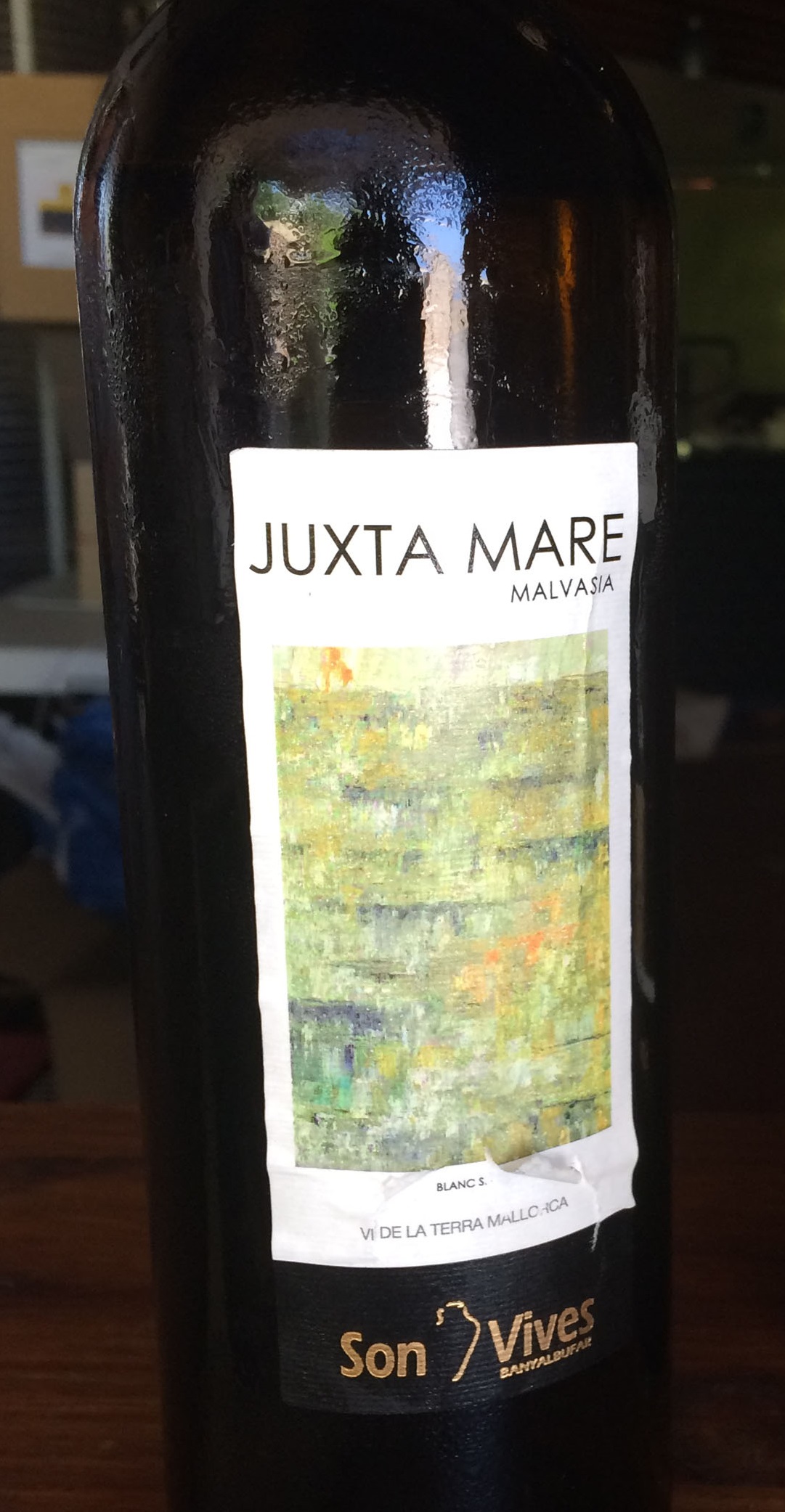
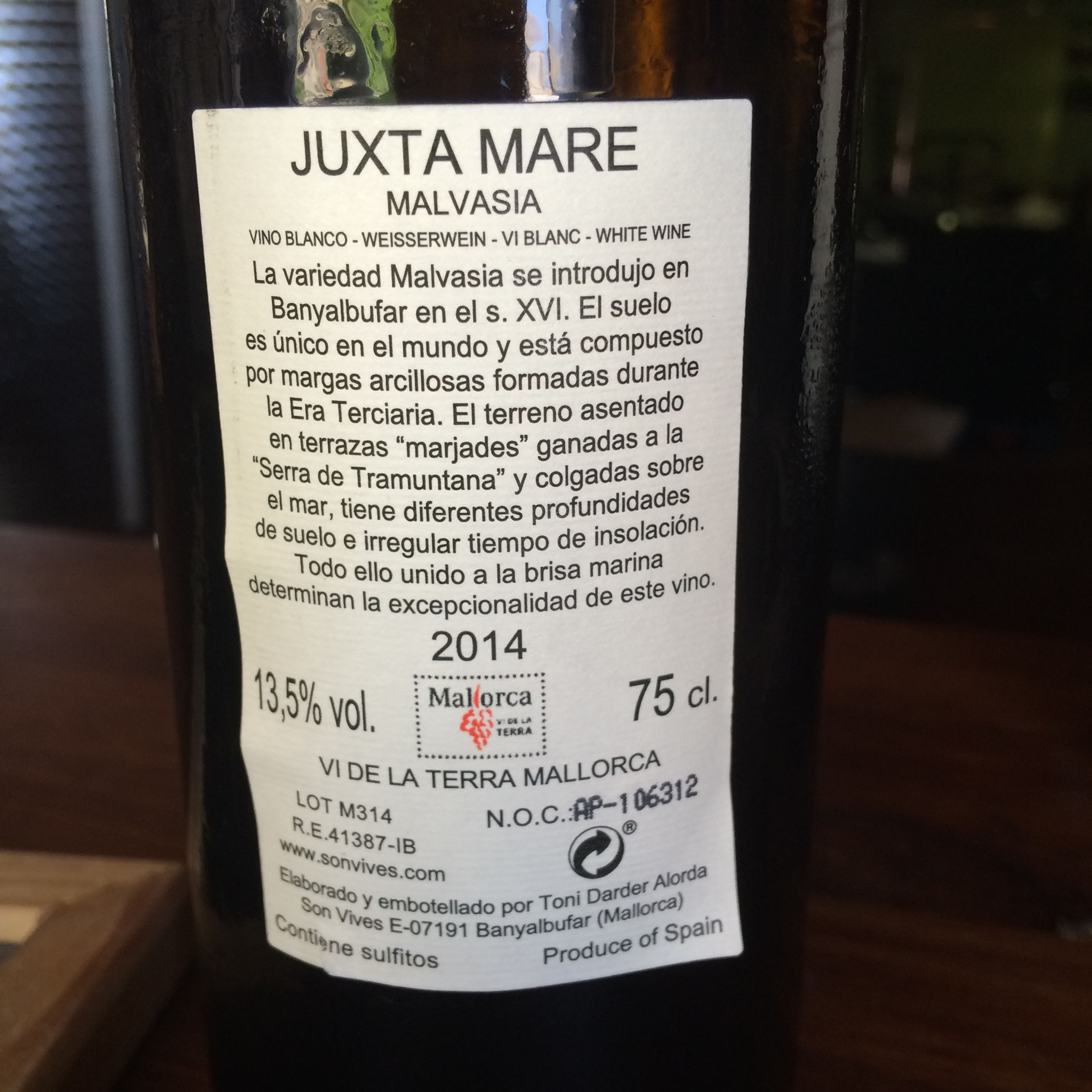
Juxta Mare 2014
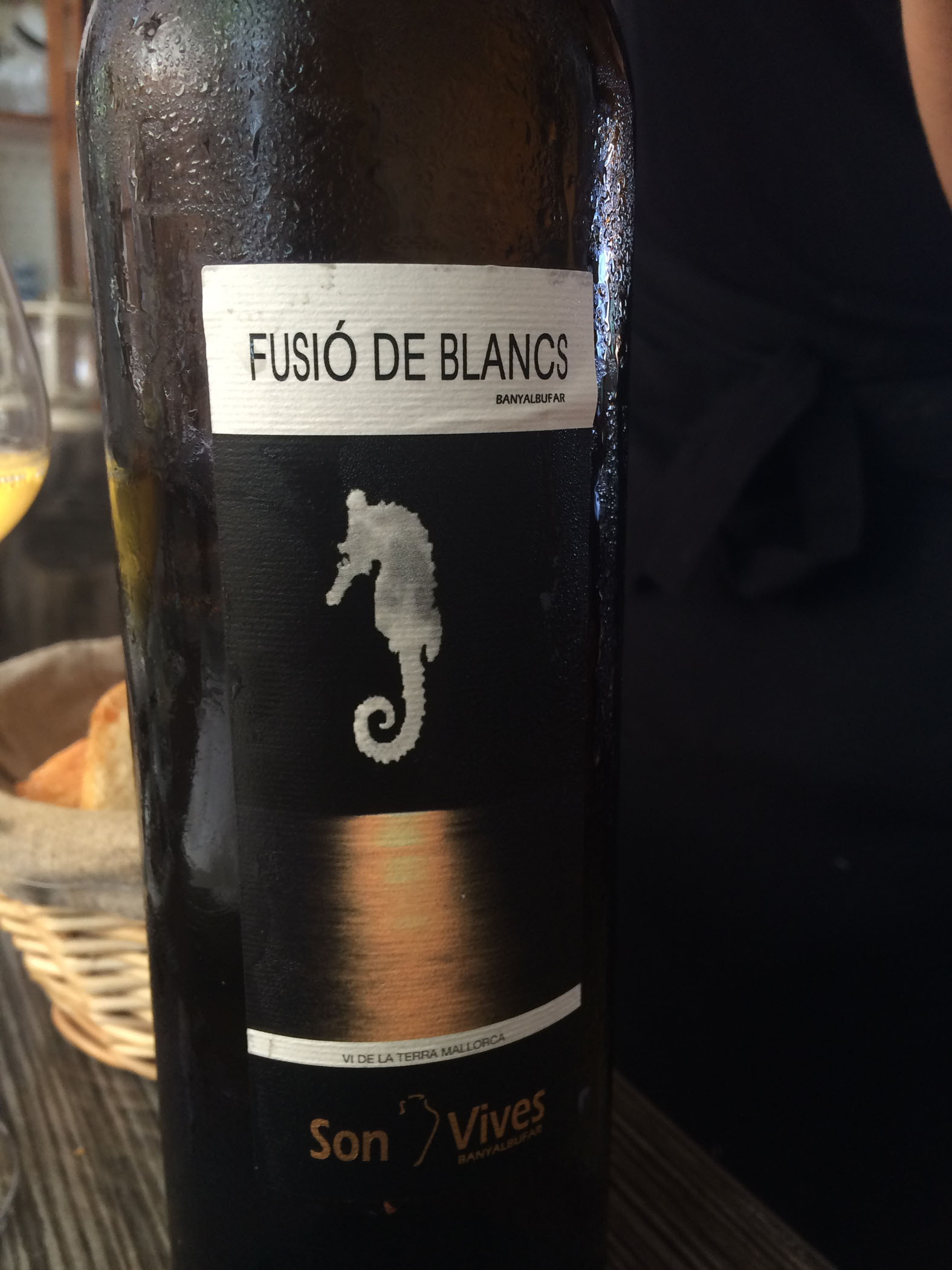
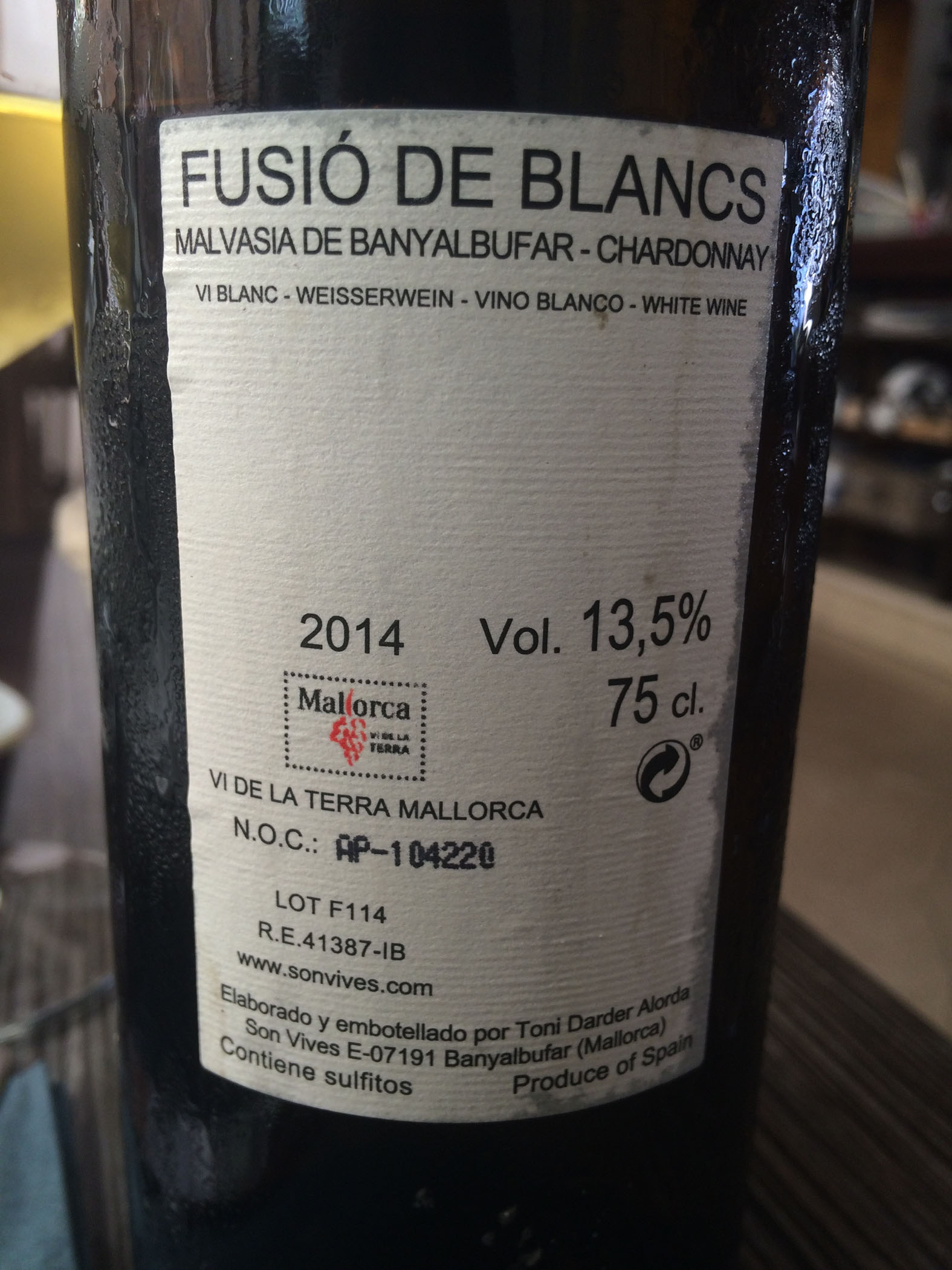
Fusio de Blancs 2014

◊   1 Red   ◊

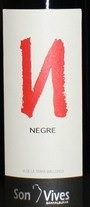
Negre

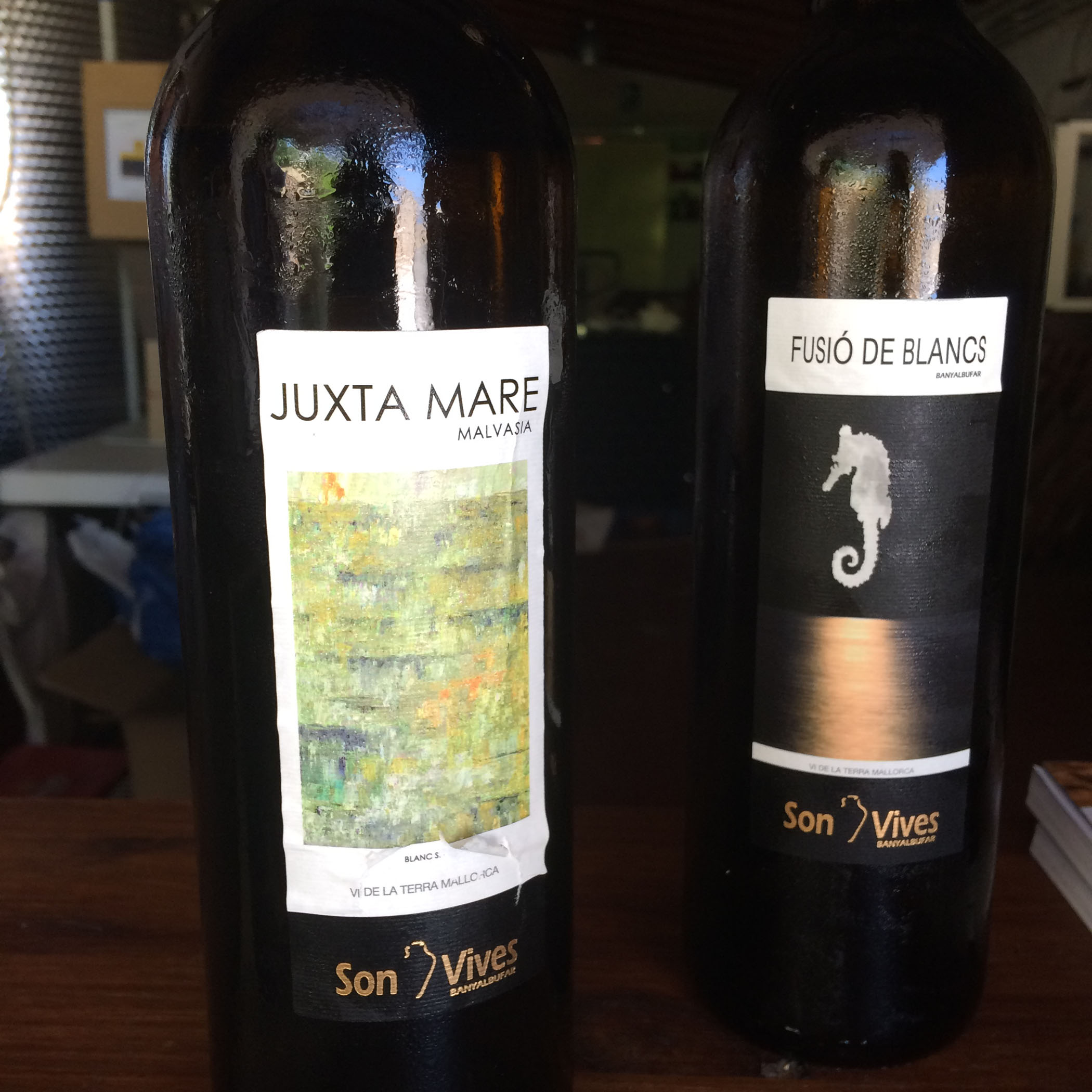
son vives two bottlesson vives negre2

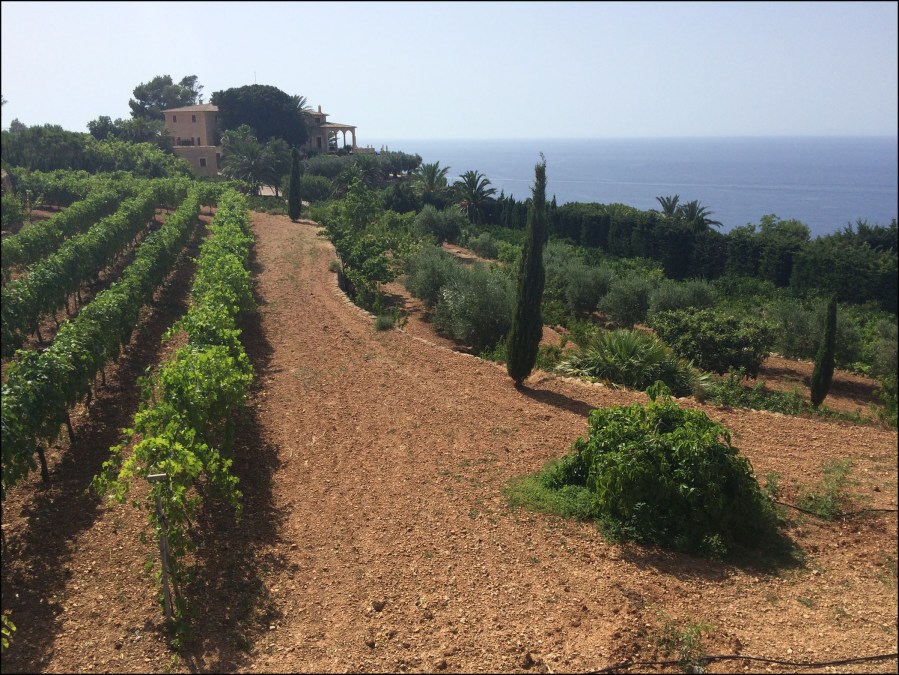
Celler Son Vives has the most picturesque tasting area with views of the sea and terraces lined with Malvasia vines. It would be bliss to be able to watch the sun set while sipping on a chilled white. Son Vives makes two native Mallorcan grape mono-varietal wines, their Malvasia dry & sweet, one white blend, and one red blend made from grapes that come from the warmer, dryer center of the island.  Our tasting guide, Mariona, was informative and a pleasure to have helping us. We are thankful that she took the time to have a short visit with us late on a Friday summer evening. Cheers!


#1
Juxta Mare 2014
Grapes: Malvasia 100%

Son vives juxtamare front Son Vives Juxtamare back

Comment:
Tawnee: I always love tasting a mono-varietal wine because it helps me to really understand what the flavors of the grape are supposed to be like. This wine has fruitful aromas and is subtly dry with a distinct finish! Yum.

Merie: Lightly dry, with hints of ripe fruit and honey, the bottle sweat invitingly from the perfect chill. This Malvasia grape is the signature variety of Banyalbufar, and the reason for being here. Apparently Son Vives also produces a Juxta Mare Malvasia Dulce, but it was not offered in our tasting.  Juxta Mare means ‘Beside the Sea’ in Mallorcan:  The coastal climate is so important to the grape, and the sea views critical to the way of life!


#2
Fusio de Blancs 2014
Grapes: Malvasía
Chardonnay
Prensal Blanc

Son Vives Fusio de Blancs Front Son Vives Fusio de Blancs back

Comment:
Tawnee: This wine has a beautiful color and I like the name. A fusion of whites – with all white grapes! Also, it has been in oak which is not common for white wines. However, not my favorite, but that doesn’t surprise me as I don’t like Chardonnay very much.

Merie: Next Mariona poured the Fusio de Blancs, which we had enjoyed earlier in a local cafe on the main street of Banyalbufar. This delicious wine is made from Malvasia, Chardonnay, and Prensal Blanc grapes, and fermented in oak barrel.  The Chardonnay and Prensal grapes come from the center of the island in Sencelles and Santa Eugenia because they do not grow well in coastal Banyalbufar, and require the hotter, dryer inland plain.


#3
Negre
Grapes: Cabernet Sauvignon
Merlot
Syrah
Manto Negro
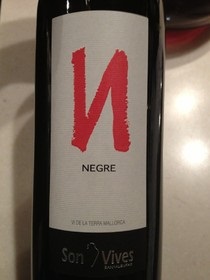
son vives negre

Comment:
Tawnee: I love red wine! Their Negre has a good fruitful aroma and a dominant presence in mouth. I enjoyed this wine more knowing that Son Vives is being resourceful and adding a red wine to their wine production by having a plot of land in the center of the island.

Merie:   Last, we tasted their red Negre 12 Meses. It is a Crianza aged one year in oak – hence “12 meses” – and made from Cabernet Sauvignon, Merlot, Syrah, and Manto Negro grapes.  It is produced entirely in Banyalbufar, but the red grapes are grown in the island’s interior wine country, near Santa Maria.  A perfectly good red, (which normally I prefer), but today the Whites ruled and no coincidence that they contain the rare and wonderful Malvasia grape.


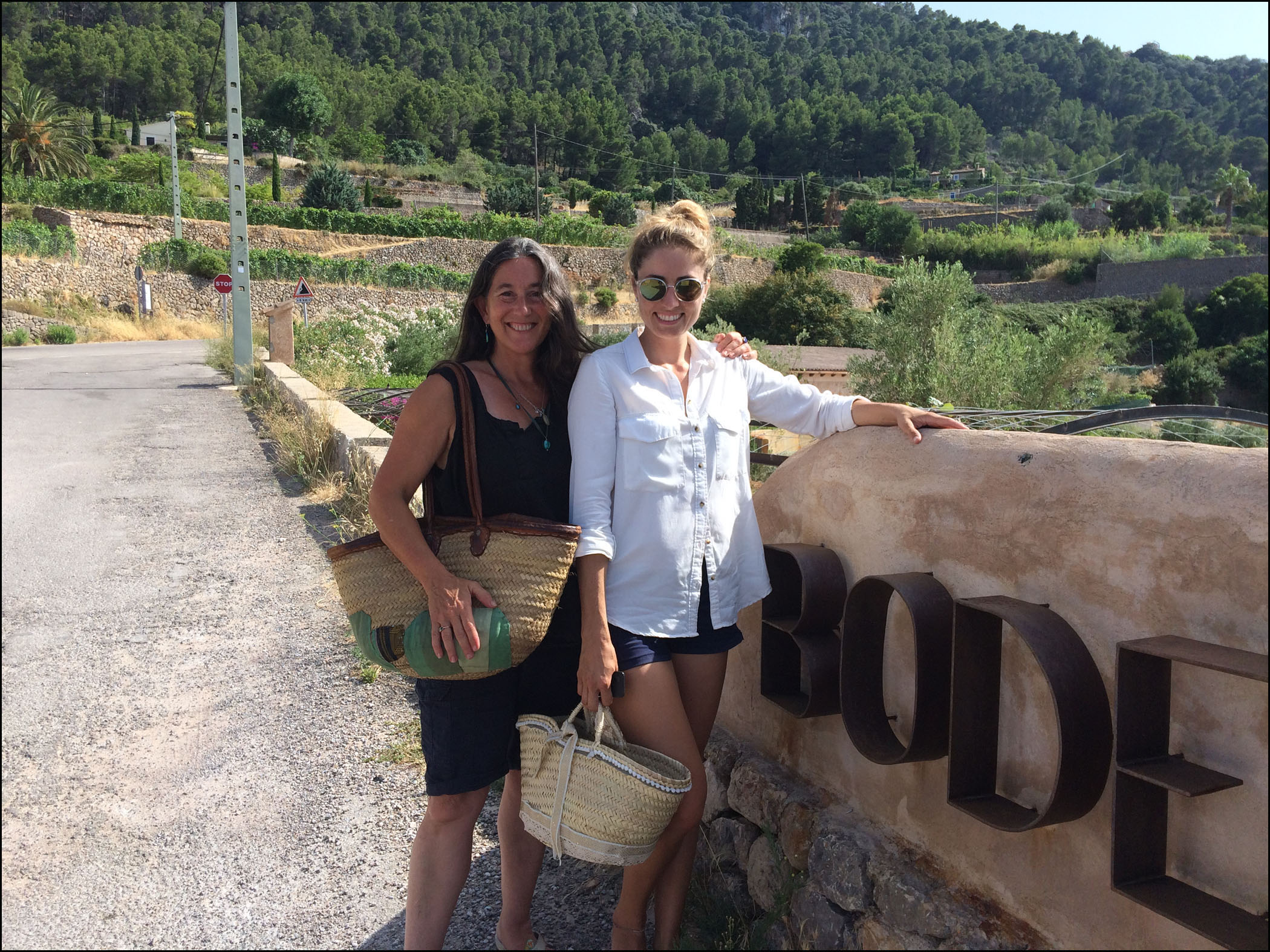
Bodega Son Vives sign

Thank you Mariona!

See Son Vives visit: Click here

### Celler Son Vives ###
Cellar Ca’n Pico Visit

“Preserving a rich history and deep passion in a bottle”

logo Can Picowww.cellercanpico.com
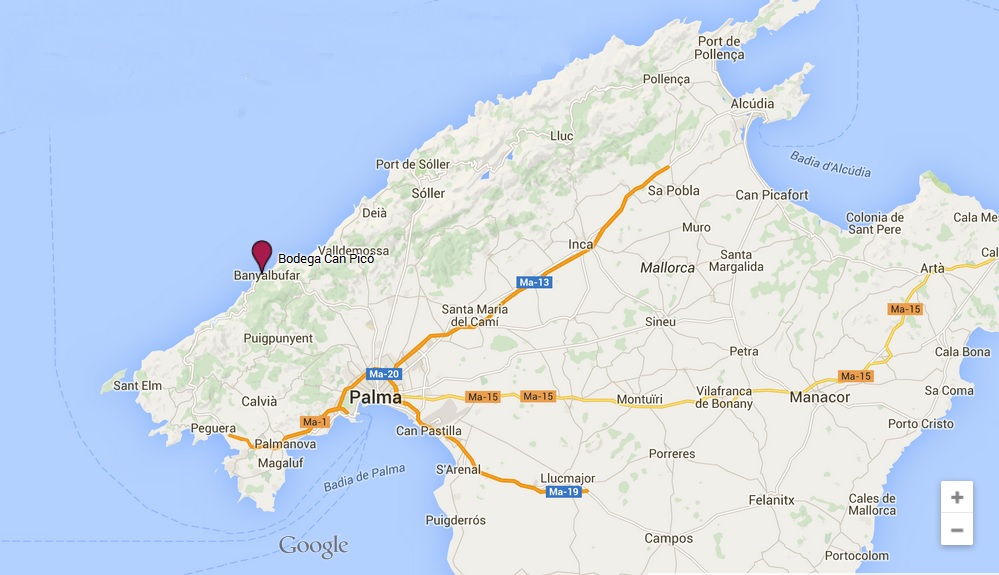
Banyalbufar, Mallorca, Spain

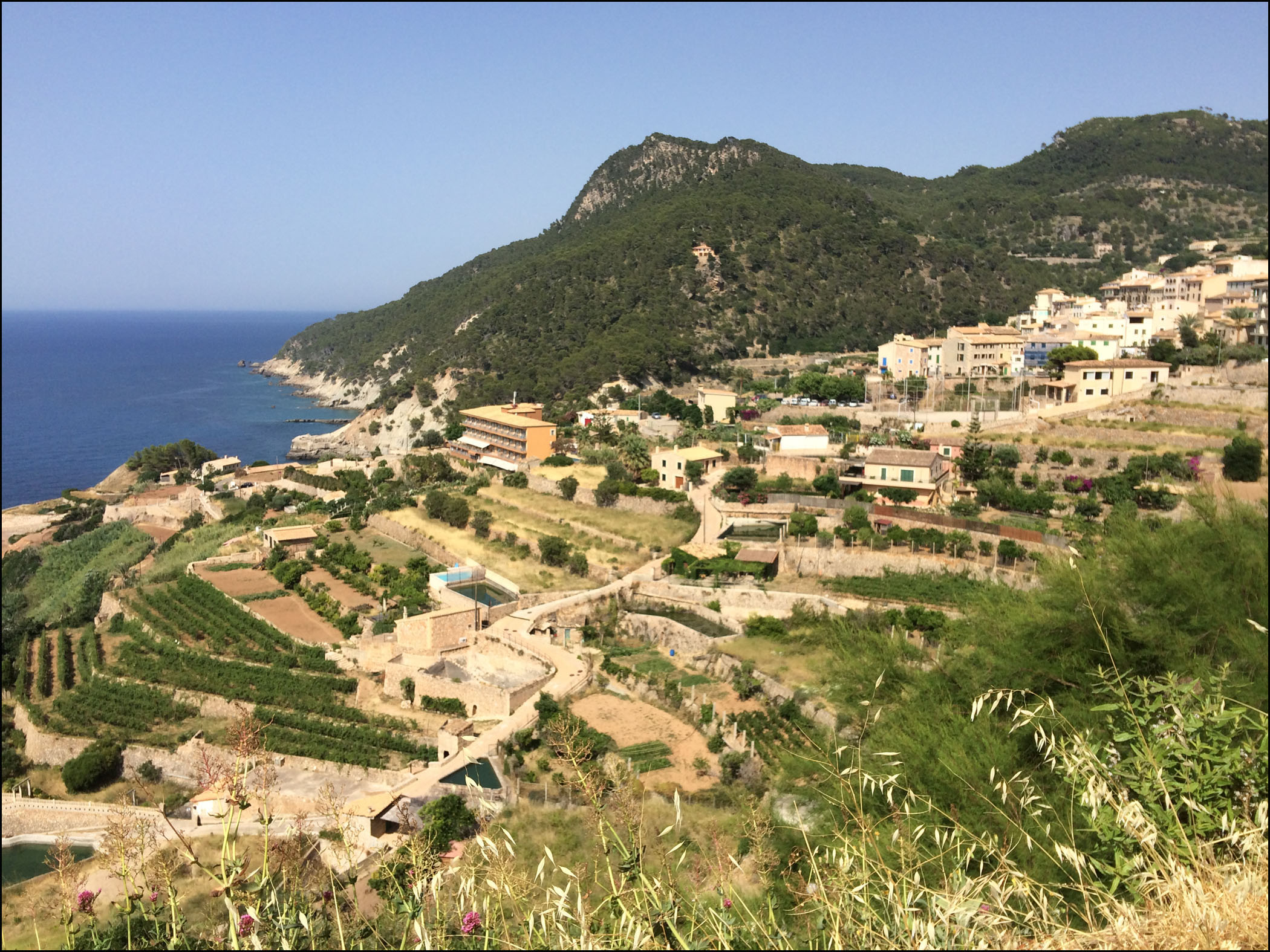
As we started the day’s adventure – driving to the gorgeous stone-terraced northwest coast of the island and the small town of Banyalbufar – Tawnee described the road we were on as “Literally breathtaking!” A nice double-entendre because it was so narrow and steep that she was actually on edge. There are three wineries in this gorgeous, cliffy coastal village, which seemed odd — but it’s not: Here is where the rare  Malvasia grape is grown to perfection.

Bodega Ca'n Pico_7-3-15_#26

A bit about Malvasia: It grows well with coastal climate and mountain temperatures, and has been planted for centuries in Banyalbufar. A rare variety, it is also grown in Sardinia, Tenerife, and outside Barcelona in Sitges. Dry, it pairs well with fish, and white meats, and if allowed its sugars, makes a nice aperitif. This grape itself is high in sugar and they call it the generous grape, “La Generosa,” because it’s sugars allow a higher level of alcohol than most whites.  It is thought by some have been brought by the Phoenicians centuries BC, and to be the first grape on the island. It is certainly considered one of the few “natives.” Another name for the Malvasia grape variety is Malmsey.

In the mid to late 1800s a nobleman, the Marqués de la Cenia, grew Malvasia grapes and made his wine here in Banyalbufar, and took it to Madrid where it was prized among the wealthy.  He was a contemporary of the Archduke Ludwig Salvator of Austria who is famous for buying up and preserving wild areas of this terraced northern coast.  No coincidence, Malvasia is also planted miles away in S’Estaca, outside of Valldemossa, one of the Archduke’s notable properties and recently owned by actor Michael Douglas.

Bodega Ca'n Pico_7-3-15_#1
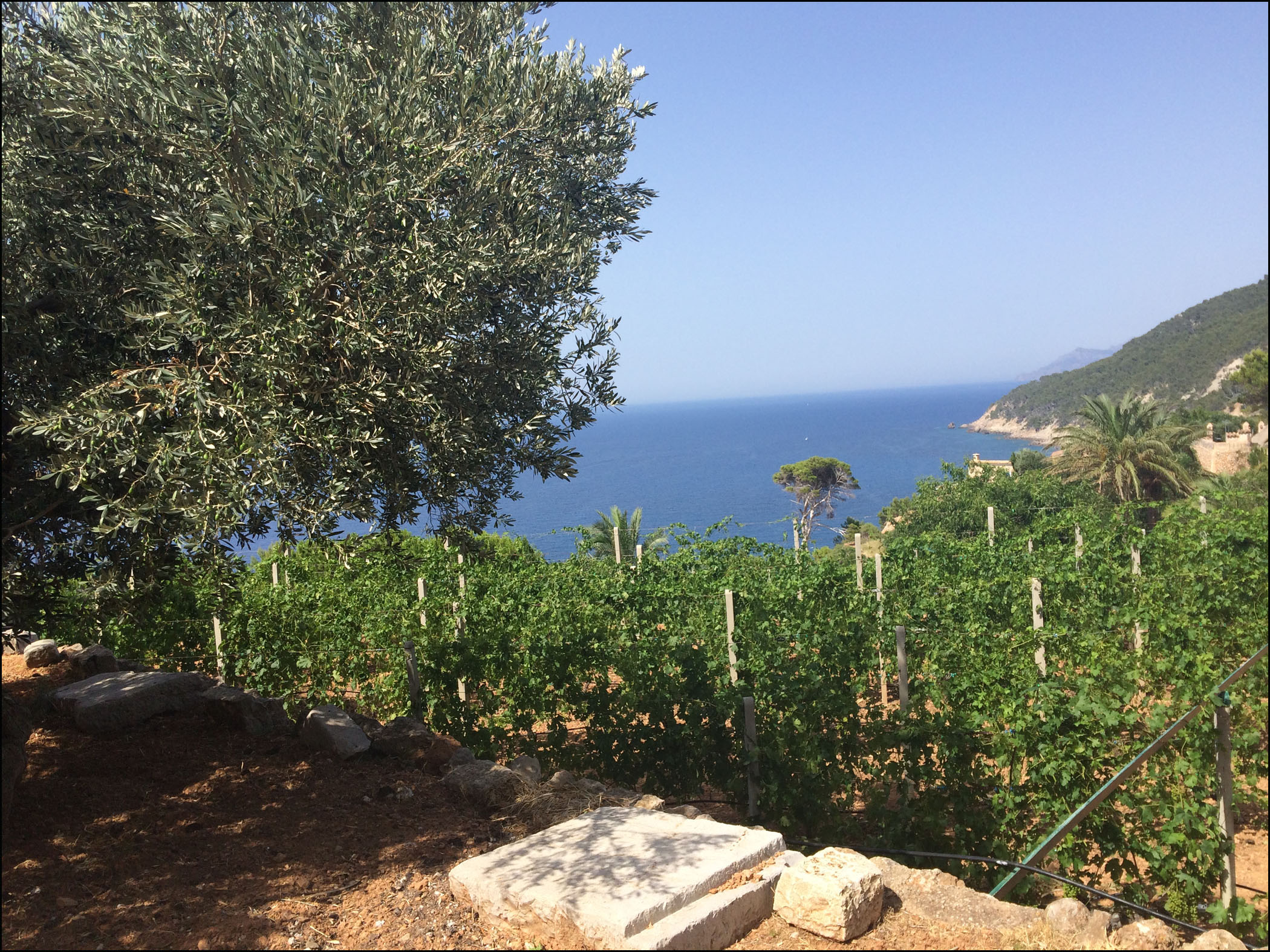
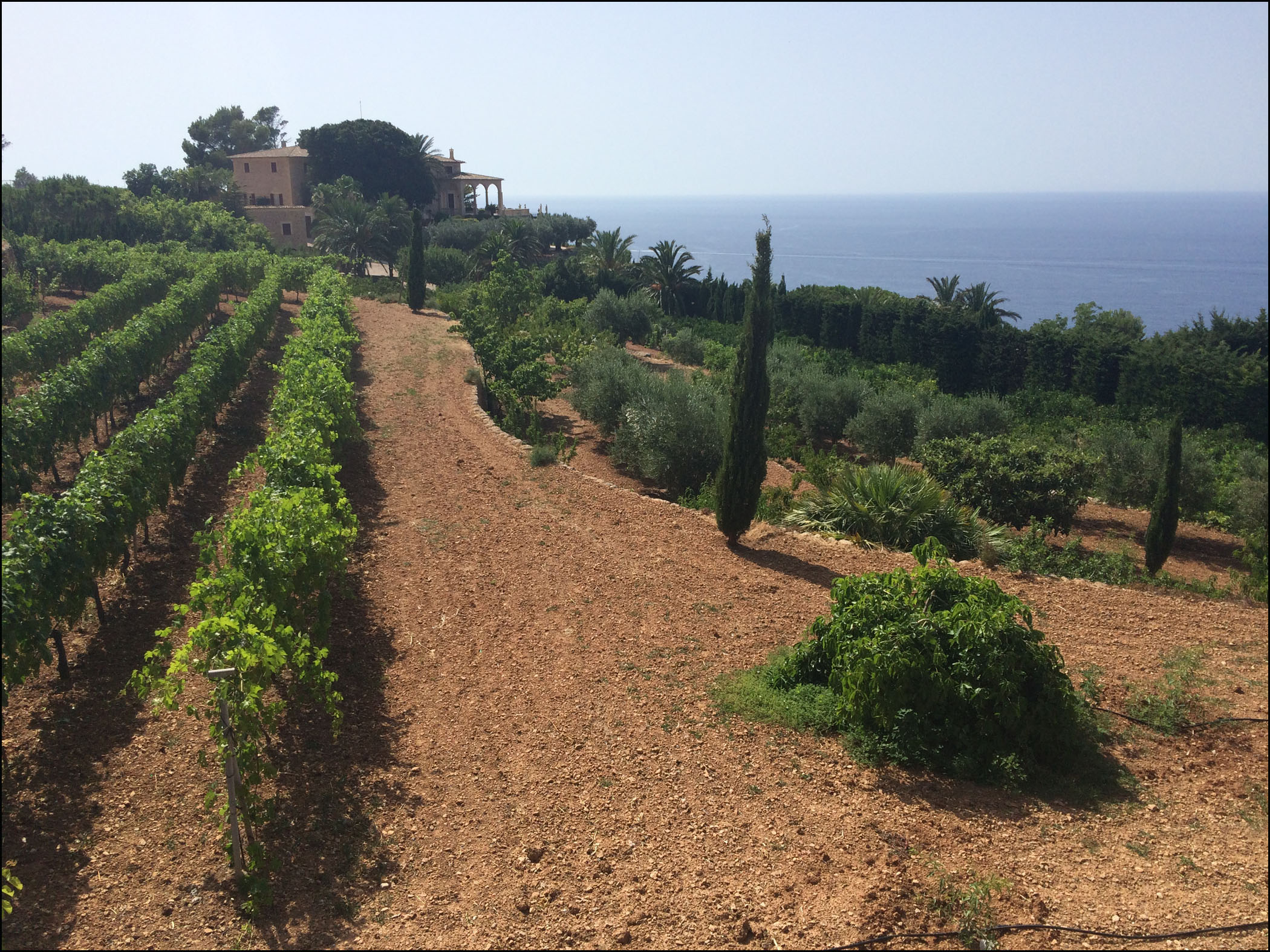
So, our first stop in Banyalbufar was the Cellar Ca’n Pico winery. This is possibly the most beautiful vineyard in all Mallorca, perched on broad terraces overlooking the sea. It is necessary to make a reservation for two reasons: 1) to schedule a visit (not set up for drop-ins) and 2) to make sure the gates are open so turning around on the narrow road is less stressful!

Bodega Ca'n Pico_7-3-15_#3Bodega Ca'n Pico_7-3-15_#4

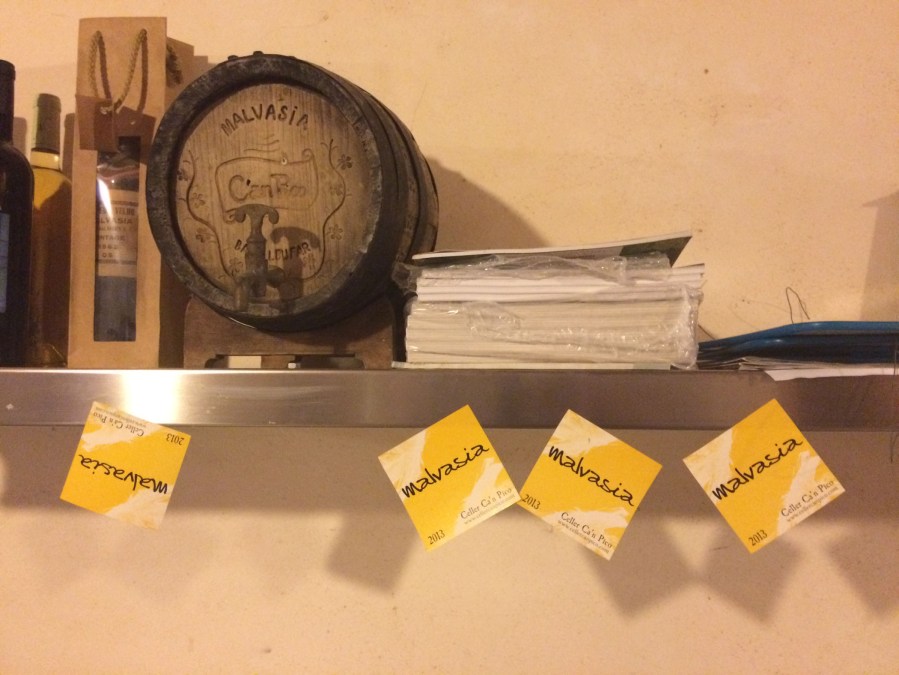
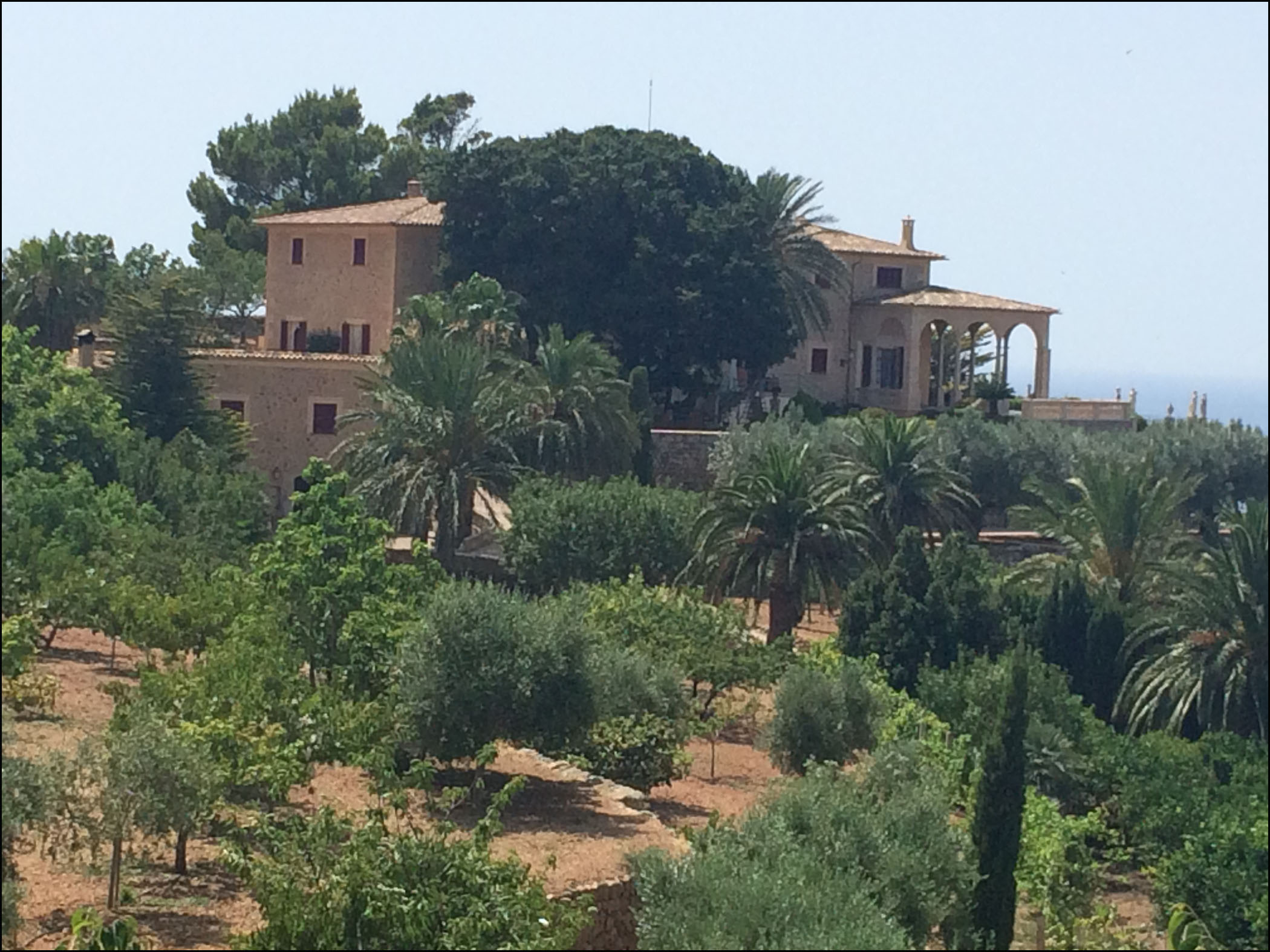
It seemed like we were pulling up to a private home, a grand old Mallorcan Estate (Finca). Well we were, and it turns out that all the wine production for Cellar Ca’n Pico takes place there at Finca Ca’n Pico, in a smallish Bodega that might otherwise be a large garage under the house. Our wine guide, the wonderful Juan Tomàs, met us as we parked, and opened the “garage door” to reveal a large stainless grape press and familiar steel tanks in the first room, then a tasting counter, bottles and barrels in the next. Tall and lanky with big brown eyes, Juan has been the “Bodeguero” at Ca’n Pico for 28 years since the current planting. They grow 80% of their Malvasia grapes right there at the terraced estate, buying a small amount more from other local vineyards.

We spent a long time talking with Juan, and we learned so much! Like most others, this tour and tasting were done entirely in Spanish, no challenge for Tawnee!

Bodega Ca'n Pico_7-3-15_#14

First Juan Tomas showed us ‘la prensa,’ a well-crafted Austrian press to carefully break the grape skins amongst whatever stems are present after a hand-picked harvest. Next they move the mash to temperature controlled steel tanks, cool so no fermenting takes place as the sediments and particulates fall. At that temperature yeasts are inactive, and in one month the grape juice is stable and clarified, ready for further production.  The whole process from growing to bottle is done here at the Ca’n Pico estate, “Aqui nos hacemos todo.” Some goes straight from fermenting tank to bottle, a small amount goes to Oak first.

Bodega Ca'n Pico bottles

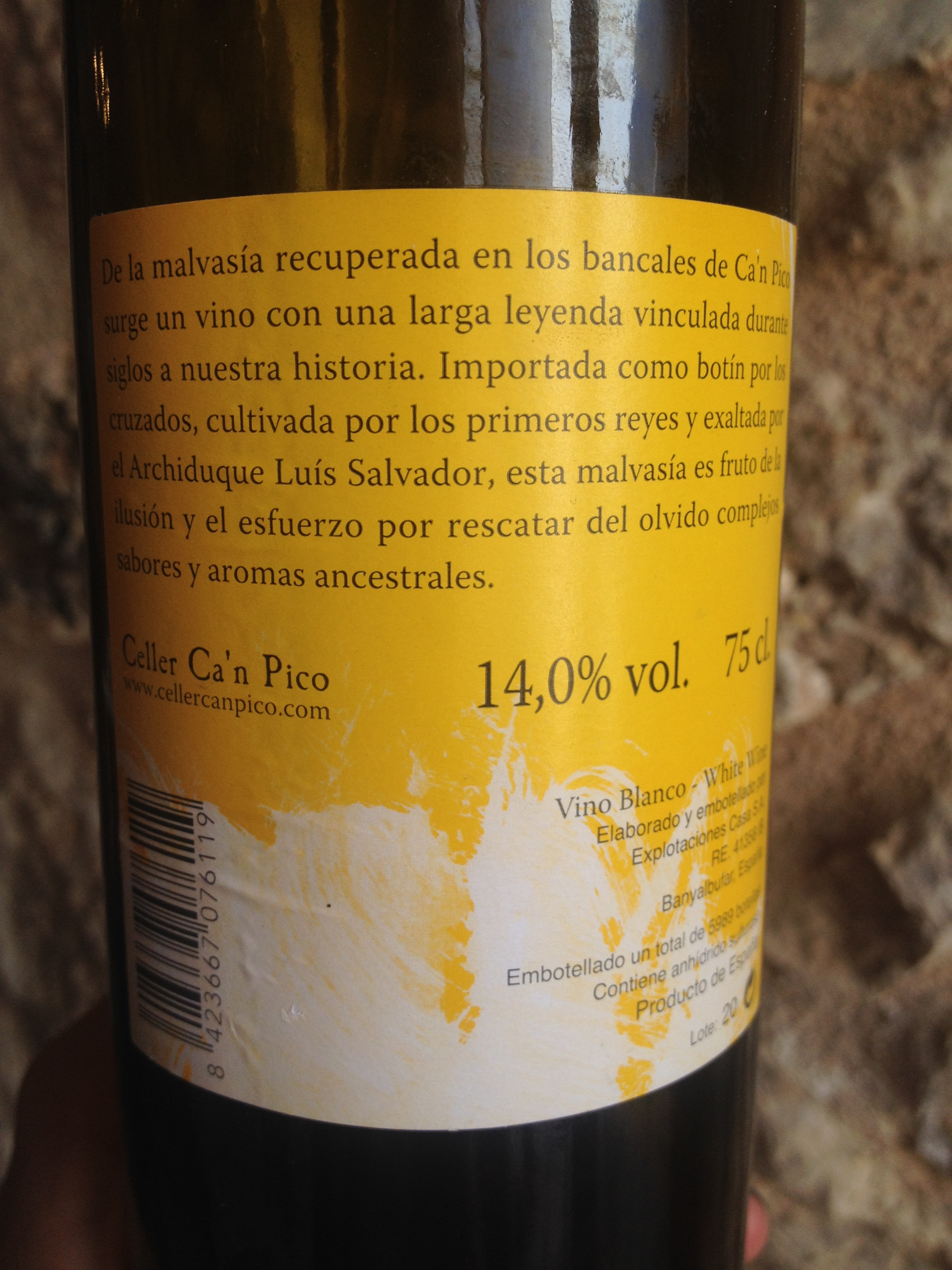
1988 is the oldest bottle of Malvasia from Cellar Ca’n Pico post phylloxera blight. 150 years ago they had more vineyards. Then for the 30 years of phylloxera they had no vineyards, and sold almonds, olives, carob, and tomatoes. Juan told the story that during phylloxera, one man in the pueblo of Banyalbufar guarded and tended his few failing Malvasia vines and made his family table wine. After phylloxera a friend took a cutting and planted, as did another.  But the product wouldn’t get above 12% alcohol, so it was making low quality wine. They added sulfites to stabilize the wine, and at the same time took cuttings of the vines to the local University of Baleares Islands (UIB)  biology department and learned the vines had 5 viruses. The University worked on them for 10 years and created a strong and resistant strain they could replant, and those are today’s Malvasia vines of Banyalbufar. Ca’n Pico held out and kept some of those vines up until the 1950s when they took them all out.  However, in 1980’s, Mr. Gabriel Canaves Picornell bought the farm and decided that with the help of our Juan Tomàs they would recover the Malvasia wine of the past. Through the advancements of science and passion they succeeded! They only produce about 5000 liters of wine every year, or 5000 bottles, and it is crafted to perfection.

Making only one label and with one grape, 100% Malvasia, they might be the only true mono-grape winery on the island, making them doubly special – the most beautiful and the most specialized.

Can Pico bottlesClick here for details: Wines Tasted

We tasted the Malvasia at the cool summer room-temperature of the Bodega. We’d had the bottle perfectly chilled earlier that day in the local restaurant where we’d had lunch. Better served properly chilled I thought, but excellent at both temperatures. Tawnee loved this bottle enough to buy one there, and has it on her favorites list.

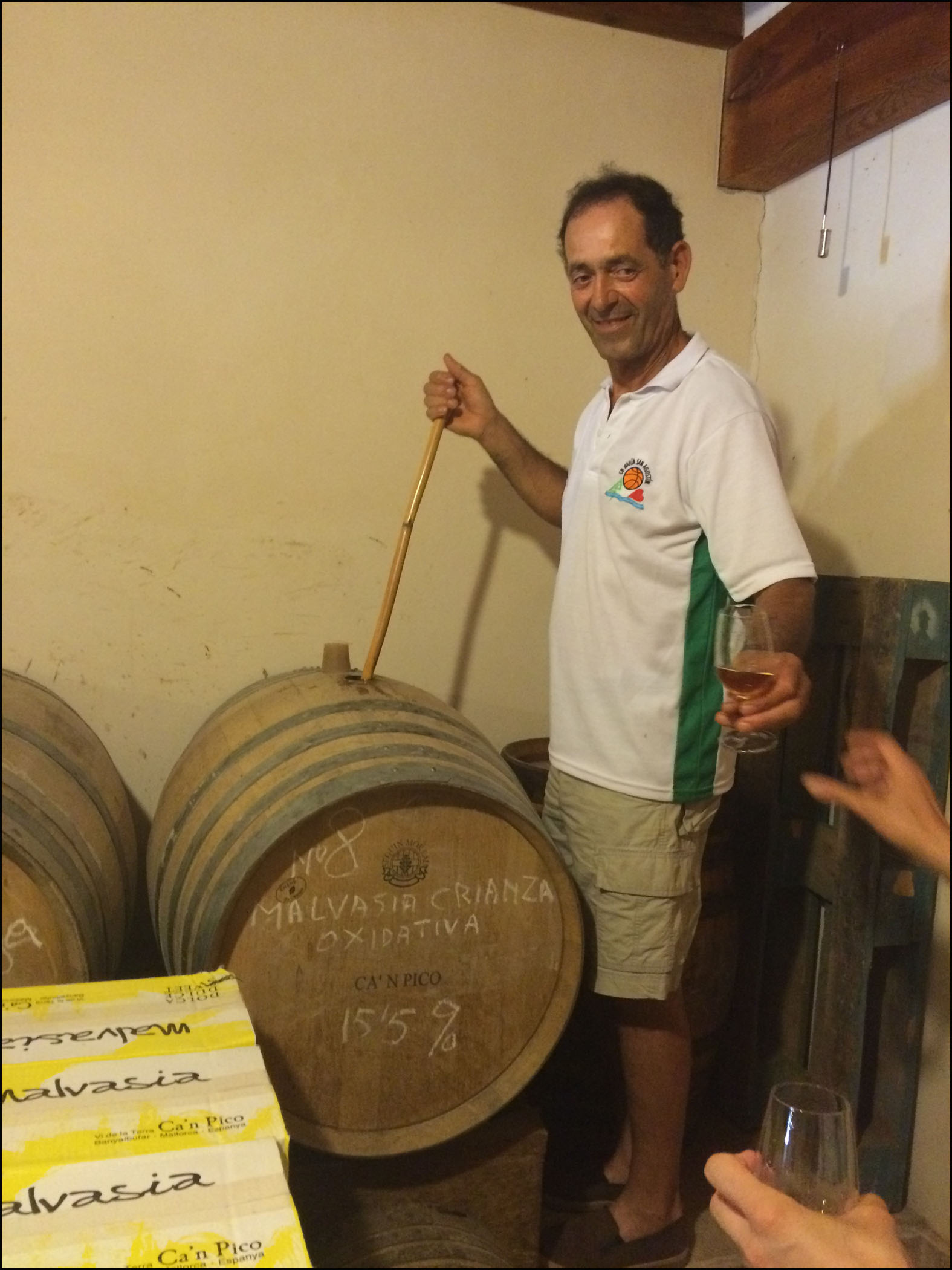
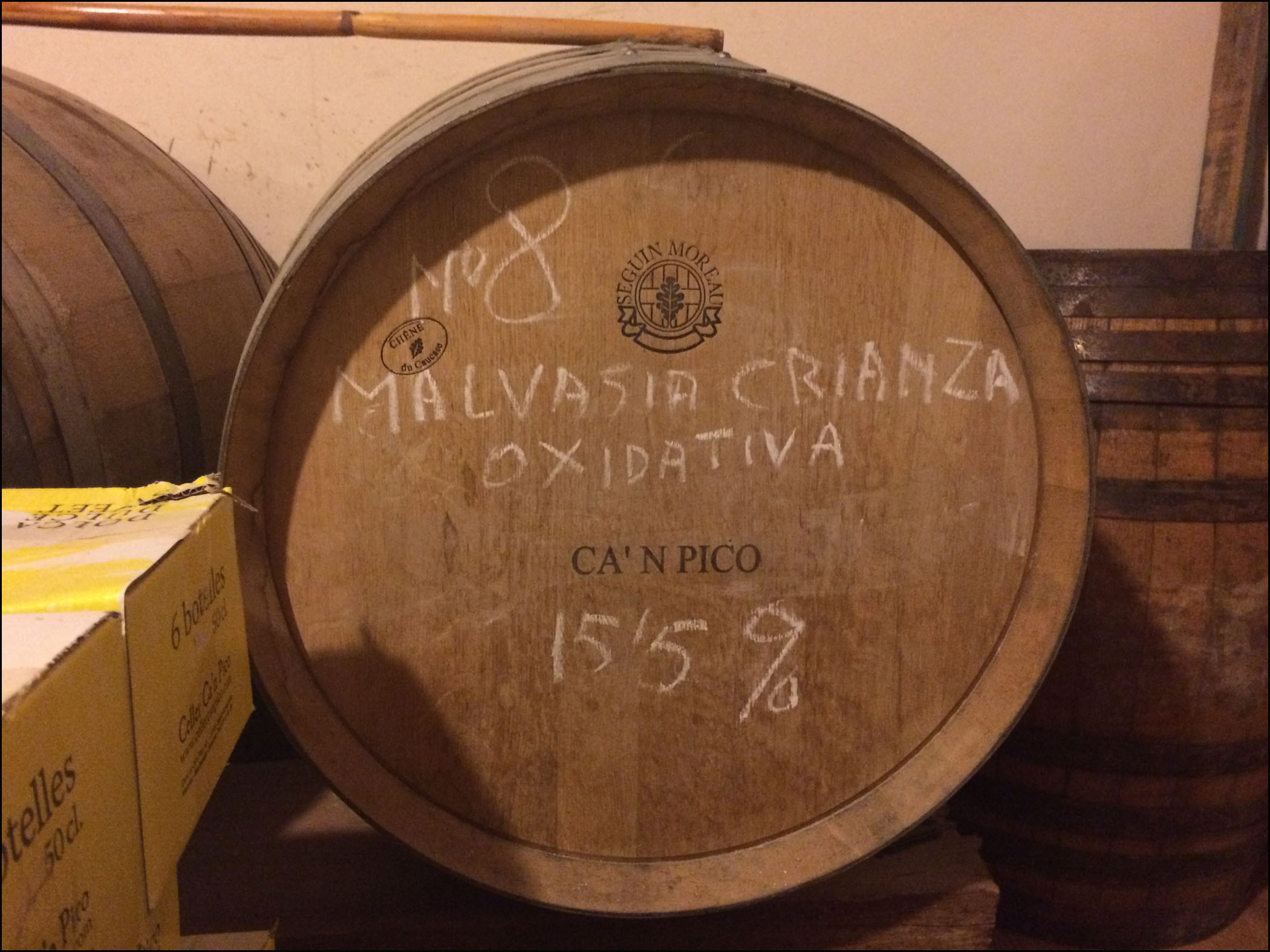
Then Juan Tomas walked over to a far barrel, and lowering a length of hollow cane into a hole in the top of the barrel, he then sealed the top with his thumb to remove a serving of wine and released it into our glasses. It was the Malvasia Crianza Oxidativa, also known as Malvasia Generosa, which is made by the old method of the Marqués: It must be 16 % alcohol or more to bottle, because it is aged with air (allowing a % of air in barrel), and 15% alcohol or less becomes vinegar. It is much like Spanish Jerez, Sherry and Port in method and flavors. It is a sweeter wine. They do not produce it for sale at this time: Much work and little demand, so it is now for family and friends, a labor of love. Ca’n Pico began making it again in 1990 and producing a few in-house bottles in 2000.

Bodega Ca'n Pico_7-3-15_#17

Juan told us that only a few decades ago, most Mallorcan wines were mediocre because they didn’t have the current technology of temperature control. Merie remembers that time!!!   Especially with white, which must be around 10 degrees for first days of particulate separation, then ferment at controlled temperatures of 14-18 degrees. Of course Ca’n Pico used the traditional methods before Phylloxera, then replanted “recently” and instituted modern technology and methods, producing today’s tasty Malvasia label wine.

Bodega Ca'n Pico_7-3-15_#24

After thoroughly enjoying our tasting and talk, Juan Tomas walked us around to see the closest vineyard terraces, and we basked in the beauty of this property, it’s breathtaking terraced seaside terrain and views.

Bodega Ca'n Pico_7-3-15_#5

How to get there: WheMap Can Picon you leave Banyabufar going in directions Estellencs you will see a sign for the Parking on the right. You take the turn directly before that. There is a little sign that says: Ca’n Pico on the stone wall. Yes, the road is narrow and no there are no barriers. It is an adventure worth taking to try their wine.

See Wines Tasted at Can Pico: Click here

###   Cellar Ca’n Pico   ###
Ca’n Pico Wine Tasting

logo Can Pico

Wine Tasted

◊  2 Whites  ◊

Malvasia 2013
Malvasia Generosa

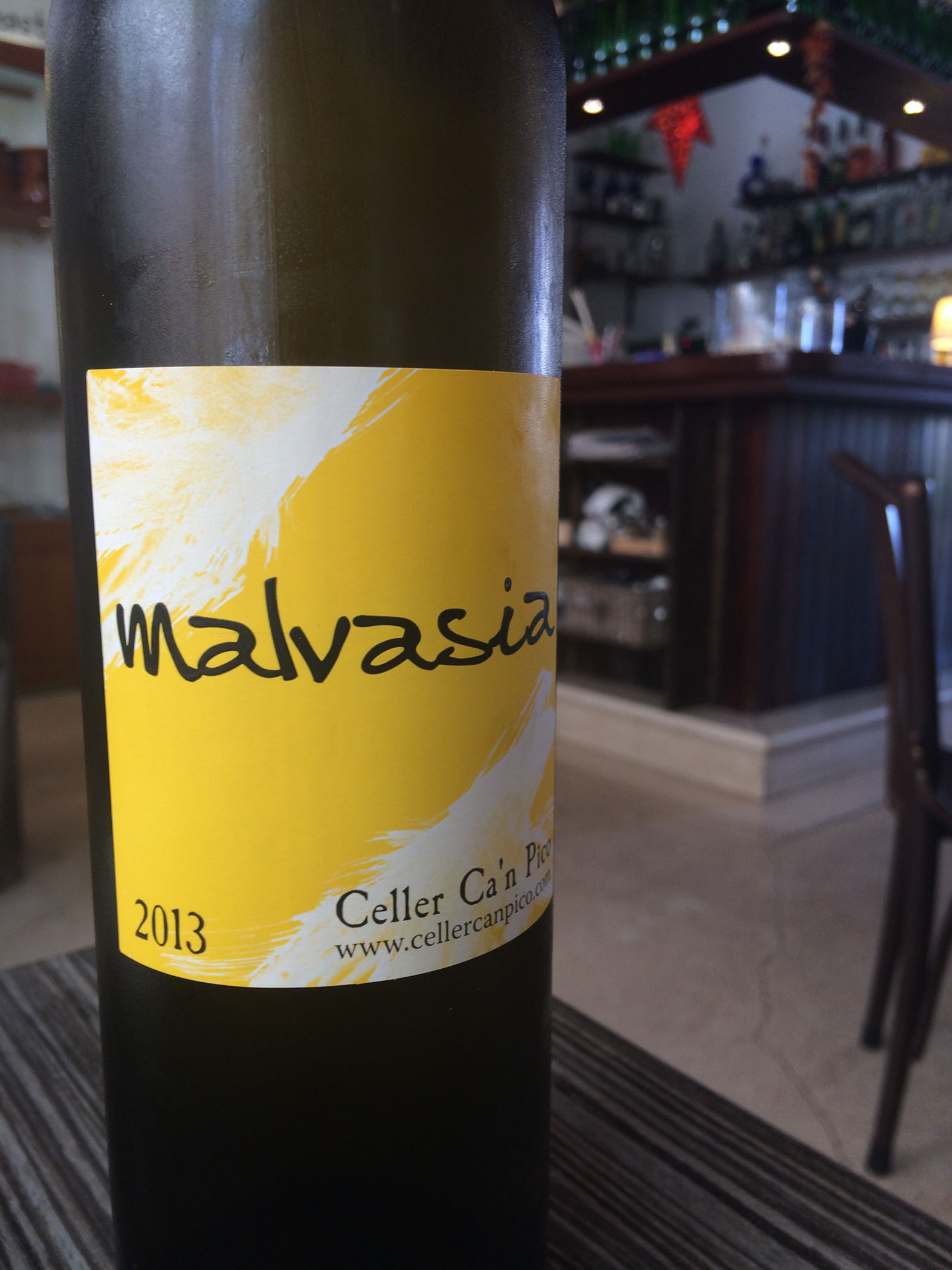
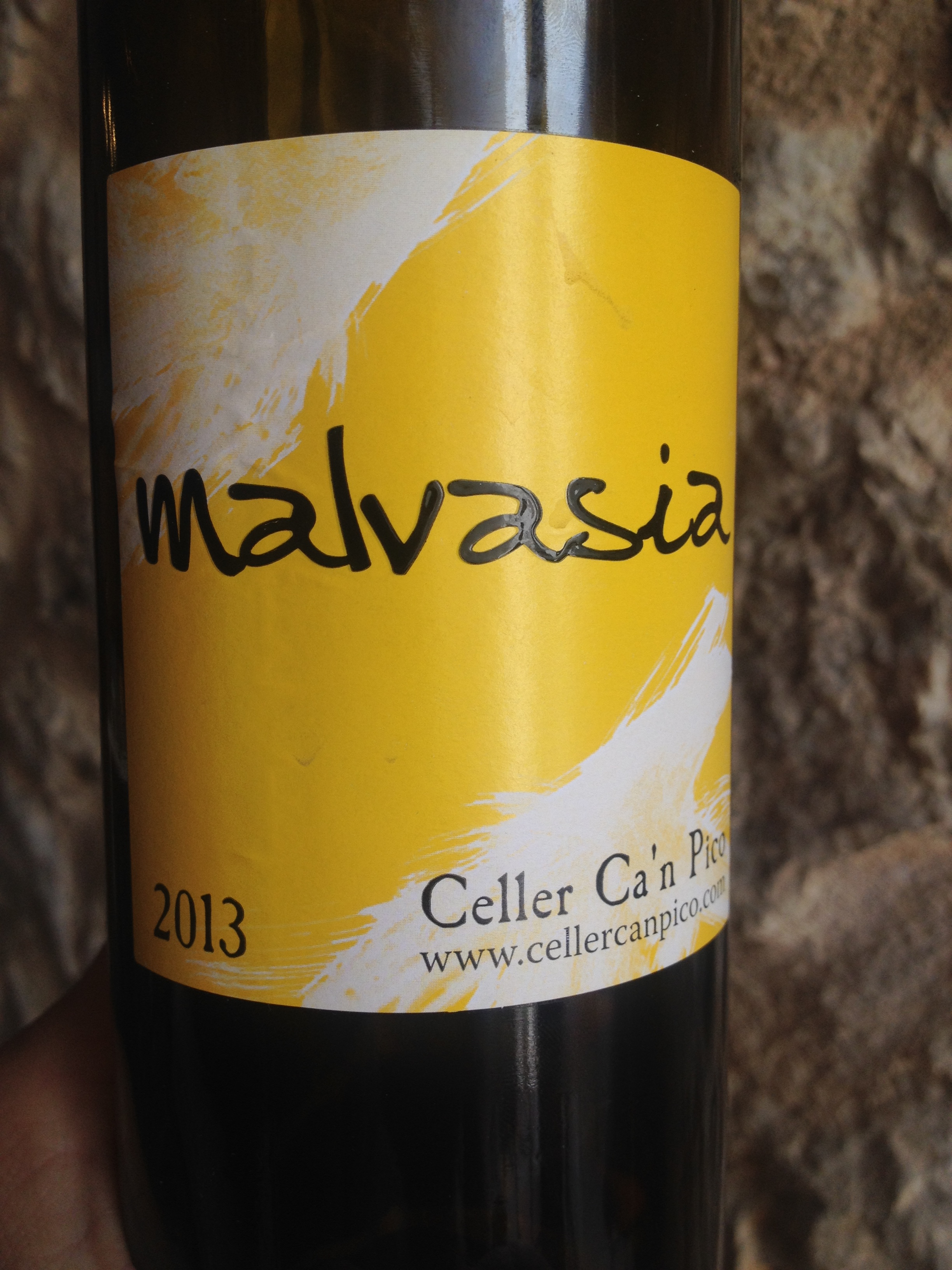
can pico bottle

Cellar Ca’n Pico loves Malvasia grape. It is the grape they use and have grown on their property since the 1800’s. They only commercially produce one bottle of white wine and have created a sherry wine that only bodega visitors get to try. Ca’n Pico lovingly recovered the Malvasia grape it in the late 1980’s after it completely died out from the phylloxera and have been perfecting this mono- varietal wine ever since. Their wine is delicate and refreshing.


#1
Malvasia 2013
Grapes: 100% Malvasia

Can Pico frontCan Pico Back

Comment:
Tawnee: A delicious white wine! I am not a white wine drinker and I loved this one. It has a subtle sweet beginning and a dry finish. The aromas are floral, perhaps like honeysuckle. Perfect for sipping chilled in the summer on a balcony looking out onto the sea. Their passion for their Malvasia grape can be tasted in the bottle.

Merie: Juan uncorked a bottle of their Malvasia at the cool room temperature of the Bodega. It was gorgeous, so different from the Chardonnay and Pinot Griegio I am used to! It was strong but subtle, dry yet dimensional, a memory of the sugars without actual sweetness. We’d had the same bottle perfectly chilled earlier that day in the local restaurant to complement a mixed Pa amb Oli lunch (a local favorite: open faced rustic bread slices drizzled with olive oil and tomato crushed across it, then topped with meats or cheeses). Malvasia is best served properly chilled I thought, but excellent at both temperatures. Tawnee loved this bottle enough to buy a bottle there, and has it on her favorites list.

#2
Malvasia Generosa
Grape: 100% Malvasia

Malvasia Gernerosa

Comment:
Tawnee: We got to try a special ‘aired’ wine similar to a Jerez wine or Sherry. It’s a sweet wine with 15.5% alcohol. They don’t fill the barrels up to the top so they can oxidize. It was sweet and golden. It would be ideal after a big meal and coffee. Sadly, I don’t think they sell this commercially yet. However, our experience was perfect, he even used a cane to delicately remove the wine from the oak barrels and pour into our glasses. Memorable!

Merie: Then Juan walked over to a far oak barrel. Lowering a length of hollow cane into a hole in the top of the barrel, he sealed the top with his thumb to remove a serving of wine, and released it into our glasses. What a slice of life! It is made by the old method of the Marqués: It must be 16 % alcohol or more to bottle Juan told us, because when aged with air (= allowing a % of air in barrel), 15% alcohol or less becomes vinegar. They do not produce it for sale at this time: “Much work and little demand,” so it is now just for family and friends, a labor of love. This wine was sweet and viscous, bright and luxurious; a super aperitif or after dinner treat. The Malvasia grape really IS generous!


Bodega Ca'n Pico Juan Tomas

Thank you Juan Tomás!

See Ca’n Pico visit: Click here

###   Cellar Ca’n Pico   ###

Bodega Son Bordils Visit

“Wine with character, consistently good and modestly priced”

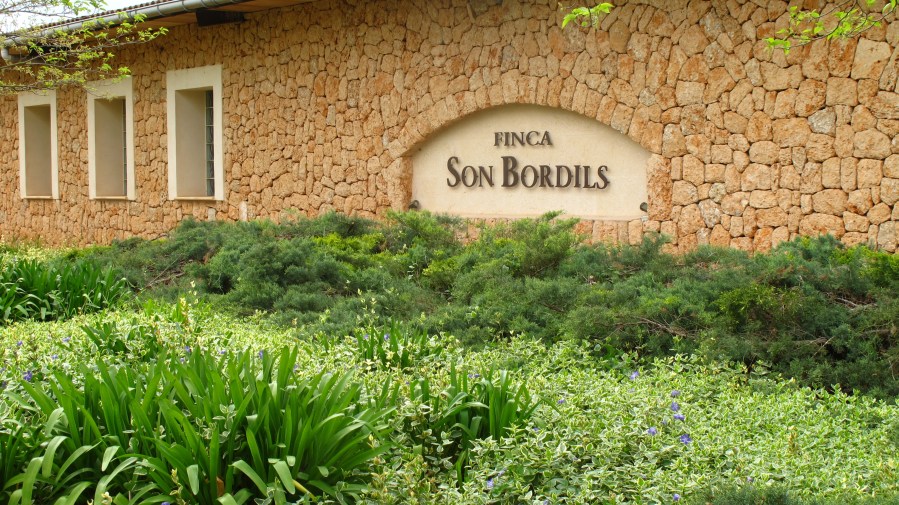
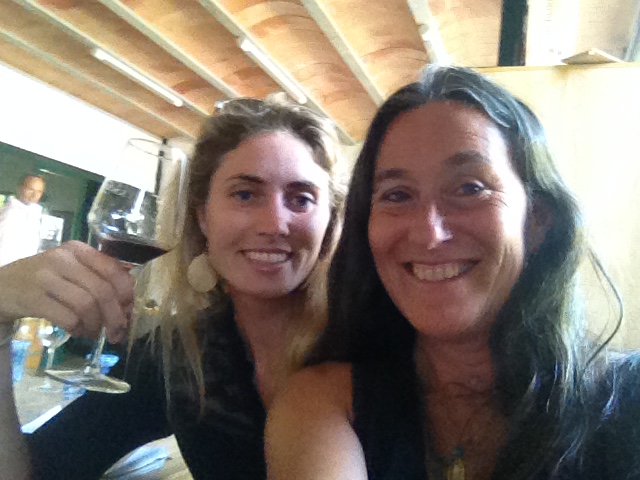
Finca Son Bordils was the first Winery we visited, and we both hold it as one of our all time favorite wine tasting experiences because of how much fun we had, how much we learned, and the door that it opened to a change in our lives.

Note: This blog entry is actually a fusion of two visits, one in April of 2014 when the magic first happened, the other in the summer of 2015 when we were on our personal Mallorcan Wine Trail and we had to go back with our new knowledge and further questions!

logo son bordilswww.sonbordils.com
Inca, Mallorca, Spain

Son Bordils Vinyard

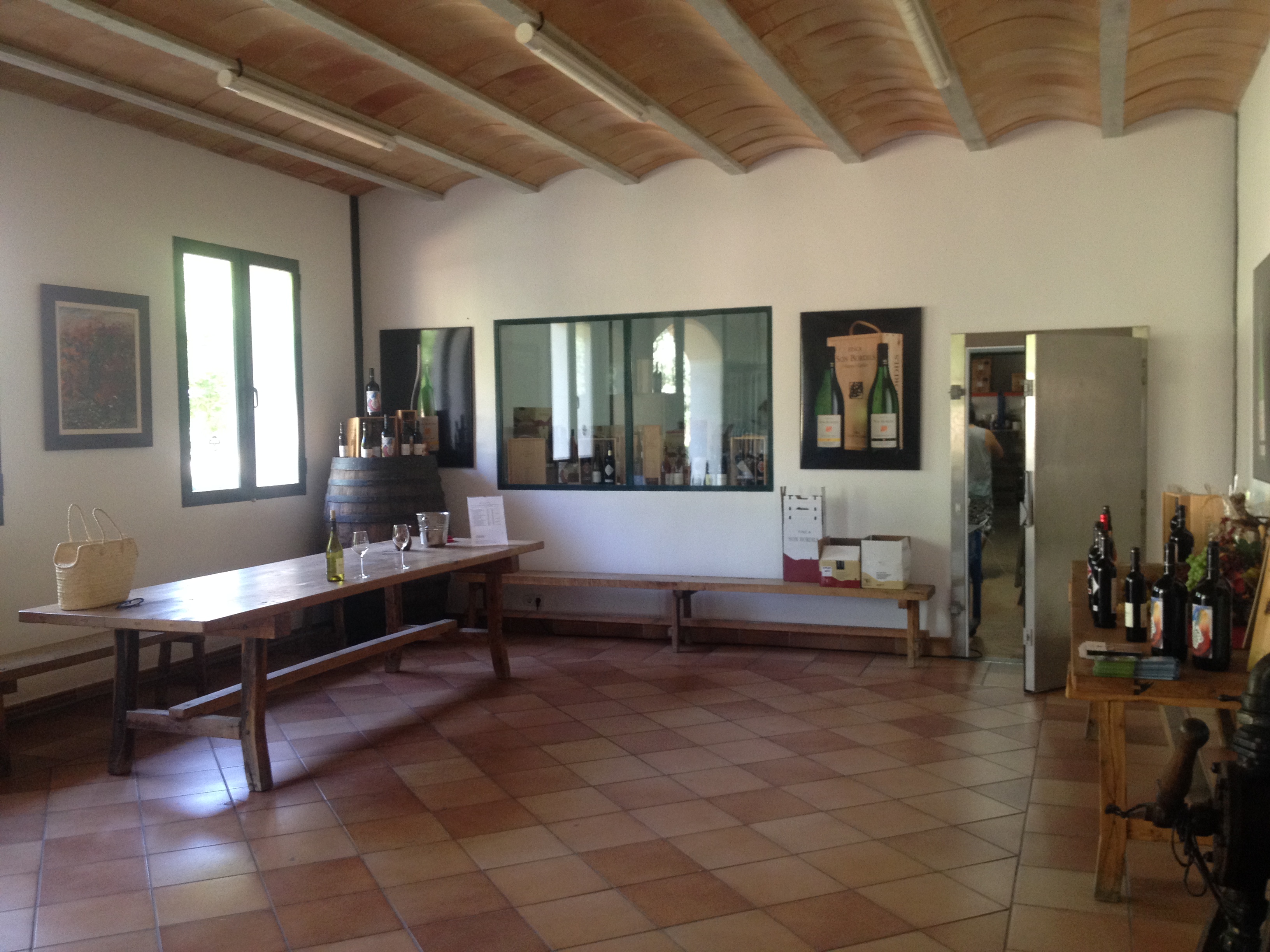
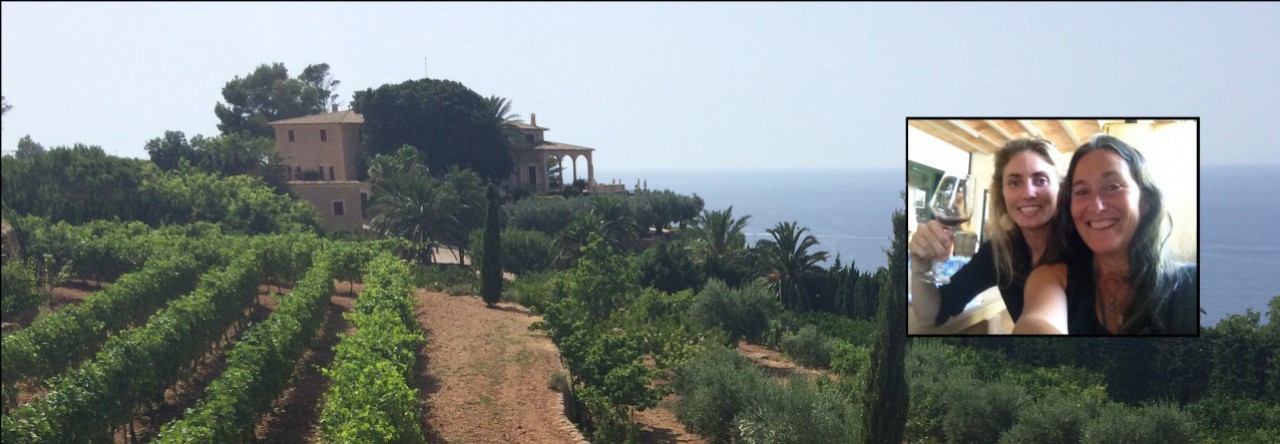
April 2014: The winery Finca Son Bordils, perched in the rolling mid-island plains outside of Inca, might be the oldest winery on the island – there is some debate. Founded in 1433 by D. Joan Bordils i Pont, the current owners are Ramón and Pedro Coll, and the Vineyard has been in their family for over 100 years. After the grape phylloxera plague, the family completely replanted 34 hectares of land with Chardonnay, Muscat, Prensal Blanc, Merlot, Cabernet, Syrah, Callet, and Manto Negro grapes, and built this beautiful and modern winery in the center, where we arrived for our tasting. They currently produce 150,000-200,000 liters/bottles per year, and are members of the Island organization Vi de la Terra Mallorca. These wines have character, and are consistently good and modestly priced.

26.07.15 067

When we arrived there, the marvelous owner Ramón Coll told us that unfortunately, the person who normally pours the tastings was out dealing with a personal matter. But as it happened, Jaume was there. He takes the Bordils wines to restaurants and pours for potential clients, and he kindly agreed to give us a tasting. It was the beginning of the serendipity and island hospitality that has been characteristic of our entire tasting experience and is part of what makes this wine region so marvelous to visit.

Mostly in Spanish we all got talking, and Jaume got pouring, and soon Jaume was telling us all about the history of wine on the islands, of trains from the interior island loaded with wine or grapes, going to the Cellars on the cooler coasts, and then out for export to mainland Spain and nearby France. He taught us about the phylloxera blight era in Europe and how Mallorca had almost 30 halcyon years when Mainland had the blight and Mallorca did not, and Mallorcan wines were in high demand and very lucrative. Sadly, phylloxera arrived in Mallorca in 1891 and devastated the island’s vineyards. He told us about the history of commerce in the Mediterranean, from when the Phoenicians were thought to have brought the first vines to the island in early BC, and wine cultivation began in earnest in Mallorca around 120 BC when Rome conquered Mallorca. We talked and tasted for what seemed like hours, enjoying unique wines from the back that are normally reserved for special clients: It was a Friday late afternoon, bottles were open which would be bad by Monday’s work day, so we enjoyed a generosity and friendship that might otherwise not have been available.

T at son bordils

So you know, Phylloxera are sap-sucking insects, originally native to North America and related to aphids. They infect the grape roots and leaves, ultimately restricting nutrients and water to the vines. At this time there is no cure, but the rootstock that came from North America when Europe was replanted is resistant. American vintners had been given clippings of the famous European grapes, and grafted them onto American grape rootstock, with the great success of American wine industry today. In a graced turn of events, after the European Phylloxera plague, the American vintners brought back clippings from those same grapes, and resistant rootstock, and Europe was able to replant it’s own varietals. Jaume told us that there were 33,000 hectors of grapes planted on the island before the phylloxera blight, and that there are around 1,500 now.

Basic timeline:

  • 1862 Phylloxera blight in France, spreading across Europe.
  • 1865 Wineries and vineyards in Mallorca in peak production.
  • 1891 The blight arrived in Mallorca and virtually all grapevines were killed.
  • 1990 Island wide replanting of grapes began.

Before we knew it, we had missed the opportunity to make Merie’s train! But, as kind fate would have it, Jaume was from the same town on the other side of the island, and he was headed home from work as soon as we were done! So off they went chatting happily in Spanish all the long drive home (fabulously challenging for Merie who is still learning!).


After that experience we were hooked, and the glorious idea of further self-educating and tasting at Mallorcan wineries was born.

26.07.15 083


July 2015: We went back to Son Bordils in order to taste their wines again with our newfound interest in self-education. It was late on a Friday afternoon like last time, an odd coincidence. This time owner Ramón Coll poured for us so his normal Tasting Staff could go home on time. He remembered us, and that he and Tawnee are Friends on Facebook after our last visit!

Wine Son Bordils

Ramón is an amazing teacher and wanting to help us learn. When we told him that we are on a mission to understand wines, the first thing he said is that temperature is critical when tasting. A wine does not taste the same from one temperature to another, and tasting is for understanding the true character of the wine; different from enjoying a glass of wine where it inevitably warms in the glass and opens like petals of flavors. Every time he took out a bottle from the cooler, or had one out on the table from a previous pour, he checked the temperature of the bottle with his hand to ensure that his wines were at their best! Pouring our first white, the Blanc de Raim Blanc of 100% Prensal Blanc grapes — see tasting notes, below — he told us that Bordils is the family name of the founder who came to Mallorca from Girona in Mainland Cataluña in the 1200s with Jaume 1st (James 1 the Conqueror, in Catalan: Jaume el Congueridor). This family brought vines with them and started their production of wine in the middle of the island.

26.07.15 087Click Here for details of: Wines Tasted

After only the first glass of white, Ramón said “You must see how it happens if you want to understand what is going on.” So, even though the bodega was at closing time on a Friday afternoon – he whisked us into working area to show us how it is all done. As we walked around the fermentation room, filled with shining steel tanks, he told us about the process. It has all to do with the yeast and sugar! There are two fermentation processes.  The first is called Primary Fermentation, which is the conversion of sugar to alcohol by the yeasts.  Secondary Fermentation (also known as malolactic fermentation) is when naturally tart malic acid is converted to lactic acid which is more mellow.  The yeasts come from the skin on outside of the grape. How much and the quality all depend on the land around it, the climate that year, and what you decide to put on your grapes. The yeast adds flavor to the wine and convert the sugars into alcohol, for every 17g of sugar= 1% alcohol. When all the sugar has been consumed you have a dry wine, not all consumed leaves what is known as residual sugars. He commented that this is one of the most difficult parts of the process, and sometimes the bodegas have to add yeast in the end to ensure that the whole process is finished to taste. Red wines generally ferment with seeds and skins to ensure color and tannins, generally whites are pressed then separated from the mash before fermentation.

26.07.15 074

They close at 6:00pm, and again it was after that – but the front doors were still unlocked and suddenly a family group of 15 German tourists filled the tasting area. We told Ramón that he should attend to them because we are only two, and we have many more questions! So back we went to the tasting room!

As we tasted, we talked about how the wines were made. One of the important things that we learned was about the labeling laws in the area. For instance, to put the name of a grape varietal on the bottle, say Merlot, it only needs to have 85% of the grape inside! We found this extremely Interesting as now we are going to try and find out who produces 100% Merlot, and who makes a “blend,” and how that might contribute to why sometimes we can’t identify a Merlot wine right off. Possibly this is more specifically important to the native grapes on Mallorca, as some are difficult to create strong mono-varietal wines from, and hence many Mallorcan winemakers create blends to get the colors and flavors they want. Looking forward to trying some Prensal Blanc, Manto Negro, and Callet mono varietals =).

The group of German tourists bought two cases. We were thankful because we are all about education right now and not bulk purchasing. We did buy two bottles before we left, but we felt like that serendipity group paid for Ramón’s staying late with us on a Friday night, AGAIN.

And we look forward to coming back and finishing that production facility tour someday!

map son bordilsHow to get there:
Leaving Inca direction Sineu it is 4.1 km on your right. It is also easily located as it is across the Inca-Sineu road from the train station Enllaç.

### Finca Son Bordils ###

See Wines Tasted at Son Bordils: Click here

### Bodega Son Bordils ###

Son Bordils Wine Tasting

logo son bordils

Wines Tasted:

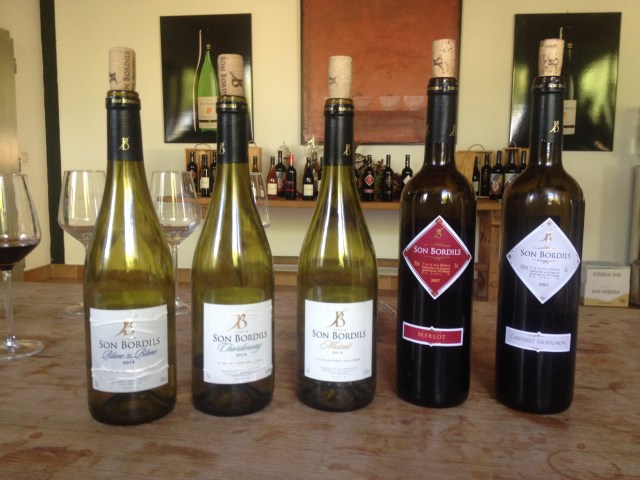
◊   3 Whites   ◊      

Blanc de Raim Blanc 2014
Chardonnay 2014
Muscat 2014

      ◊   1 Rose   ◊  

Rosat 2014

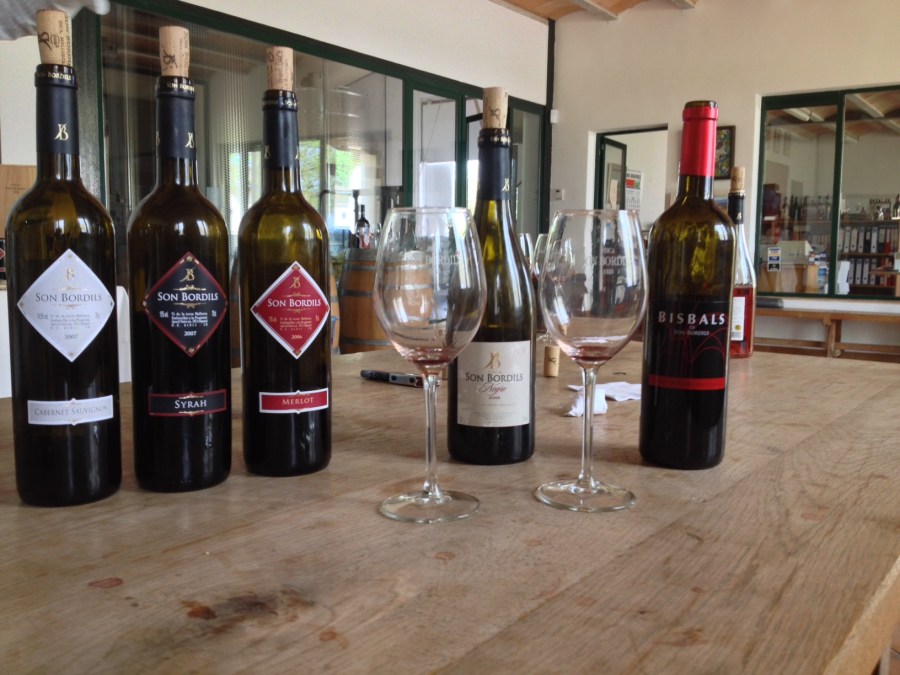
◊   4 Reds   ◊

Merlot 2007
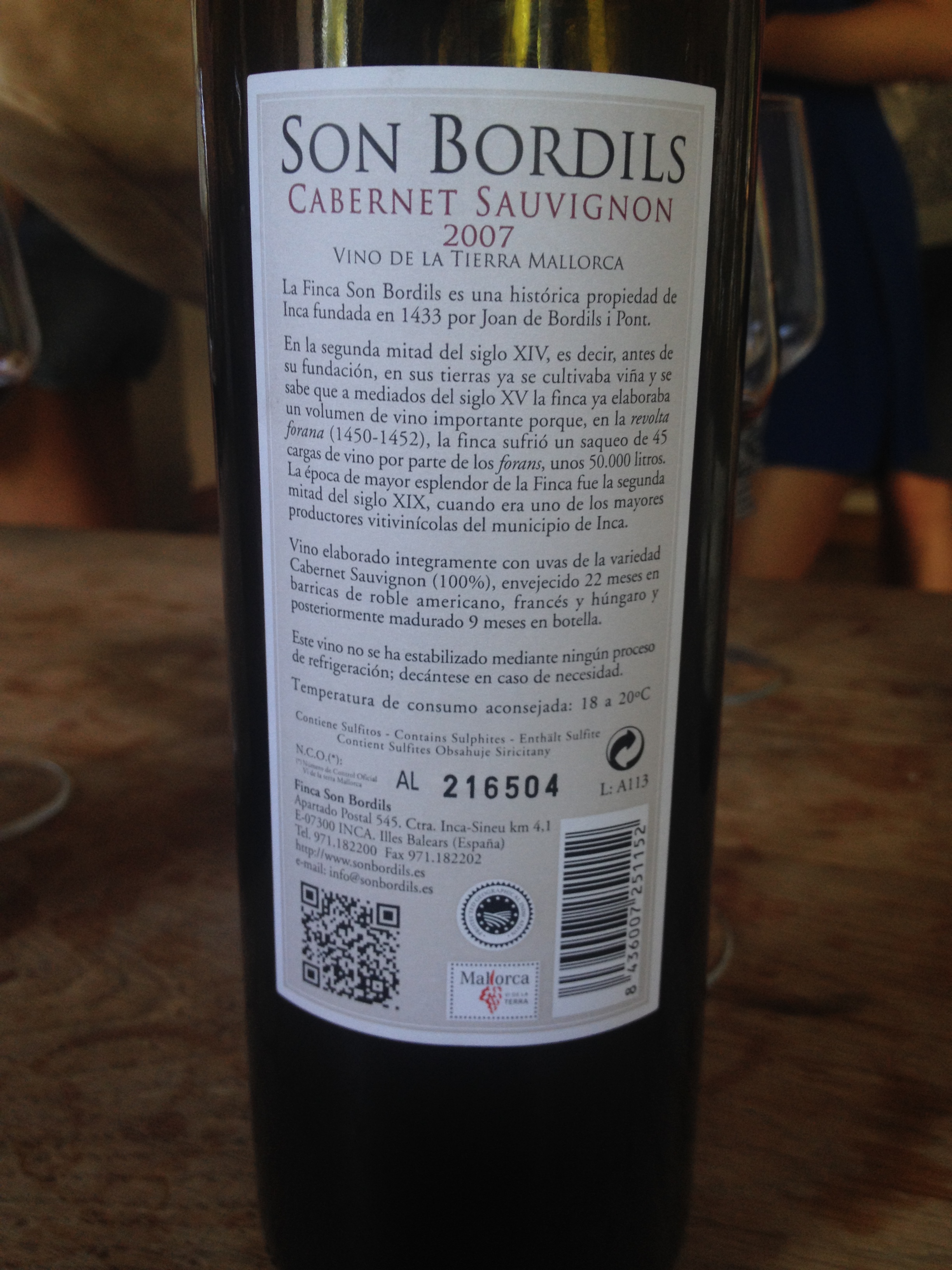
Cabernet 2007
Bisbals 2008
Negre 2010

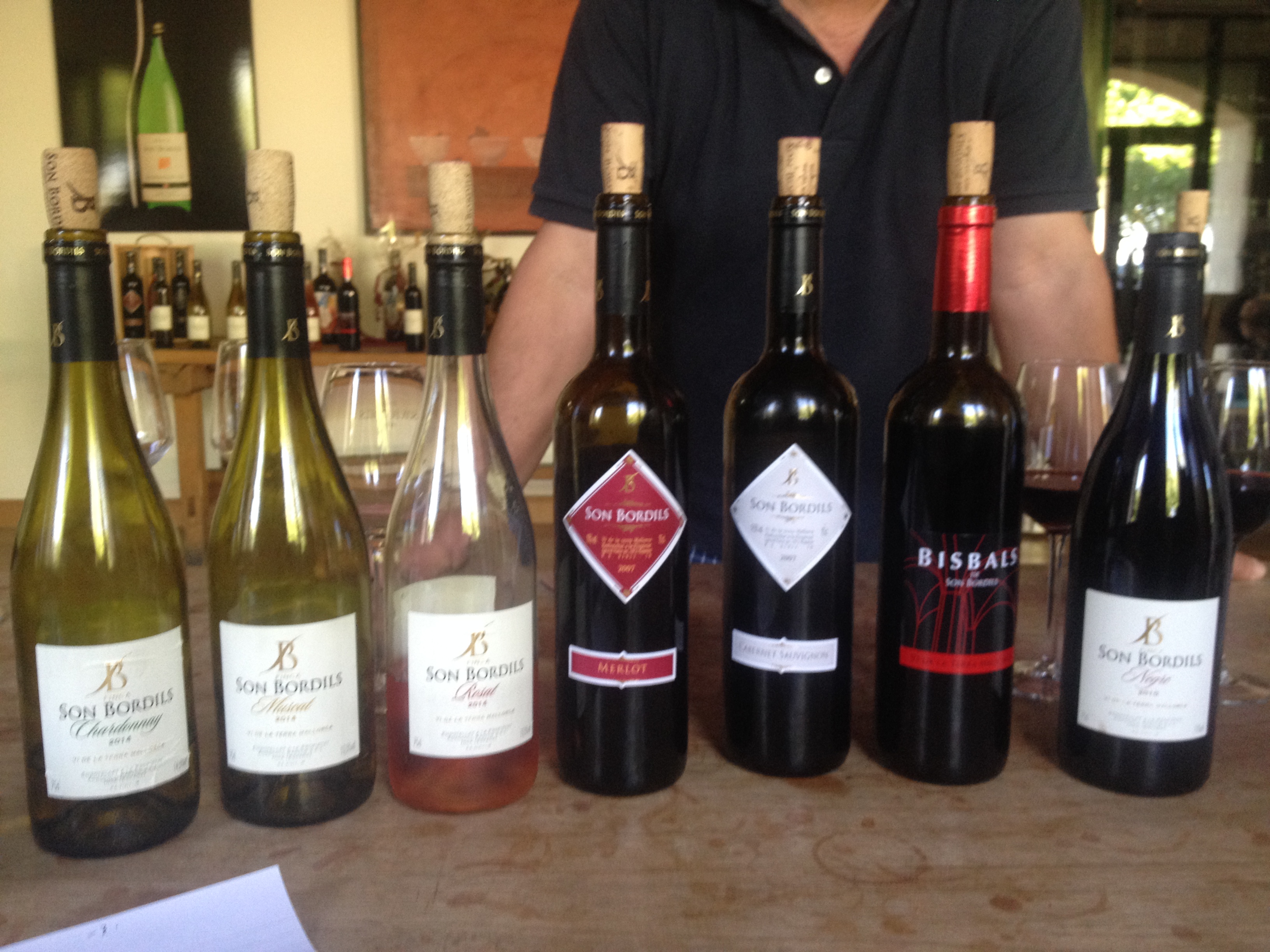
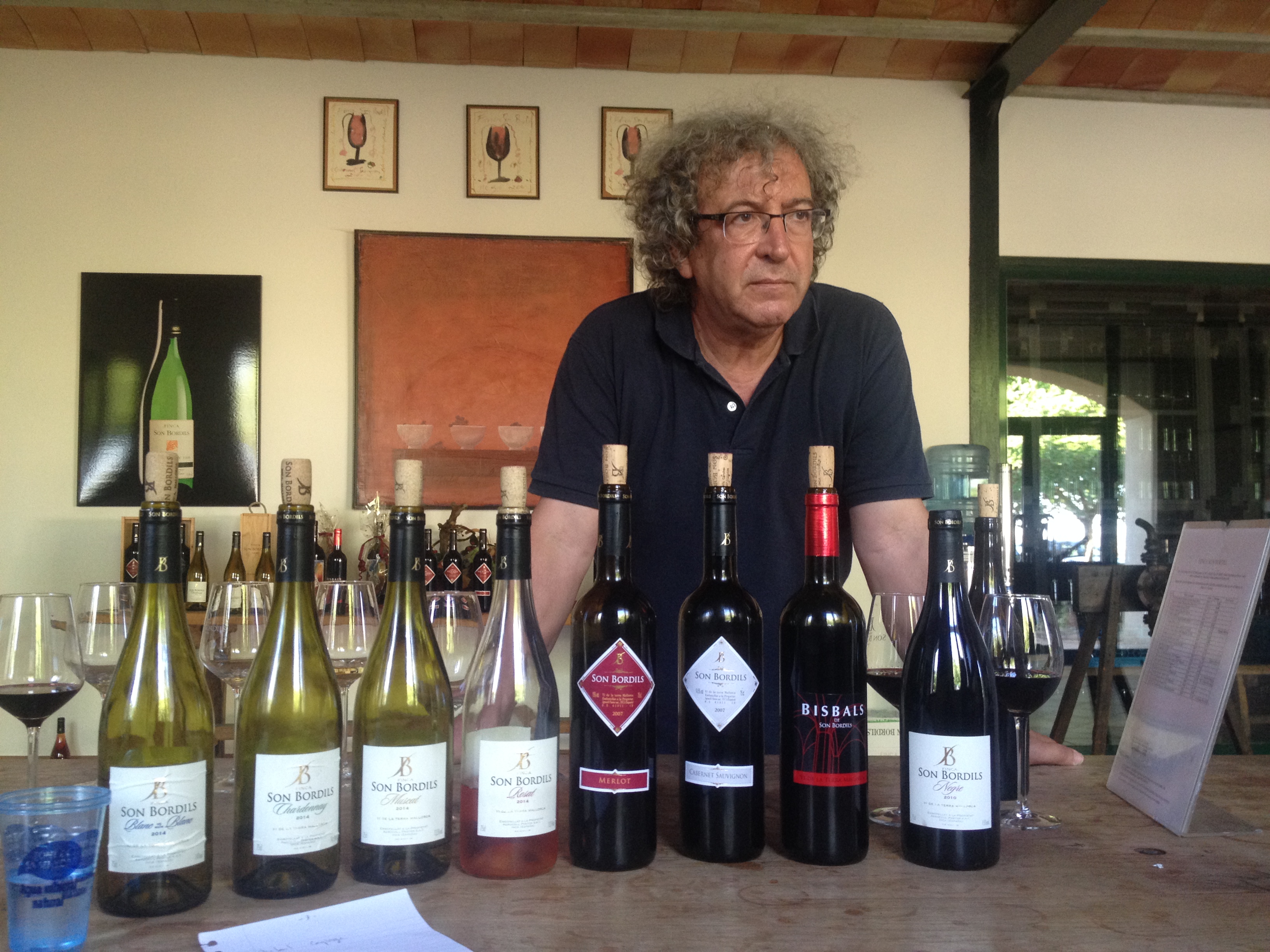
Son Bordils wine tasted

We learned that all Finca Son Bordils whites and rosés are young, with no time in oak barrels, and that they mainly produce mono-varietal wines and only 2 blends.  Again, Ramón was meticulous on the temperature of the pour and firsts sips.


#1
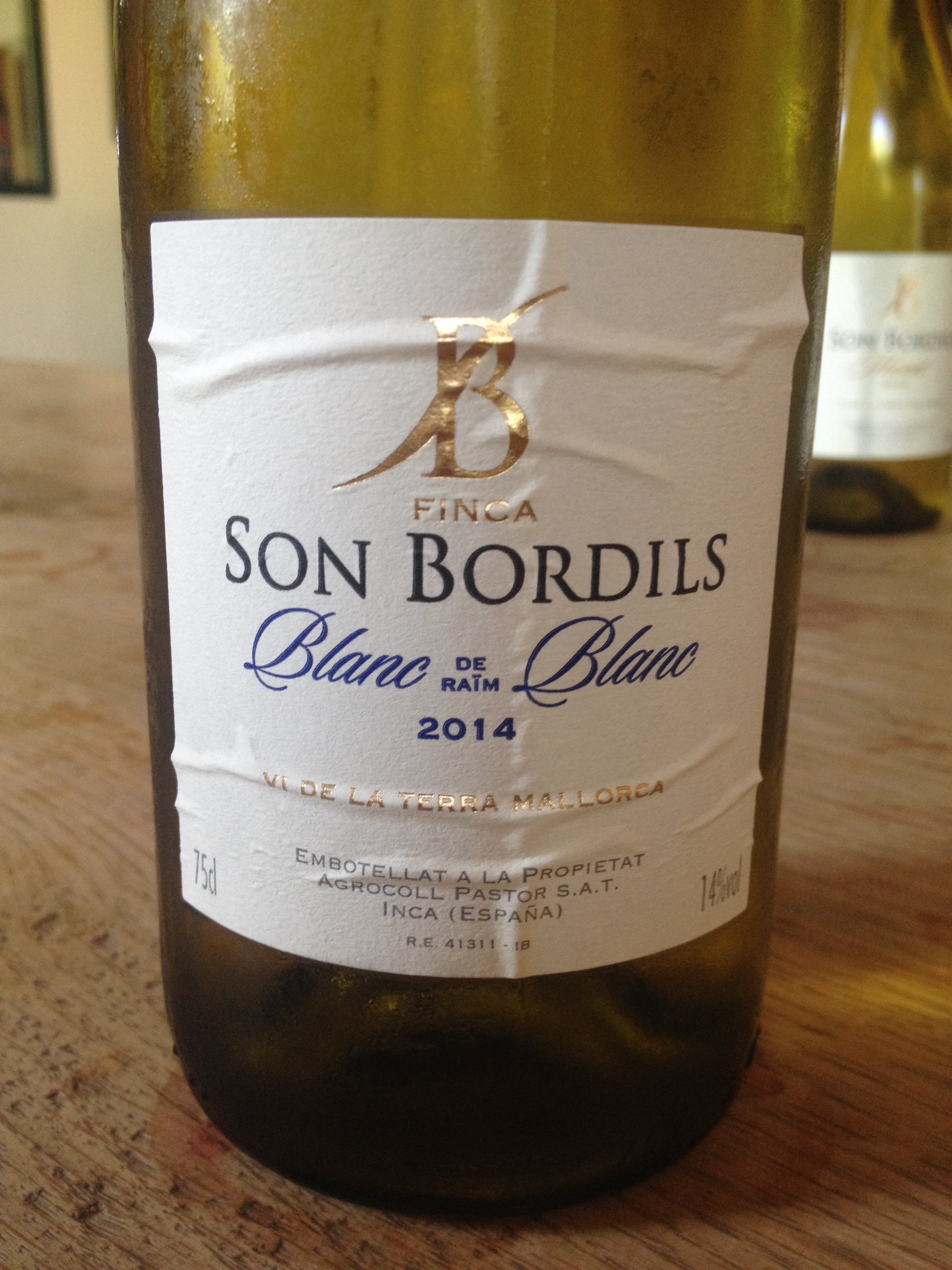
Blanc de Raim Blancs 2014

Grapes: Premsal

Son Bordils Blanc de Blancs

Comment:
Tawnee: This is the best white from the bodega. My absolute favorite! I don’t know what it is going on with me, but this summer I am loving whites! This is a very common name and today for the first time, I find out why it is called Blanc de Blancs – it is a white wine made from a white grape! Of course, but if nobody ever told me, I never would have guessed it!

Merie: First Ramón poured the Blanc de Raim Blanc of 100% Prensal Blanc grapes.  Prensal Blanc is believed to have been on island since the Phoenicians in BC so it is considered “naitive.”  It has a pleasing light tropical and citrus aroma, with good fruit taste.  Ramón called it “fresco.”  Unexpectedly, this was our favorite of everything we tasted today and we each went home with a bottle.


#2

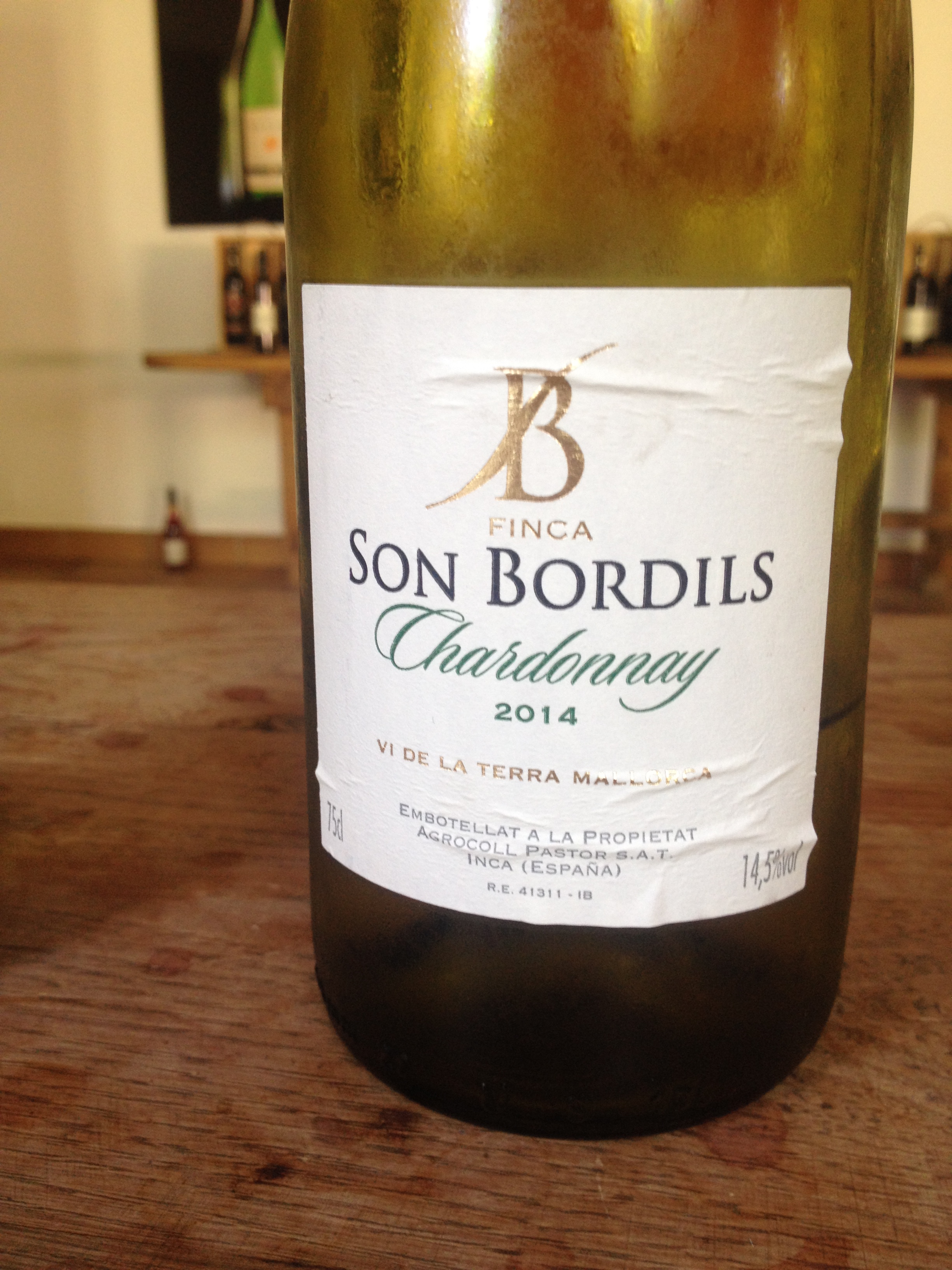
Chardonnay 2014

Grapes: Chardonnay 88%
Reisling 8%
Viognier 4%

Son Bordils ChardonnaySon Bordils Chardonnay Back

Comment:
Tawnee: I am in search of a Chardonnay that I like, this one was good, but not exquisite for my taste. Here is an example of how the bodega can put the name Chardonnay on the bottle, but not have 100% single grape.

Merie: The Chardonnay came next.  It is titled Chardonnay on the label because it meets the DO requirement of 85% Chardonnay grapes, but in fact this bottle was 88% Chardonnay, and 12% Riesling and Viognier to bolster the Chardonnay to their taste.  It is lovely and full-bodied with bright ripe fruit – no oak!  A good friend of mine who lives in London phone-orders several cases of this wine each year before summer starts, and it’s delivered to their Mallorcan mountain casa when they first arrive!


#3
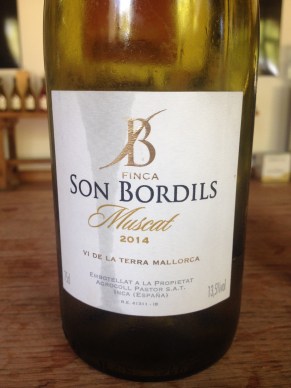
Moscat 2014
100% Moscat,
(but different varieties)
Moscatel de Grano Menudo
Moscatel de Frontignan,
Muscat d’Alsace or Moscato d’Asti.

Son Bordils Moscat

Comment:
Tawnee: I like that this wine is with the name Muscat, but that it has many different types of Muscat grape. I like the originality of the name and the flavor.

Merie: The Muscat is nicely dry, not a sweet desert wine, with the unmistakable flavor and aroma of this famous grape.  I loved this!


#4
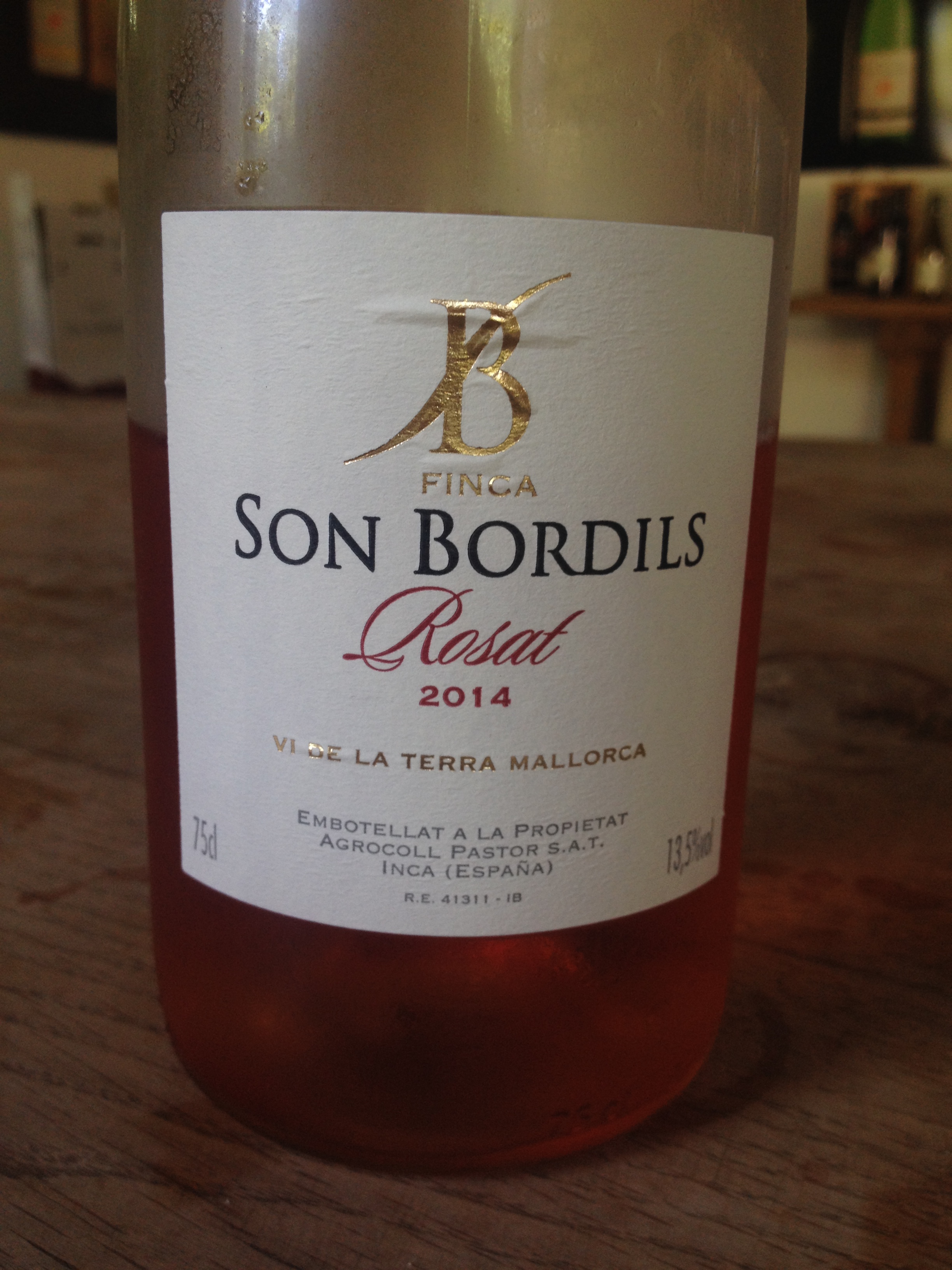
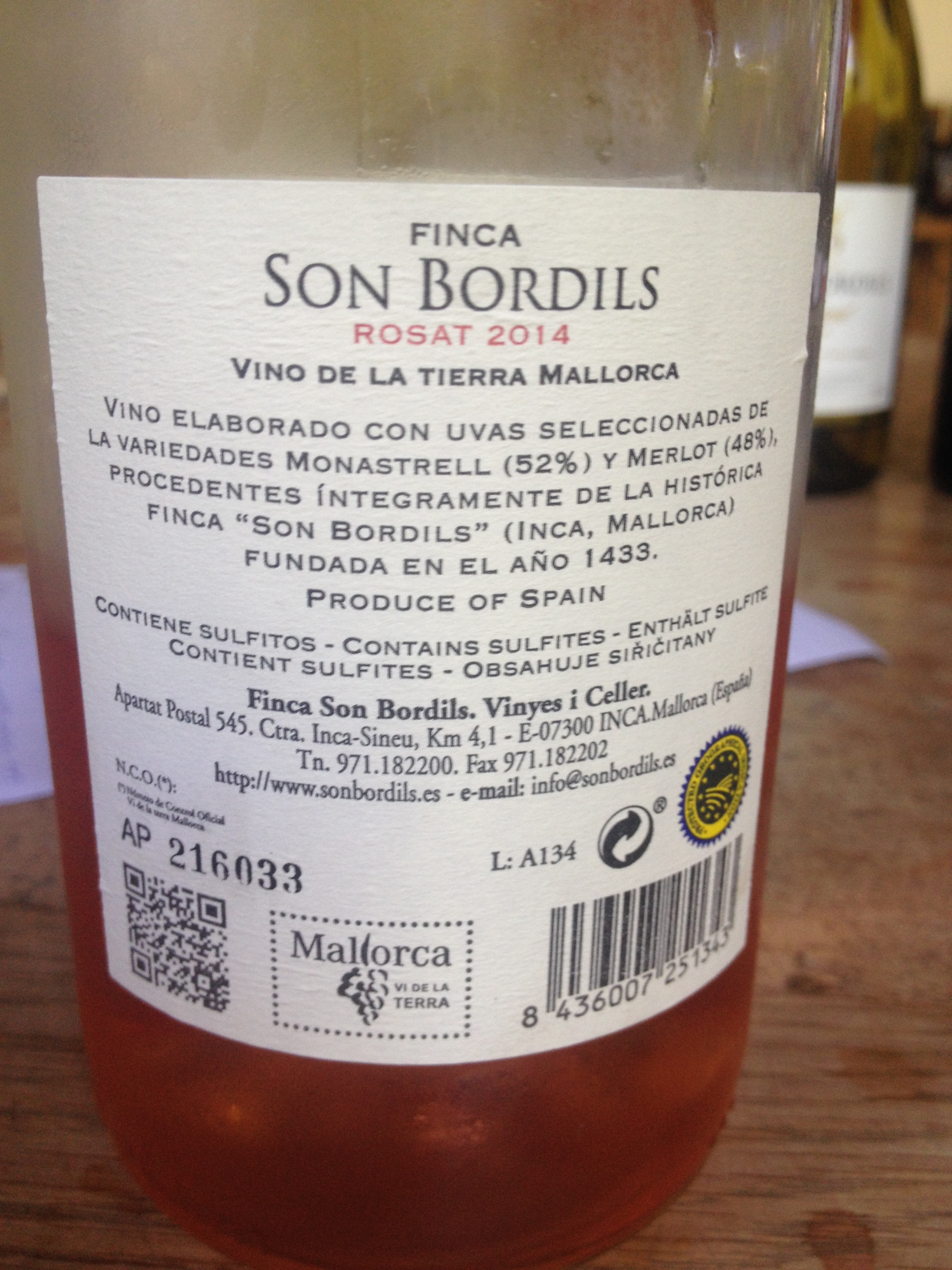
Rosat 2014
Monastrell 52%
Merlot 48%

Son Bordils RosatSon Bordils Rosat back

Comment:
Tawnee: This is my second favorite wine from Son Bordils. An excellent rose to accompany summer lunches.

Merie: This Rossat rosé is made from two red grapes, 52% Monastrell and 48% Merlot grapes and has a classic dark pinky-orange appearance.  The aroma was fine, but the taste was better!  Normally they make two Rosés, one 100% Monastrell and one 100% Merlot, but this year the yield was low so they made a blend of the two to good effect.


#5
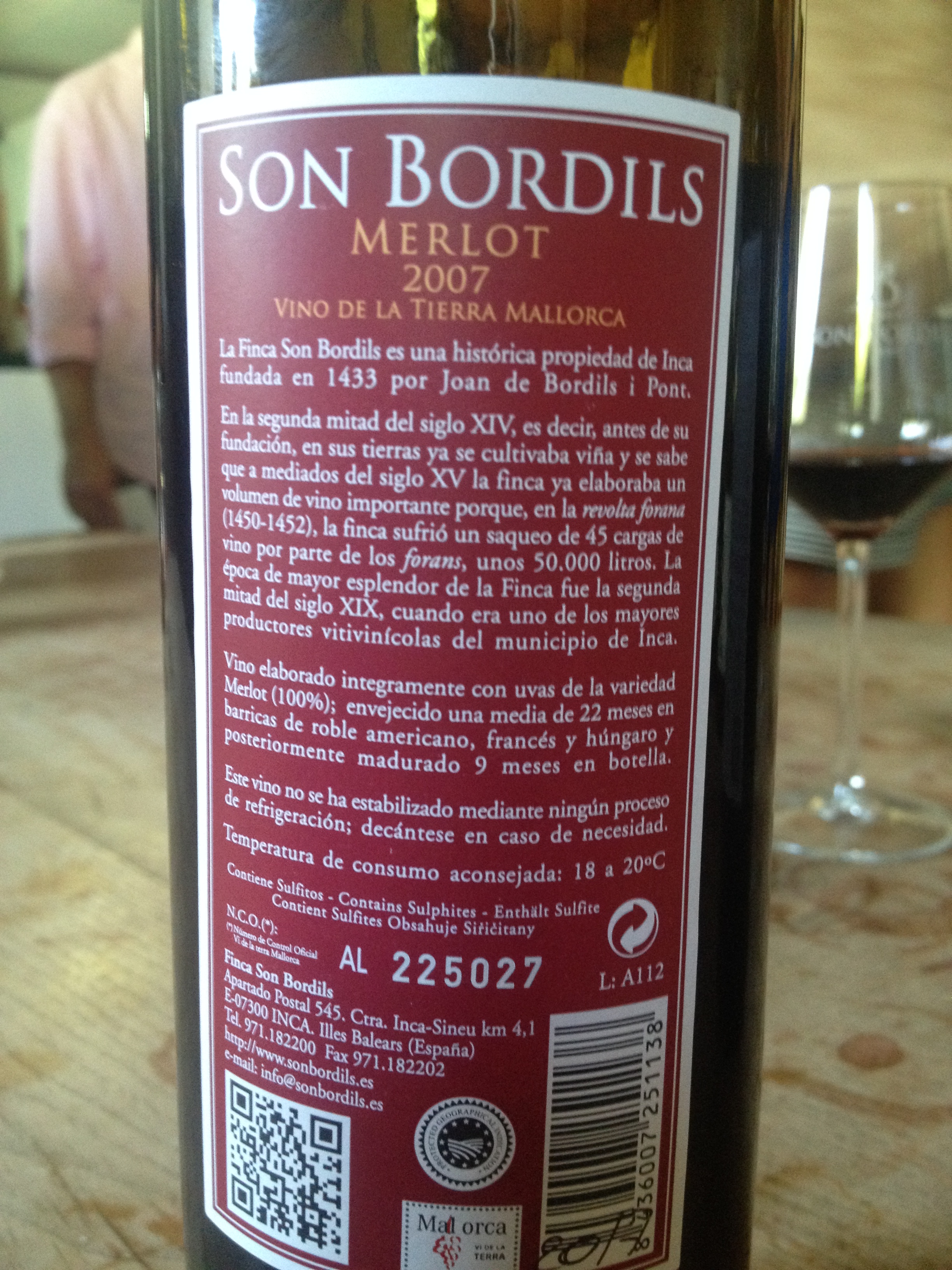
Merlot
Merlot 100%

Bordils Merlot26.07.15 081

Comment:
Tawnee: As the bottle breathed, the flavors opened up. A very good red wine, full of flavor and body.

Merie: Next Ramón poured the 100% Merlot and I really wanted some cheese and crackers to go with this lovely wine.  The aromas were nice, the flavors better.

#6
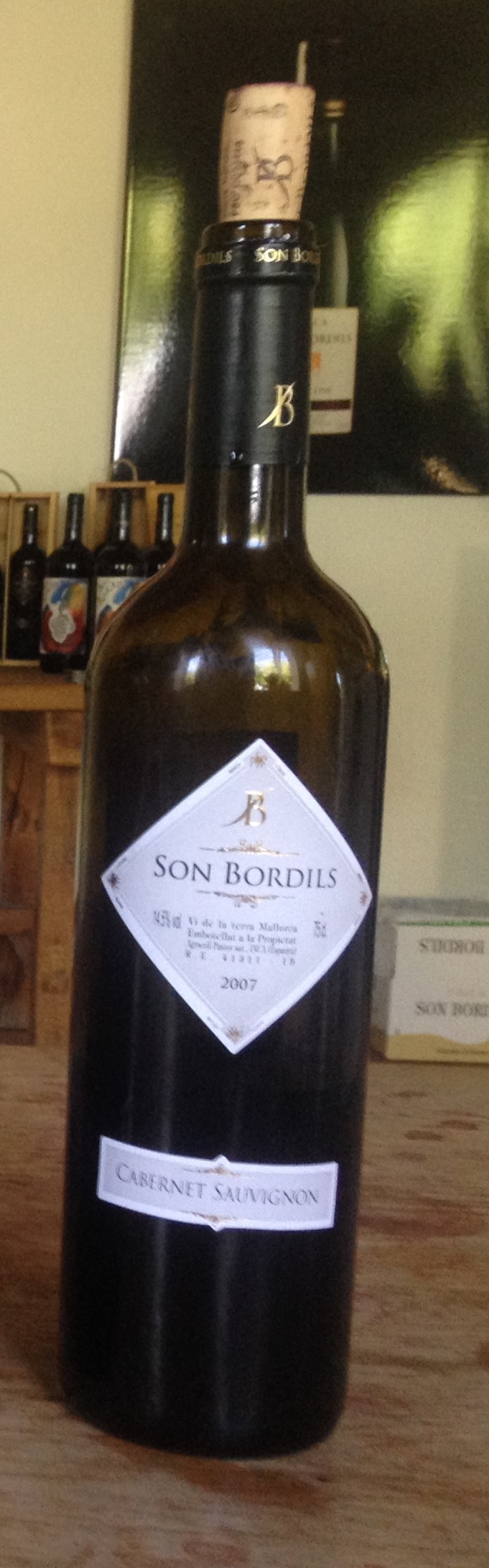
Cabernet Sauvingon
Grapes: 100% Cabernet Sauvingon

Cab Sav frontSon Bordils Cabernet

Comment:
Tawnee: I am beginning to see I like Cabernet Sauvingon. A solid, bold experience.

Merie: The Cabernet had a gorgeously balanced aroma and body, and the finish very clean, a really nice staple wine.


#7
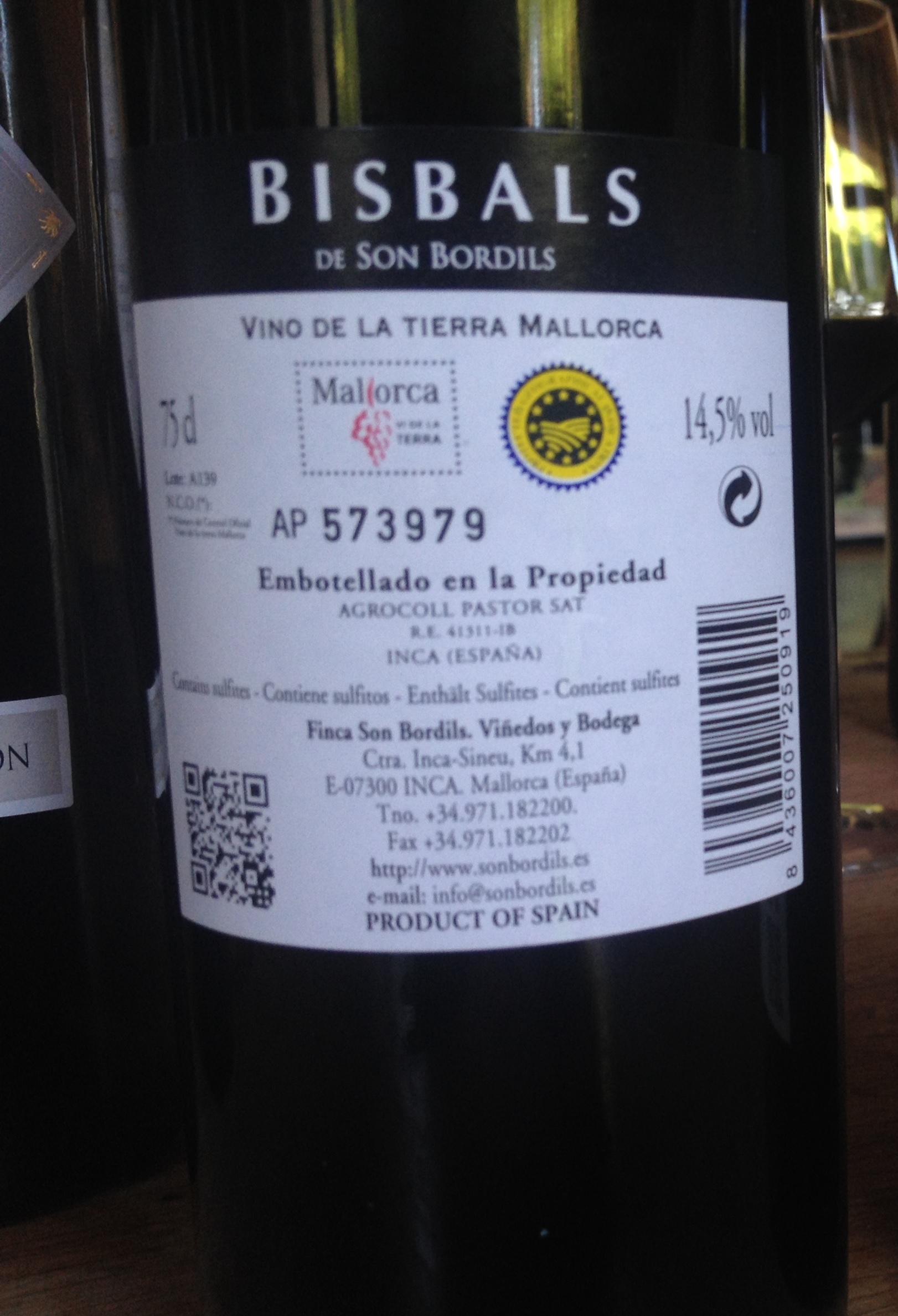
Bisbals
Grapes: Merlot
Manto Negro
Cabernet Sauvingon

Bordils Bisbal frontBordils Bisbal back

Comment:
Tawnee: I like it! It has a very unique flavor- spicy and meaty. The name comes from the special name of the pine forest on Son Bordils- Ses Bisbals- which is like a bishop, and is fitting because it is where the little church is on the land.

Merie: Next Ramón poured us Bisbals, named after the old island Finca/farm house estate.  It is a blend of Merlot, Manto Negro (another “native grape”), and Cabernet, with 14.5% vol. and a nice tannin structure.  The aftertaste lingers and makes you want another sip.

#8
Negre
Grapes: Manto Negro
Cabernet Sauvignon
Callet

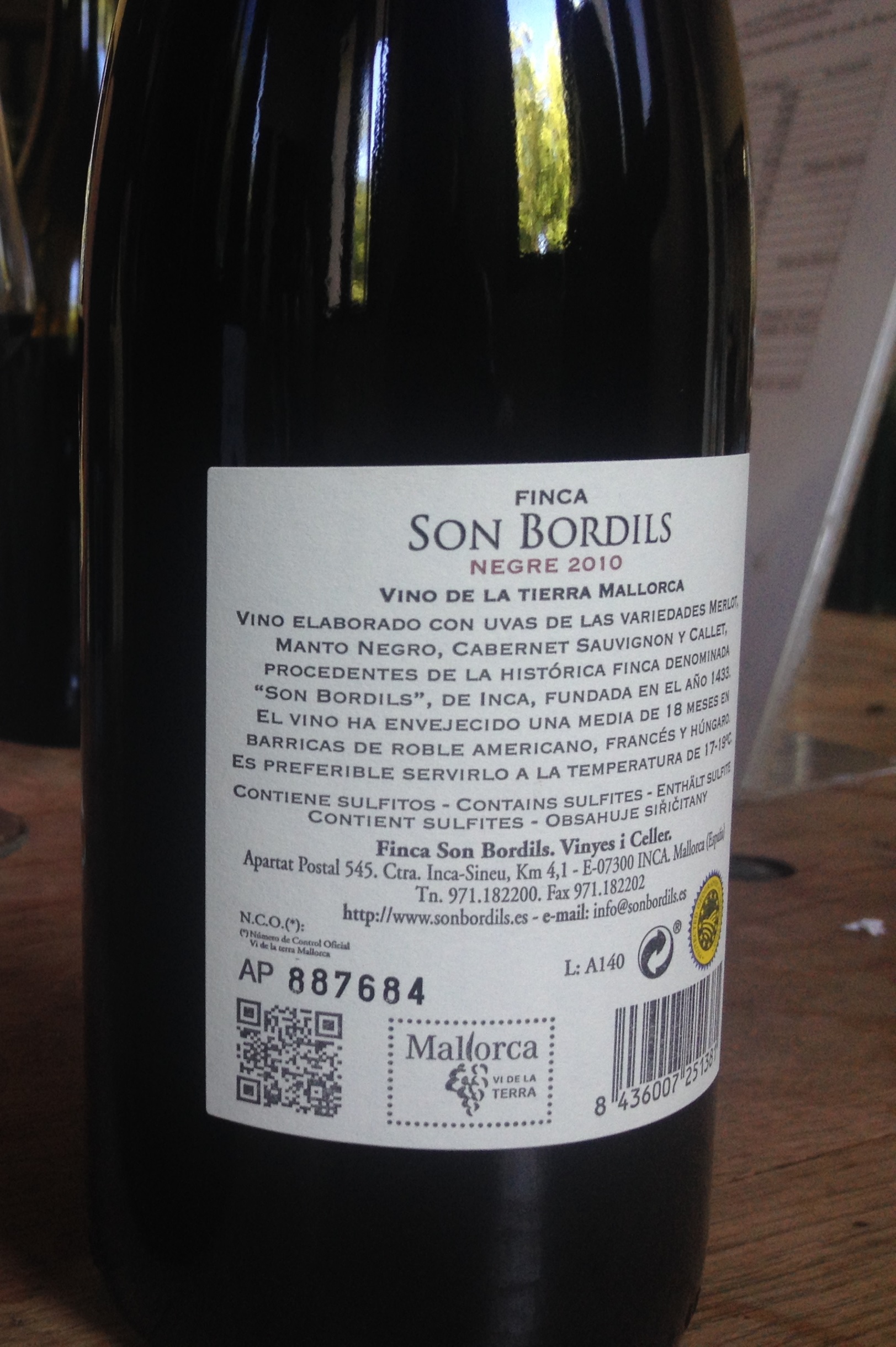
Bordils NegreBordils Negre Back

Comment:
Tawnee: Full of ripe red fruits and fennel. This is a great dinner wine at a great price!

Merie: On to their Negre (which means black in Mallorcan but is used to mean red in wines).  14.5% vol., 18 months in American, French, and Hungarian Oak barrels.  It is a blend of Manto Negro, Cabernet Sauvignon, and Callet (again, native).  They recommend it is best served at a cool 17-18° Celsius (62-64° F).  Dryer than the Bisbals, Ramón told us that the Callet grape has balsamic flavors when the vines are young.  He tasted with us and perceived flavors of red fruits, licorice/fennel, and toasty cocoa.  Yum.


Son Bordils Ramon

Thank you Ramon!

See Son Bordils Visit: Click here

### Bodega Son Bordils ###